


The United States began a fresh round of strikes against multiple targets overnight in Iran, the US military said on Wednesday, hours after US President Donald Trump vowed new attacks if no peace deal is secured.
Shortly afterward the strikes commenced, Iran's top joint military command announced the closure of the Strait of Hormuz, saying any vessel that will attempt passage will be shot at. Iranian media reported that two "violating ships" were hit, citing Iran's Revolutionary Guards Navy.
"The strikes are in response to Iran's unwarranted and continued aggression," the US military's Central Command said in a post on X, adding that the strikes began at 5.15pm EDT, which was 12.45am in Tehran.
The attacks are the latest development in an escalating exchange of strikes that threaten to reignite a full-scale war, which was paused in early April when the two sides agreed to a fragile ceasefire.
Iranian media say explosions were heard in the southern port city of Bandar Abbas, the island of Qeshm, along with the cities of Minab and Sirik. Iranian sources reported hits by "enemy projectiles" in Qeshm and the cities of Kargan and Sirik.
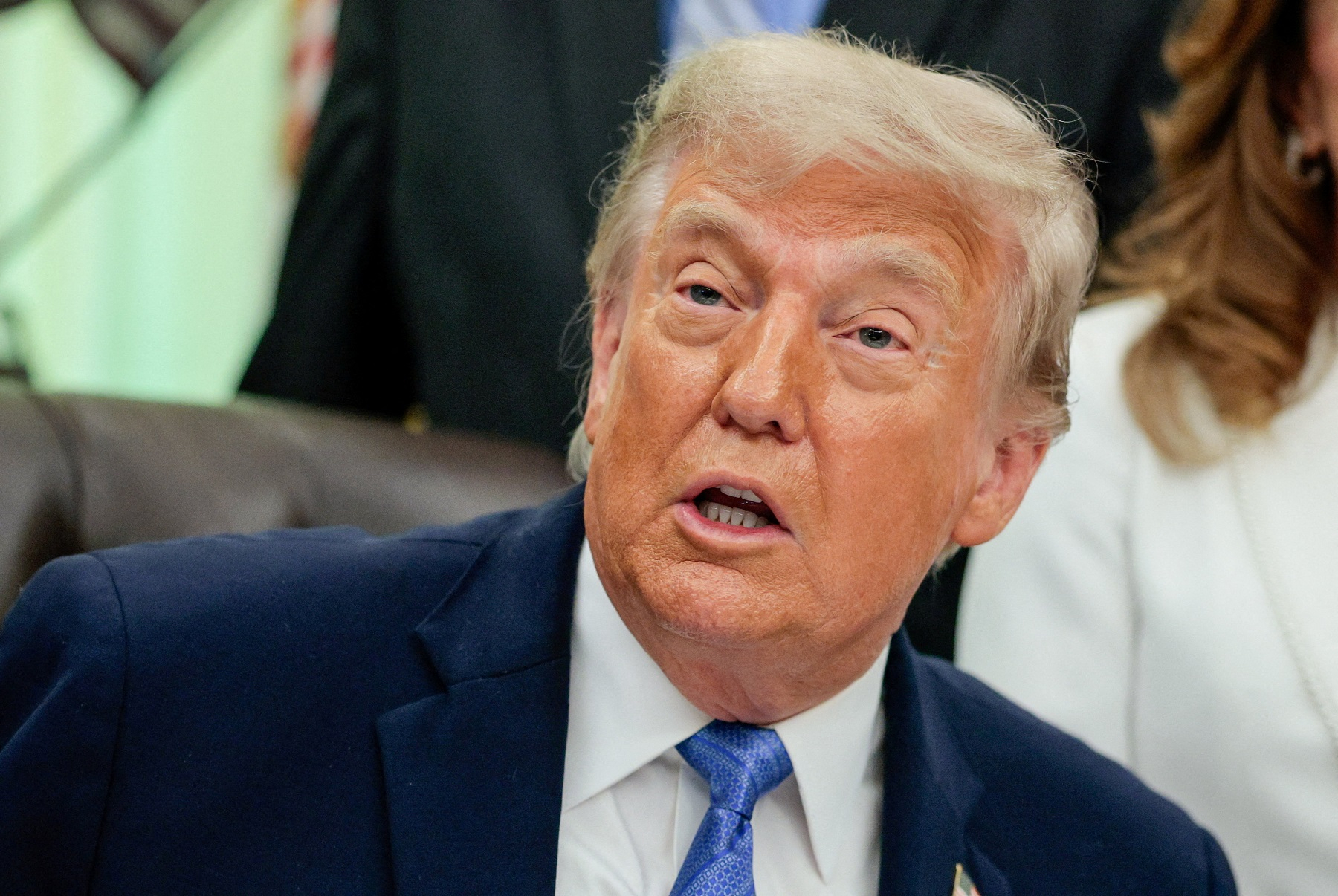
Trump told reporters earlier on Wednesday at the White House, "We're going to be attacking them, attacking them very hard."
US Defense Secretary Pete Hegseth later told reporters during a visit to Central Command in Florida that the strikes would "advance our military interests and also enhance our diplomatic position."
"We will strike them hard tonight, and hopefully Iran makes a good decision," he said. "If we need to negotiate with bombs, we'll negotiate with bombs."
The United States and Iran have traded fire several times since the tentative ceasefire took hold, even as negotiators have unsuccessfully sought an end to the three-month-old war.
Trump has repeatedly said a deal is close, though there has been no sign of a breakthrough, while also threatening to resume bombing.
The US military targeted air defenses and radar sites around the Strait of Hormuz on Tuesday after a US attack helicopter was downed near the strategic waterway on Monday. Iran responded with missile and drone attacks on US bases in Jordan, Kuwait and Bahrain. A US official said there was no significant damage.
Iran accused the US of striking reservoirs that supplied drinking water to 10 villages and violating international law.
"This is not collateral damage – it is a calculated war crime and a flagrant violation of human rights," Foreign Ministry spokesperson Esmaeil Baghei said. The Pentagon did not immediately respond to a request for comment.
Trump, who has threatened before to destroy Iran's civilian infrastructure, did not say whether the coming strikes would target power plants and bridges.
The head of the Iranian parliament's national security committee, Ebrahim Azizi, warned in response that the "war won't be limited to the region."
Despite the belligerent language from both sides, there were signs of continuing diplomatic efforts. A delegation from Qatar, which has been mediating between the United States and Iran, landed in Tehran on Wednesday to hold talks on the latest developments, Iranian media reported.
The war has killed thousands and disrupted roughly one-fifth of the world's supply of oil and natural gas, sending prices sharply higher. Iran has blocked traffic through the Strait of Hormuz, while the US has maintained its own blockade on Iranian ports.
Oil prices rose nearly US$3 following Trump's threat of escalation, to US$94 per barrel. Trump said vessels carrying 100 million barrels of oil have defied Iran to travel through the strait as part of a secret military mission. He said oil prices would be much higher without the effort.
Hegseth said ships have been transiting the strait "in the middle of the night, protected by the United States in a way that Iran can't stop, they can't see it."
Separately, the US military said it disabled an oil tanker transporting Iranian crude in the Gulf of Oman on Tuesday for a second consecutive day.
Fighting in a parallel war between Israel and Iran-backed Hezbollah militants in Lebanon has continued. Israeli airstrikes in southern Lebanon killed at least 13 people on Wednesday, Lebanese security sources said, while Hezbollah claimed fresh attacks against Israeli forces.
Tehran's demands include an end to Israel's attacks in Lebanon, the lifting of sanctions on Iran, the release of billions of dollars in frozen assets, and recognition of its control of the strait. Trump says Iran must end its restrictions on shipping through Hormuz. He also says any peace deal must ensure Iran cannot develop a nuclear weapon. Iran denies any such ambition.
The UN nuclear watchdog's 35-nation Board of Governors passed a US-backed resolution on Wednesday telling Iran to declare its remaining enriched uranium stocks and let inspectors verify them. Iran branded the resolution as "political". (Reuters)
Edited by Cecil Wong
US strikes Iran again, Tehran closes off key waterway
2026-06-11 HKT 07:06
Share this story


Jamie Clarke reports

