


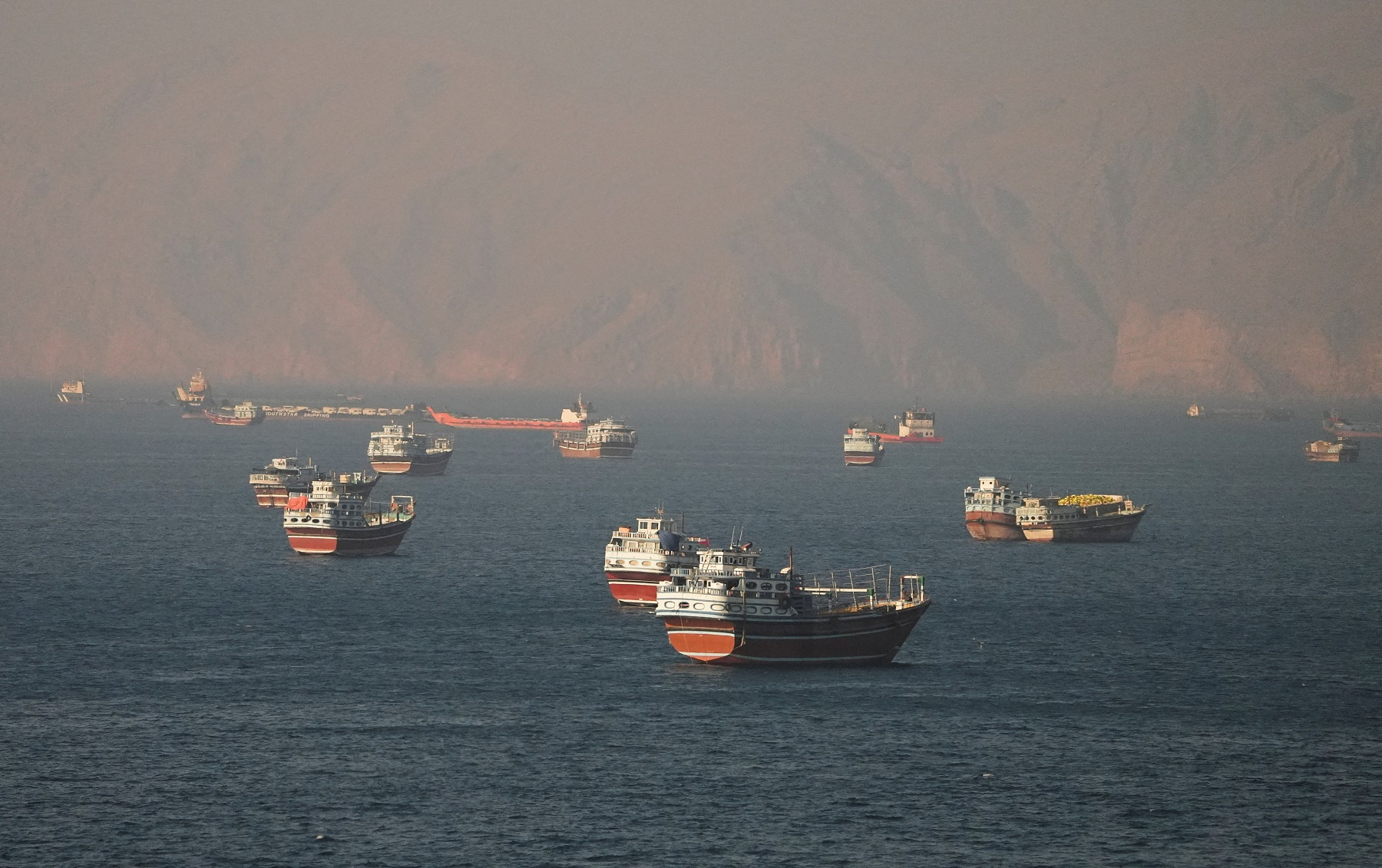
US President Donald Trump said Monday that ships were again moving through the Strait of Hormuz and the vital oil route would be "completely open" by Friday, after Washington and Tehran announced a deal to end the Middle East war.
The reopening of one of the world's most important energy chokepoints would mark a major step toward ending months of deadly conflict and economic turmoil triggered by US-Israeli strikes on Iran in late February.
"Ships are starting to move, many loaded up with Oil, out of the Strait of Hormuz," Trump said, adding later that he did not "think we will need much help" keeping the waterway open.
Iran had blockaded the strait since the start of the war, sending oil prices soaring and raising fears of a prolonged inflation shock.
The United States, Iran and mediator Pakistan said the agreement was to be signed Friday in Switzerland.
A senior US administration official, however, said Trump, Vice President JD Vance and Iran's parliamentary speaker Mohammad Bagher Ghalibaf had already signed the text electronically.
"The president wanted to sign it personally because he wanted to show his... dedication to bring this through to a successful resolution," said the official.
Asked at the G7 in France when the text would be released, Trump said: "It's a very powerful document, and I want it to be released. So probably pretty soon."
Iran's Deputy Foreign Minister Kazem Gharibabadi said the deal brought an "immediate end" to the war, with talks on a "final agreement" to be held within two months.
Iran's military hailed the accord as a victory, claiming it had "humiliated" the US and Israel, while President Masoud Pezeshkian called it "a great achievement" for the region.
But Iranian Foreign Minister Abbas Araghchi struck a more cautious note.
"We have a history of broken commitments... we have a history of agreements being torn up. All of this is present in our minds," he said.
Iran's foreign ministry spokesman Esmaeil Baqaei said Washington must ensure that Israel stops fighting in Lebanon under the agreement.
Lebanon was pulled into the war in early March when Iran-backed Hezbollah launched rockets at Israel after the killing of Iran's supreme leader, prompting Israeli strikes and a ground invasion.
"The United States must honour its commitments. It must ensure that the Zionist regime also respects its own regarding Lebanon," Baqaei said.
But Israeli Prime Minister Benjamin Netanyahu said the country's forces would remain in Lebanon, Syria and Gaza "as long as necessary".
He said the war with Iran had spared Israel from the Islamic republic's threat of "nuclear annihilation", while Israeli figures across the political spectrum criticized the deal.
Lebanese President Joseph Aoun welcomed the agreement during a call with Araghchi, saying he hoped it would be a "positive step towards reducing tensions".
Lebanese state media later reported the first deadly strike since the announcement, saying the Israeli attack in the south killed one person.
Hezbollah, which thanked Iran for insisting Lebanon be included in the deal, said it had repelled an Israeli force trying to "advance" in southern Lebanon.
The deal follows weeks of fraught negotiations and threats of renewed hostilities, but key details remain unclear.
Baqaei said Washington had "committed" to releasing frozen Iranian funds abroad and compensating Tehran for wartime damage.
Iran's Mehr news agency had reported that Washington would release US$12 billion in frozen assets before negotiations begin.
Baqaei said Tehran would seek UN Security Council ratification after negotiating a final agreement on its nuclear programme.
That could prove contentious as Washington presses to end Iran's nuclear ambitions and address its stockpile of highly enriched uranium, said to have been buried by US strikes last year.
Trump told The New York Times the US was still negotiating whether Iran would suspend enrichment for 20 years, hinting he might settle for 15.
Baqaei said Iran would charge maritime service fees, rather than tolls, on shipping through Hormuz.
Iraq welcomed the planned reopening of the strait, while UN Secretary-General Antonio Guterres called the accord a "critical step" toward ending the war.
Saudi Arabia and Egypt welcomed the agreement and Pakistan called it a "historic step towards peace", while Britain, France, Germany and Italy said they were ready to lift sanctions on Iran. (AFP)
Edited by Cecil Wong
Trump says Hormuz will be 'completely open' by Friday
2026-06-16 HKT 07:20
Share this story


Jamie Clarke reports

