


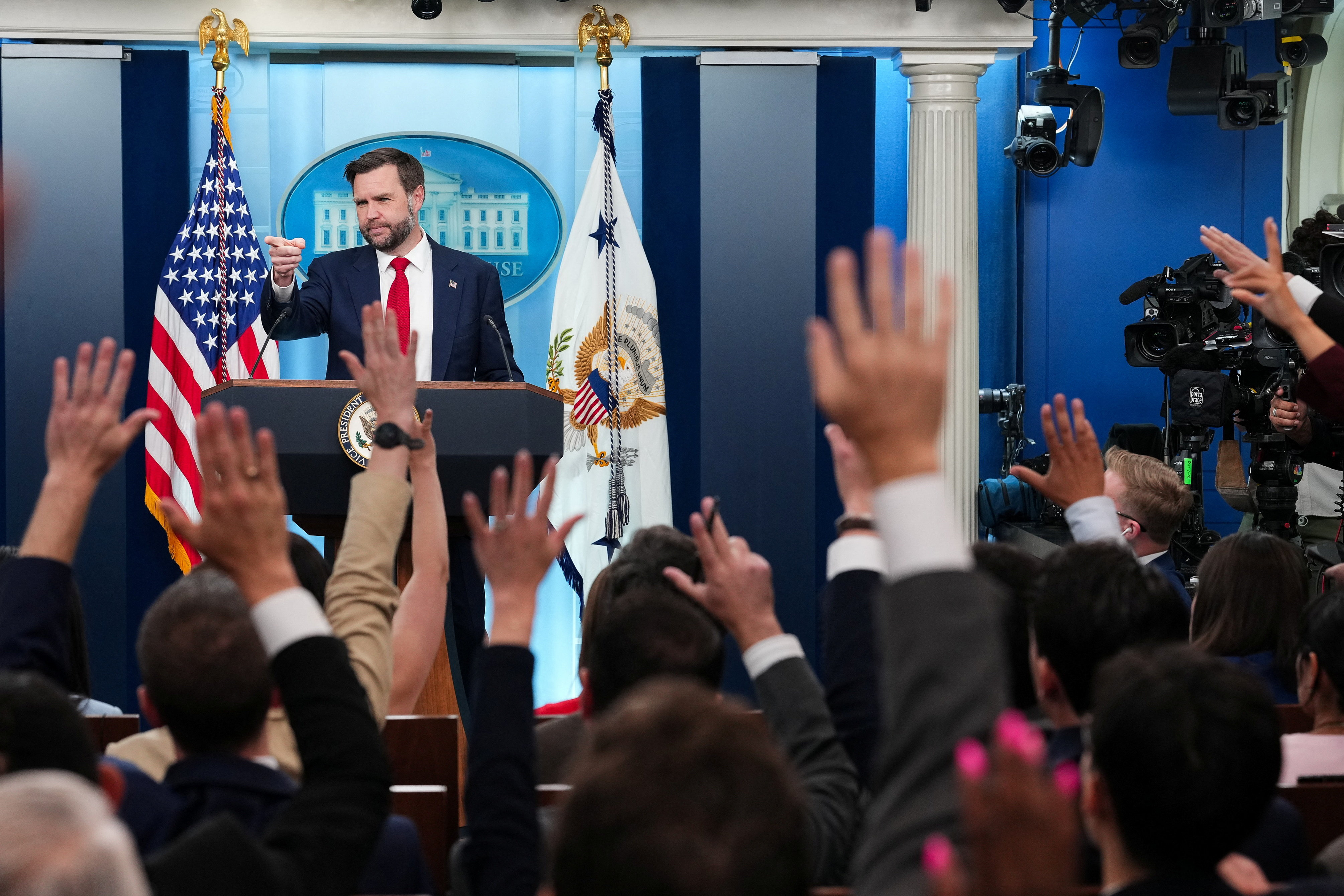
The White House said Vice President JD Vance was delaying a trip to Switzerland, where he'd been set to lead a new round of negotiations with Iran over its nuclear programme – raising questions about what's next for the tentative agreement to end the war .
The team led by Vance had been ready to leave but was postponing, the White House said on Thursday, citing difficult logistics for negotiations. The announcement followed a report from Al-Mayadeen, a pan-Arab satellite channel that is politically allied with the Iranian-backed Lebanese militant group Hezbollah, that Iran was delaying sending its delegation to Switzerland over Israel’s ongoing military campaign in Lebanon.
Hezbollah said on Friday its fighters destroyed three Israeli tanks and that clashes were ongoing, hours after Lebanese state media reported that Israeli strikes in the south killed three people.
The group's fighters targeted "three Merkava tanks with guided missiles, which led to their destruction and setting them on fire".
This was after Israeli forces "consisting of an armoured platoon and an infantry platoon [tried] to infiltrate towards the northern side of the Ali al-Taher hills" – a strategic site overlooking the key town of Nabatieh.
Vance, who was initially personally sceptical of the US going to war with Iran, has increasingly become the administration’s face of the conflict and has been outspoken in defending the deal.
Earlier on Thursday, he took the relatively unusual step of appearing at the White House to defend the initial deal to extend the ceasefire 60 days and allow for more negotiating – arguing that while it offers concessions, Iran first has to comply with US demands.
“As they dial up their good behavior, we can dial up the economic relief,” Vance said. “If they dial down their good behavior, we can turn it off.”
However, the semi-official Tasnim news agency in Tehran said, before Vance's announcement, that Iran's negotiators needed to see signs of implementation of the interim agreement from the US before the next rounds of peace talks could begin, and that there was no confirmation that its delegation would travel to Geneva.
Vance also said, in making his remarks, that he was not sure of the timing of his planned to Switzerland and that talks might not begin this week. The formal postponement now makes that even less clear.
Vance staying put in Washington came after the US said it had lifted its blockade, allowing oil tankers to begin freely moving through the Strait of Hormuz after months of being unable to use the critical channel. Still, the tentative agreement has drawn sharp criticism from some in the US – including a few congressional Republicans – who worry Washington ceded too much to Iran with relief from sanctions and a potential US$300 billion fund to help with rebuilding. (AP & AFP)
Edited by Robert Kemp
Vance delays Swiss trip as wrangle looms on Iran deal
2026-06-19 HKT 12:39
Share this story


