


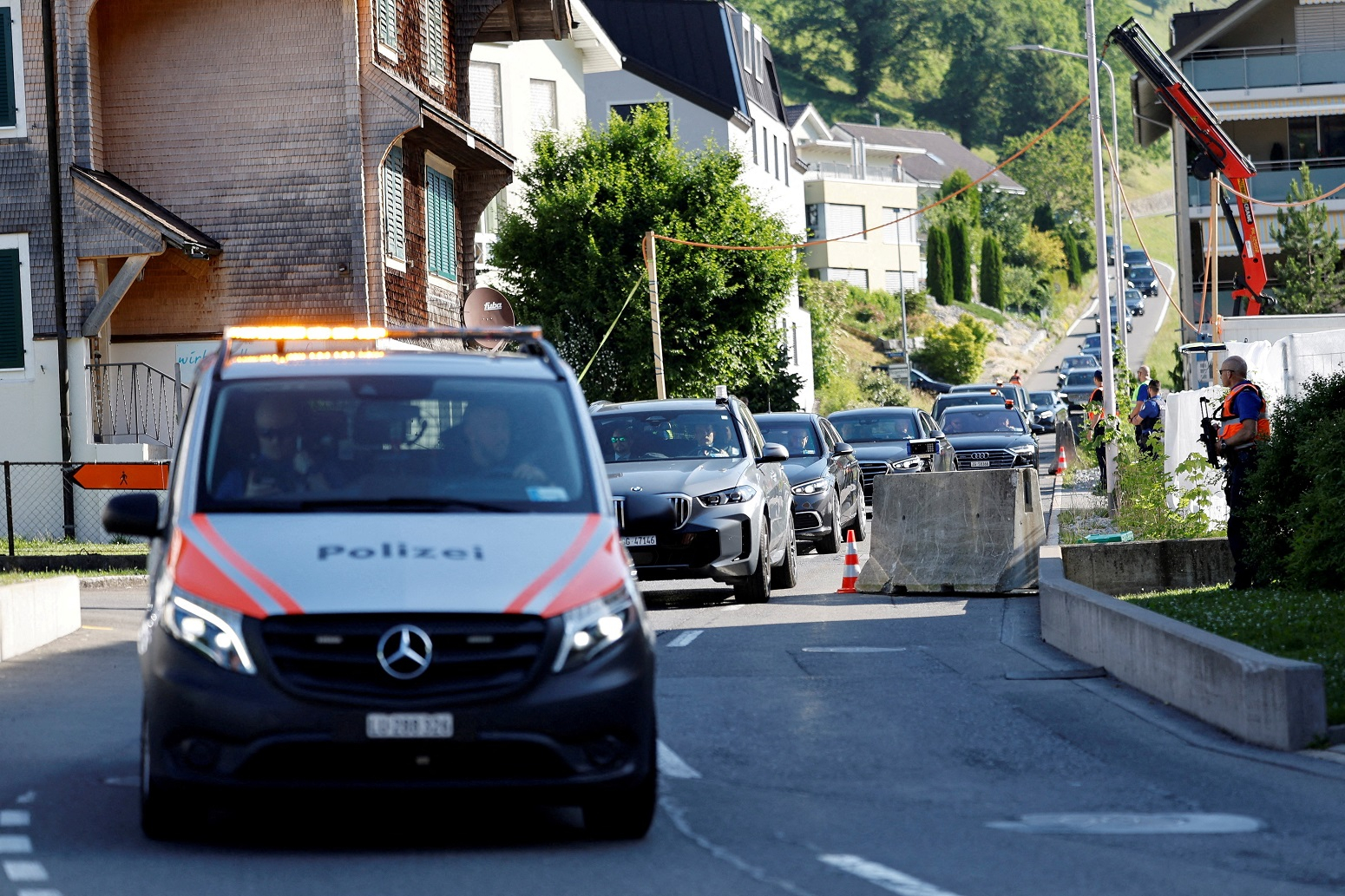
Iran's senior envoys left talks in Switzerland on Monday after a marathon negotiating session with the United States, state media reported, as mediators claimed progress towards a definitive US-Iran deal.
The host nation said conditions were set for technical talks to immediately follow, with the sides at the beginning of a 60-day period to secure a long-term settlement.
The negotiators aim to tackle some of the most intractable issues that have dogged US-Iranian relations for decades, including Tehran's nuclear programme and enriched uranium.
Iranian Foreign Ministry spokesman Esmaeil Baqaei said on Monday that "a very brief discussion took place regarding the nuclear issue, but there was no discussion of details" and that nuclear talks had not begun.
All the while, the war in Lebanon between Israel and Iran's close ally Hezbollah has threatened to collapse the ceasefire, though the country has been relatively calm since Sunday.
Israeli leaders have expressed deep misgivings over the deal signed last week and have insisted that their troops will continue to occupy southern Lebanon and are free to respond to any threats there.
Tehran and Washington, meanwhile, have set up communication lines to end the fighting in Lebanon and to keep the vital Strait of Hormuz open, mediators said, after the first round of talks.
Iran closed the strait, through which much of the world's oil and gas travels in peacetime, early in the war, sending economic shockwaves across the globe.
Before the conflict began, there was free international passage through the strait, but Tehran appears keen to monetise the waterway as part of any deal.
It is also set to get some form of sanctions relief from Washington, with some assets unfrozen.
Mediators Pakistan and Qatar said the negotiators reached agreement on a "roadmap towards reaching a final deal within 60 days", with technical talks to continue for the rest of the week at the Swiss resort of Burgenstock.
"Encouraging progress has been made including the creation of a mechanism for further technical talks," they said, detailing a contact channel set up to "avoid incidents and miscommunication" in the Strait of Hormuz.
A "de-confliction cell", between the parties and the Lebanese authorities has also been agreed to prevent fighting from erupting again, they said.
After the first round of talks in Switzerland ended, mediators Pakistan and Qatar said Tehran and Washington had agreed to set up a "de-confliction cell" with Lebanon "to ensure the adherence of the termination of military operations" there.
Aoun received "a telephone call from US Vice President JD Vance, senior adviser to the US president Jared Kushner, and the Qatari Prime Minister" Sheikh Mohammed bin Abdulrahman Al Thani, a statement from the Lebanese presidency said.
They discussed "the issue of consolidating the ceasefire in Lebanon, stopping the Israeli military escalation, and steps that should be taken in this regard, including the possibility of forming a cell for this purpose", the statement added.
After the talks in Switzerland, Iran's Foreign Minister Abbas Araqchi wrote on X: "1st real test: Lebanon deconfliction cell." (AFP)
Edited by Tony Sabine
Iran envoys return to Tehran as technical talks begin
2026-06-22 HKT 18:38
Share this story


