


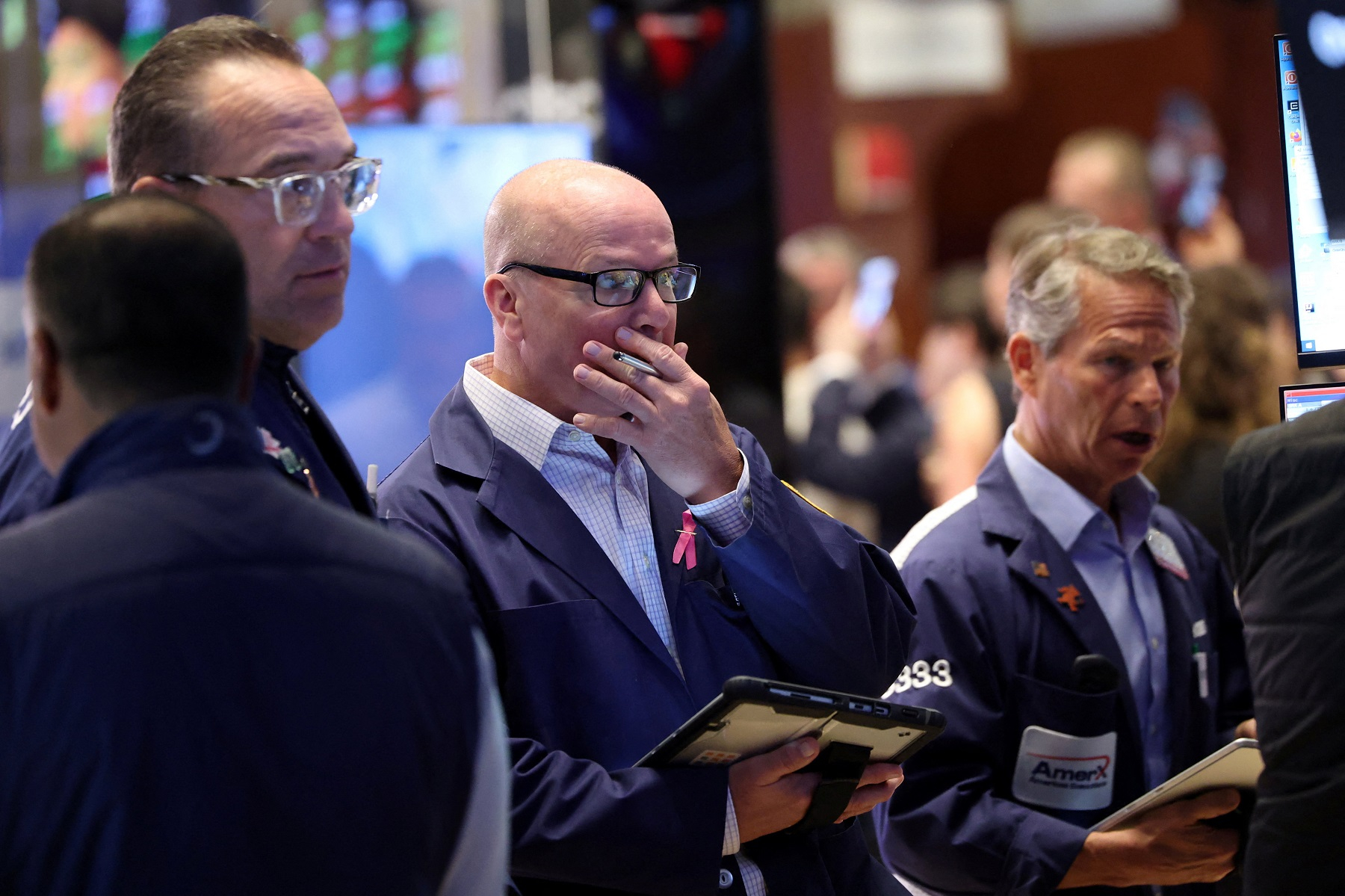
The S&P 500 and the Nasdaq closed down on Monday, dragged by declines in the megacap technology stocks including Alphabet, while investors assessed developments in US-Iran negotiations.
The Dow closed higher, boosted by the healthcare and industrial sectors. SpaceX tumbled 16.4 percent, its biggest single-day drop, and weighed heavily on the Nasdaq Composite. It is still trading above its IPO price of US$135 per share. The Elon Musk-led company launched its first-ever debt offering on Monday and said it had about US$100.8 billion in cash and cash equivalents as of June 19.
Optimism about artificial intelligence has supported Wall Street's recent rally, but analysts noted that more investors have been questioning lofty spending on infrastructure expansion by hyperscalers. Alphabet fell 5 percent while Meta, Amazon and Microsoft fell between 2.3 percent and 4.7 percent.
"This is a very sentiment-driven sector and the group tends to trade together on a day-to-day basis," said Bill Northey, senior investment director at US Bank.
"But as we step back ... some of the strongest fundamentals are within the AI data centre buildout space. That includes both the hyperscalers as well as many of the components that go into that continued buildout."
The Dow Jones Industrial Average rose 148 points, or 0.3 percent, to 51,712, the S&P 500 lost 27 points, or 0.4 percent, to 7,472 and the Nasdaq Composite lost 351 points, or 1.3 percent, to 26,166.
Oil prices fell as Washington and Tehran agreed on a roadmap toward a final deal within 60 days. US and Iranian officials made "great progress" at the first round of their talks in Switzerland that ended early on Monday, mediators said, although tensions persisted over Lebanon and the Strait of Hormuz.
"Energy prices are coming down, which is certainly a catalyst for both the consumer as well as businesses," Northey said. "On the flip side of that, we came out with a very hawkish (Federal Reserve) under new Chair Kevin Warsh, and it led the market to believe that there will be a more prioritized focus on returning to price stability in the near term." (Reuters)
Edited by Cecil Wong
Tech sector weakness drags S&P 500, Nasdaq
2026-06-23 HKT 06:22
Share this story


