


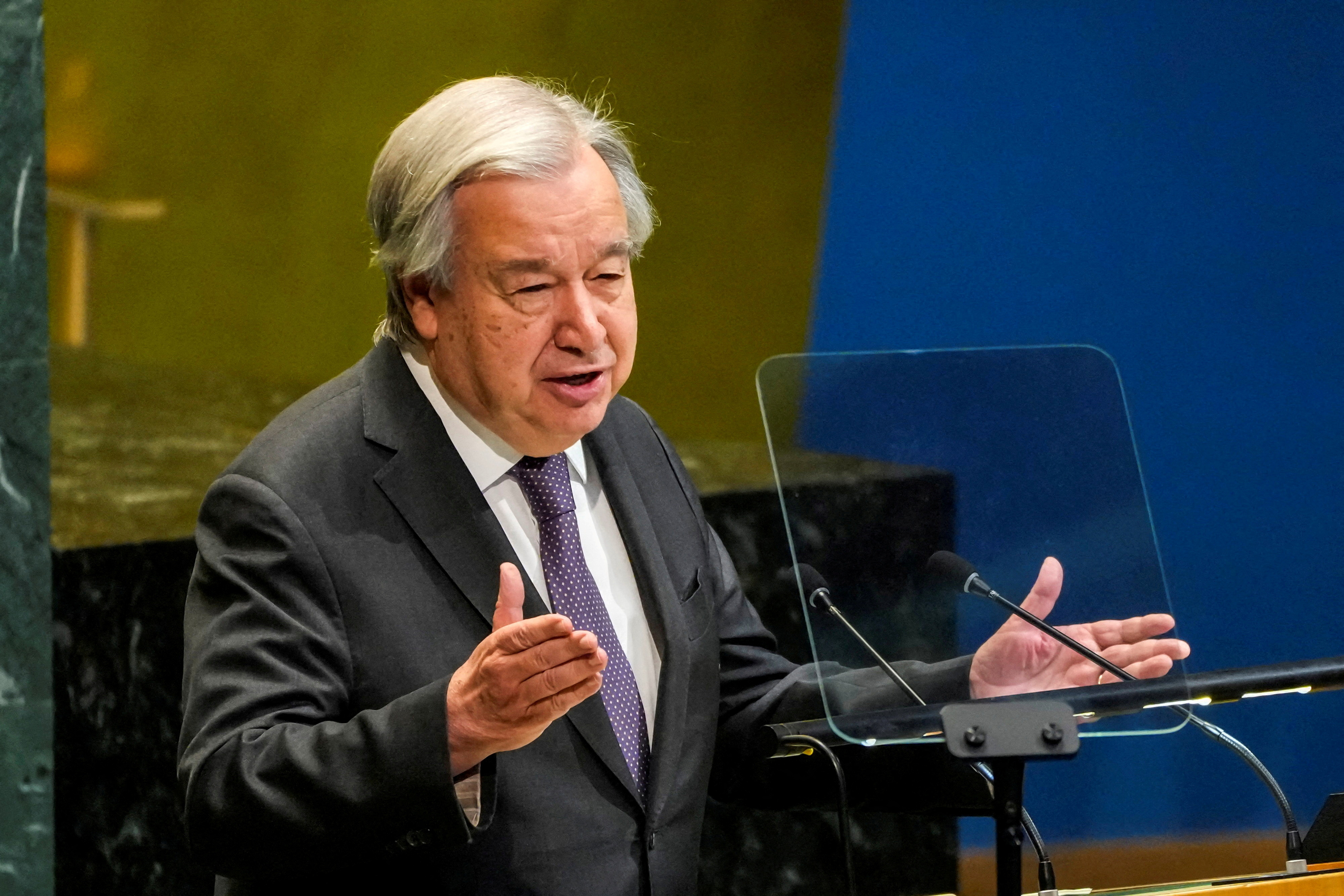
UN chief Antonio Guterres called on Tuesday for faster action on global warming, challenging AI firms to "come clean" about their environmental footprint and warning that fossil fuels were driving climate and energy crises.
As Europe bakes under a second heatwave in as many months, he delivered a speech in London that painted a stark picture of a planet that has just endured its 11 hottest years on record.
"Climate chaos is accelerating before our eyes," Guterres said, while the energy crisis, fuelled by war in the Middle East, is "exposing the folly of a world hooked on hydrocarbons".
"It is clear that our world is facing a Tale of Two Crises," he said.
"On the surface, these crises may seem separate. But they share the same destructive origin: fossil fuels," he said at London Climate Action Week, an annual gathering of policymakers, company executives and NGOs.
Guterres announced new initiatives to combat methane emissions and address concerns over the environmental footprint of energy-hungry data centres.
The growing energy and water use of data centres – vast server warehouses powering AI and other digital services – is putting pressure on local communities and the environment.
A UN study earlier this month found that the facilities consumed more electricity than all but 10 countries in 2025.
By 2030, they could use more power than all but five countries, the study found.
Guterres launched an AI Environmental Transparency Initiative, urging every major artificial intelligence company to measure and publicly disclose their environmental impact as well as commit to powering every data centre with renewable energy by 2030.
"It is time to come clean," Guterres said.
"If AI is to help build a better future, it must be honest about what it costs us now."
Guterres warned that the world was "dangerously" off track in efforts to reach the global goal of achieving net zero emissions by 2050, saying there was a "clean way out" by accelerating the transition to renewable energy.
Countries agreed to pursue efforts to limit warming to 1.5 degrees Celsius above preindustrial levels under the 2015 Paris Agreement, but scientists now say that threshold could be breached by about 2030.
"We must act with far greater urgency to strictly limit the magnitude and duration of any overshoot beyond 1.5C," Guterres said, adding that rising temperatures are pushing the world closer to "catastrophic tipping points". (AFP)
Edited by Tony Sabine
UN chief says world facing a 'Tale of Two Crises'
2026-06-23 HKT 17:37
Share this story


