


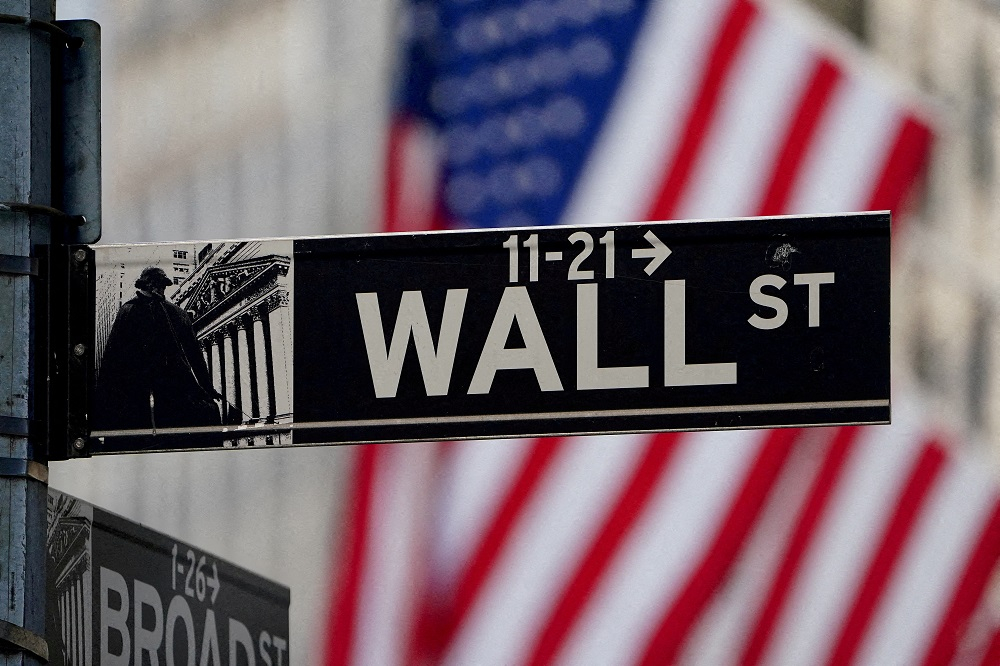
Wall Street's main stock indices overcame an early bout of tech jitters on Friday thanks to buy-the-dip traders, finishing mildly lower, while oil prices fell as shipping traffic resumed through the Strait of Hormuz.
Ships continued to leave the Gulf, some of them braving a route not authorised by Tehran, despite an attack on a freighter that forced the suspension of a UN evacuation, tracking platforms showed.
The United Nations operation had freed 115 vessels and 2,500 seafarers trapped by the dispute over control of the Strait of Hormuz, before the attack struck a ship in the Gulf of Oman, the UN maritime agency said.
International benchmark Brent crude fell 4.3 percent, returning to levels seen before the war on Iran began. Its US equivalent, West Texas Intermediate, dropped 3.7 percent.
Stock markets started the day on the back foot as tech stocks came under renewed pressure after Apple announced price hikes on laptops, tablets and other products, citing spiralling memory and storage costs sparked by the rise of artificial intelligence.
That was followed by Microsoft announcing price hikes for its popular Xbox gaming consoles, also citing an AI-fuelled surge in component costs.
The tech-heavy Nasdaq took the brunt of US losses, closing down 0.24 percent.
"News that OpenAI would delay its IPO until next year, over fears it would not attract enough interest to give it a US$1 trillion listing, has also weighed on the market mood on Friday," said Kathleen Brooks, research director at XTB trading group.
The tech sector, in particular the so-called Magnificent Seven companies that includes AI chip designer NVIDIA, Apple, and Google's parent company Alphabet, has been the main driver of a surge to record highs across several markets globally amid an eye-watering boom in all things AI.
That euphoria may be waning on worries that company valuations look stretched, amid questions about when firms will see a return on the trillions of dollars invested.
"The substantial expenses tied to the modern infrastructure has firms scrambling for cash on their balance sheets, via debt sales and equity offerings, and that's adding risk to the landscape," said Jose Torres of Interactive Brokers.
Forex.com analyst Fawad Razaqzada said that while some degree of profit-taking was probably inevitable after the tech stock rally, "the latest moves also raise broader questions about whether expectations for the sector have simply run too far ahead of commercial reality."
While US stocks retreated early, they were saved by investors swooping in to "buy the dip."
"Dip buyers have come storming in... to steady the ship after the wave of selling of the last 18 hours," said Chris Beauchamp, chief market analyst at IG. (AFP)
Edited by Robert Kemp
US stocks recover from tech tremors as oil prices fall
2026-06-27 HKT 05:45
Share this story


