


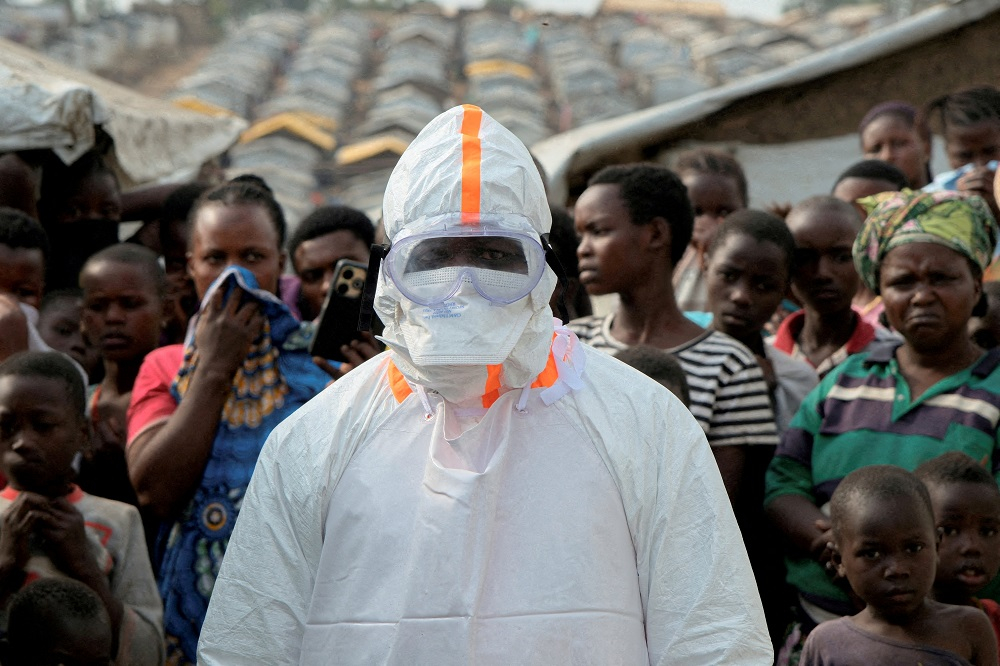
The Ebola outbreak in the Democratic Republic of the Congo is the "fastest growing" ever, African health authorities said on Thursday, as the World Health Organization said it had killed 600 people.
Updated numbers issued by the UN health agency showed there have been 1,759 confirmed cases in DR Congo since the outbreak was declared in mid-May, including 600 confirmed deaths.
"This is the fastest growing Ebola outbreak ever, not only among the previous Bundibugyo outbreaks, but all the different viruses that are causing Ebola," Wessam Mankoula, head of emergency preparedness and response for the Africa Centres for Disease Control and Prevention (Africa CDC) told reporters.
He compared it to the deadliest Ebola outbreak – in 2013-16 in West Africa – when there were 994 cases in the first six weeks, while there have been 1,596 in the current one.
"Unfortunately the virus is still ahead of our response. It's moving faster than deploying the resources to control the situation," Mankoula said.
The current outbreak is caused by the rare Bundibugyo species, that has no approved vaccine or treatment, and is believed to have spread for some time before it was detected.
The WHO's figures for the DRC, which come from the health authorities in the vast country, show that the outbreak there has a case fatality rate of 34 percent.
A total of 285 patients in the DRC have recovered, while 304 suspected cases of the viral haemorrhagic fever are under investigation.
The outbreak in northeastern DRC has hit four provinces but is focused on Ituri province.
The trial of two potential treatments for Bundibugyo began in the DRC on July 2, and is evaluating the effectiveness of the monoclonal antibody MBP134 and the antiviral drug remdesivir, alone and in combination.
Ebola spreads through close contact and infected bodily fluids.
The DRC's 17th Ebola outbreak was declared on May 15 after several deaths in mineral-rich Ituri province, which is plagued by armed groups.
More than 10,000 contacts of infected people are being monitored, at a follow-up rate of 82 percent. The WHO believes a rate of 95 percent is needed to get on top of the outbreak.
Laboratory capacity has increased from 30 tests per day in the capital Kinshasa to more than 2,000 tests daily in decentralised labs in the affected provinces.
The WHO wants US$115 million to strengthen its Ebola response, of which 32 percent has been received to date.
One of the affected provinces is South Kivu, which has seen clashes between the Congolese armed forces and the Rwanda-backed M23 armed group.
UN rights chief Volker Turk on Thursday called for an immediate end to the fighting, deploring its impact on civilians and saying there were growing fears that the increased clashes could force further displacement, including into other countries. (AFP)
Edited by Cecil Wong
Ebola outbreak is 'fastest-growing ever' as 600 die
2026-07-10 HKT 07:39
Share this story


