


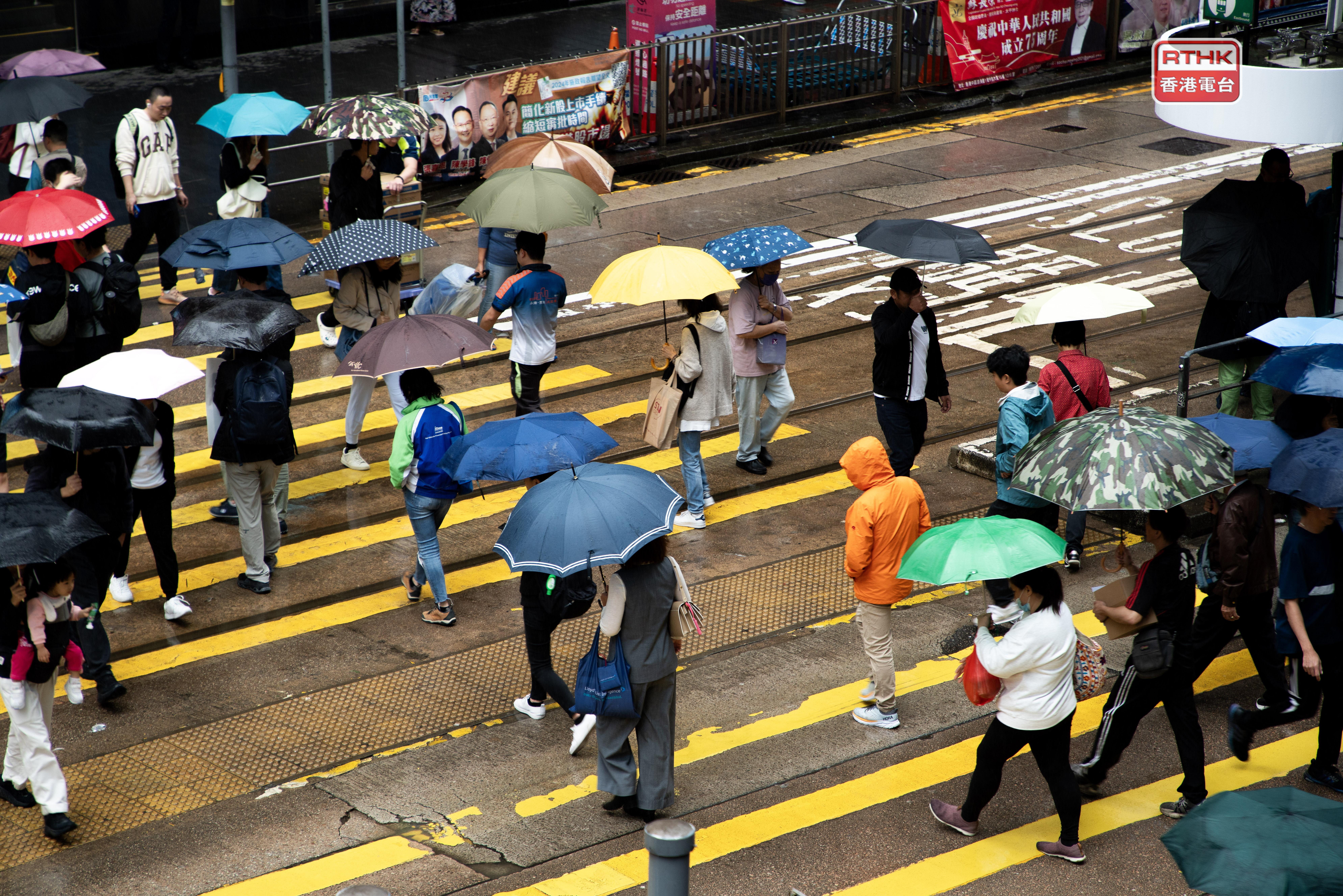
The Observatory on Monday said it would assess the need to issue Standby Signal No. 1 between Monday evening and Tuesday morning – when the picture over whether a low-pressure system over the northern part of the South China Sea would develop into a tropical cyclone becomes clearer.
The city's weather forecaster said in a statement the low-pressure system is gradually edging closer to the coast of Guangdong and will need some time to consolidate.
"Whether it will develop into a tropical depression can only become more certain when it is relatively close to the coast of Guangdong," it said.
"If the area of low pressure develops into a tropical depression, the observatory will assess the need for issuing the Standby Signal No. 1 this evening to tomorrow morning."
It also noted the system would be closest to Hong Kong on Tuesday morning, skirting within 100 kilometres of the territory, according to the current forecast.
Warning the public to be prepared for heavy showers, thunderstorms and squalls on Tuesday, it said assessments will be made as to whether it needs to issue rainstorm warning signals or localised heavy rain advisories as well.
Showers will be heavy at times at first from Wednesday, it said, with strong winds offshore and flooding in some low-lying areas.
The Observatory also urged residents to drink sufficient water given its alert about prolonged heat and to seek medical advice if one felt unwell.
The warnings came as Typhoon Bavi, which spanned some 1,000 kilometres at its widest point at one stage, made landfall between Taizhou and Wenzhou in Zhejiang over the weekend.
The storm, which earlier brought strong winds and heavy rains to the coast, is expected to move northeast into Anhui province on Monday before crossing the Shandong peninsula into the Yellow Sea a day later.
It's expected to gradually transition into an extra-tropical cyclone, but as it's heading north, some areas in the southern part of the nation began to lower their weather warnings.
Edited by Tony Sabine
T1 issuance in the air from tonight to early tomorrow
2026-07-13 HKT 15:42
Share this story


