


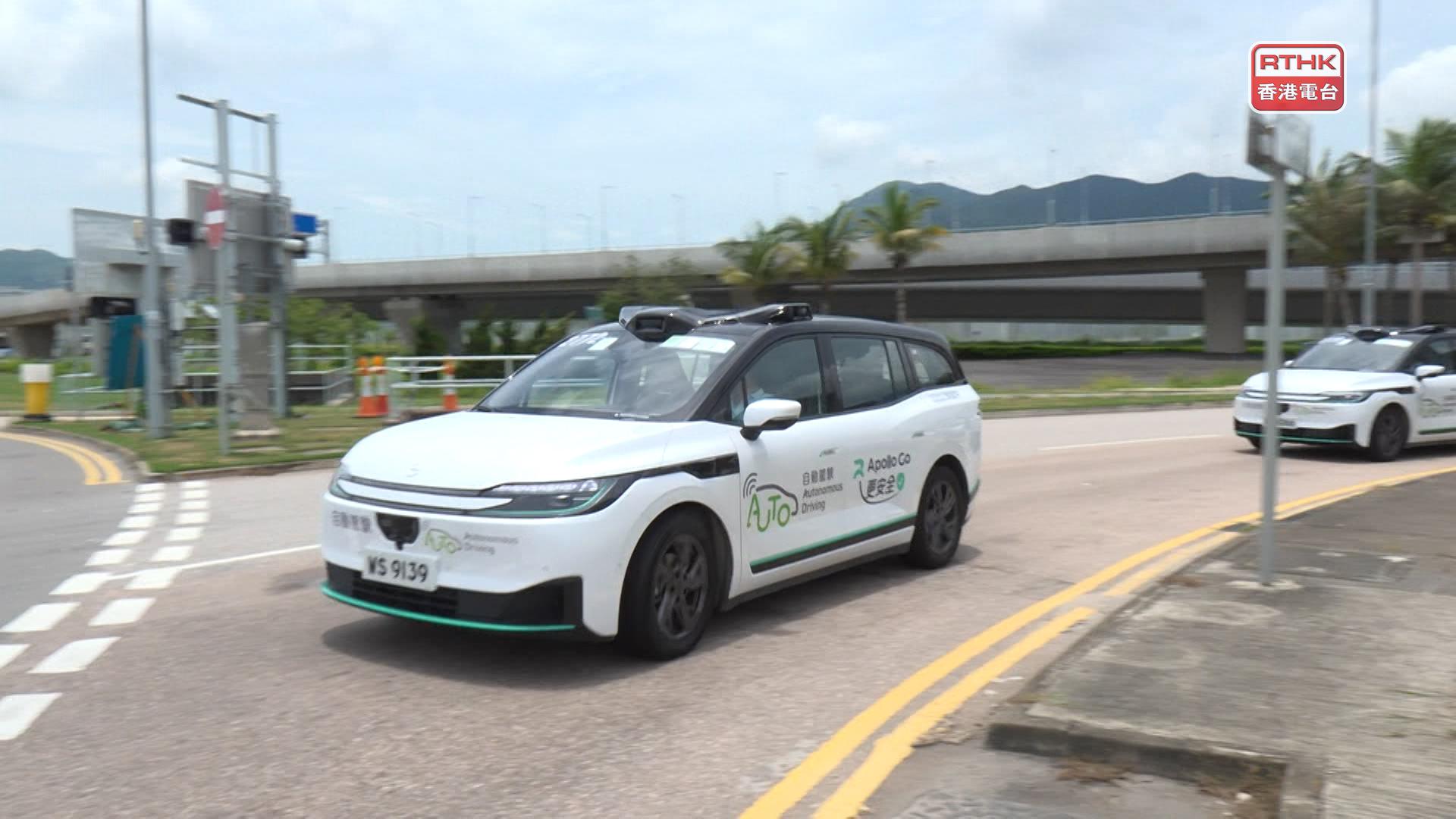
Tests for autonomous driving have been running smoothly, according to the Transport Department, although officials have not given a concrete timetable for when commercial operations for driverless cars will be ready in Hong Kong.
The department has so far issued seven picot licences, allowing 63 driverless vehicles to be tested along certain fixed routes at locations such as Hong Kong International Airport, Kai Tak, and the West Kowloon Cultural District.
In a press briefing on Monday updating the latest progress, Chief Electrical and Mechanical Engineer Derek Chung noted cumulative test mileage in North Lantau had exceeded 240,000 kilometres since trials there began at the end of 2024.
“All tests proceeded smoothly, showing Hong Kong’s steady progress in advancing autonomous driving technologies at a comparable standard in both the mainland and international levels,” he told reporters.
“The Transport Department is also acting as a strict gatekeeper when approving applications for road tests. We carefully examine the reports submitted by the operators of the autonomous vehicles each month. We also deploy staff to carry out on-site inspections and evaluations of the vehicles’ performances to ensure road and public safety.”
The trial routes in North Lantau were expanded in February from the airport to Tung Chung town centre and Sunny Bay, allowing 20 autonomous vehicles to operate altogether.
Chung noted these vehicles are now also allowed to travel on selected road sections at a maximum speed of 50 kilometres per hour, and have shown a stable performance alongside human-driven vehicles.
Asked when commercial operations would be ready, Chung said the Commissioner for Transport is spearheading a cross-departmental working group to advance these efforts.
The North Lantau trials are being conducted by Apollo Go, a subsidiary of mainland tech giant Baidu.
The company is also carrying out tests in Cyberport, Kowloon City and Kwun Tong.
Iris Wong, a senior project and business development manager of Baidu’s Intelligent Driving Group, said the tests were carried out in various complex scenarios to simulate the local driving experience.
“These include roundabouts, areas with high traffic volume, busy intersections, traffic lights and stop and give way junctions. We have completed the development and verification of these features. All tests worked smoothly and did not cause any traffic disruption,” she said.
Asked whether any tests were completed in adverse weather conditions, Wong said all trials were done in accordance to the requirements set out by the Transport Department.
However, she declined to comment on an incident earlier this year, in which more than 100 driverless vehicles operated by the company stopped in the middle of roads in Wuhan, causing traffic disruptions.
Edited by Tony Sabine
No fixed timetable for full driverless launch in HK
2026-07-13 HKT 17:12
Share this story


