


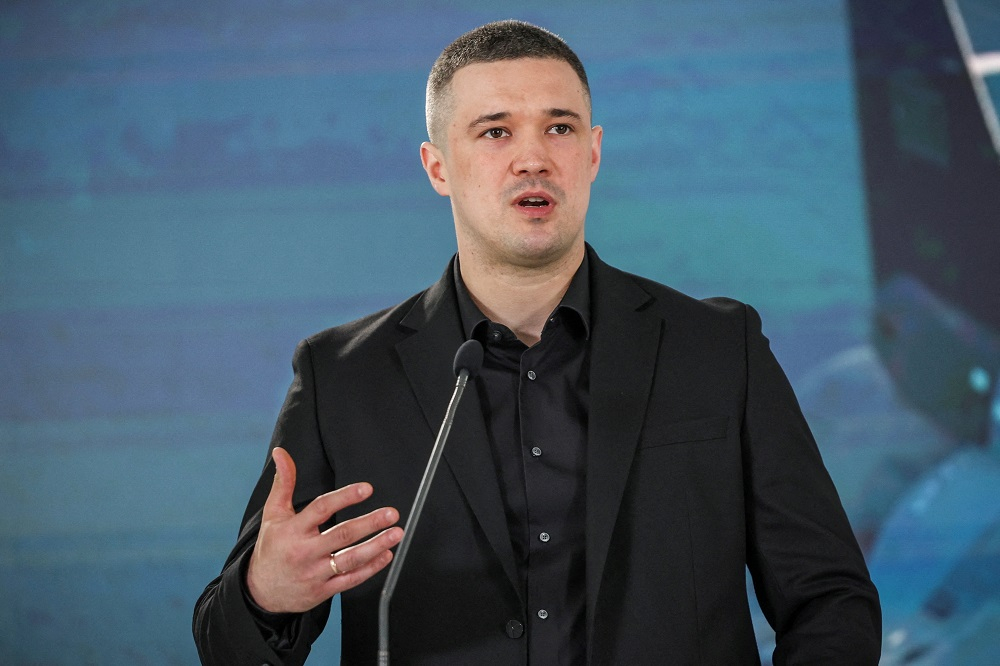
Ukraine's ex-defence minister – whose ousting triggered a week of protests and forced out the country's commander-in-chief – said on Thursday he was rejecting offers by President Volodymyr Zelensky for a new role.
The popular reformist Mykhailo Fedorov said he would only accept a return to his old role, where he could combat "corruption," "root out a culture of lies" and "complete the army's transformation."
Organisers have urged fresh protests calling for Fedorov to be reinstated after Zelensky unexpectedly removed him from office after just six months in the role.
"I will not accept any position other than Minister of Defence," Fedorov said in a statement to reporters.
"No other role carries the actual authority to combat procurement corruption, complete the army's transformation, plan and execute asymmetric operations against the enemy, root out a culture of lies and unaccountability within the system," he added.
Zelensky's firing of Fedorov last week plunged Kyiv into its deepest political crisis since Russia attacked in 2022.
Thousands of young people protested across the country against the decision.
Fedorov, 35, was appointed in January on a mandate to modernise and digitise the Ukrainian military.
He was removed after months of behind-the-scenes clashes with the army command, who he said resisted his calls to change.
After days of protest, Zelensky earlier this week fired his commander-in-chief Oleksandr Syrsky, replacing him with Mykhailo Drapaty, an ally of Fedorov and fellow reformer.
But Zelensky has appointed a new acting defence minister and refused to offer Fedorov his former role.
Fedorov is a long-time Zelensky ally, having worked with him since he entered the presidency in 2019.
He won admirers inside and outside the military for his early embrace of drones – long before it was clear that would come to dominate the four-and-a-half-year war.
He has criticised the army for its Soviet-style approach and not caring enough about human losses and tried to reform a military hit by scandals over corruption, equipment shortages, absenteeism, the treatment of conscripts and an unpopular mobilisation drive. (AFP)
Edited by Cecil Wong
Ukraine's ousted defence minister pushes for return
2026-07-24 HKT 07:14
Share this story


