


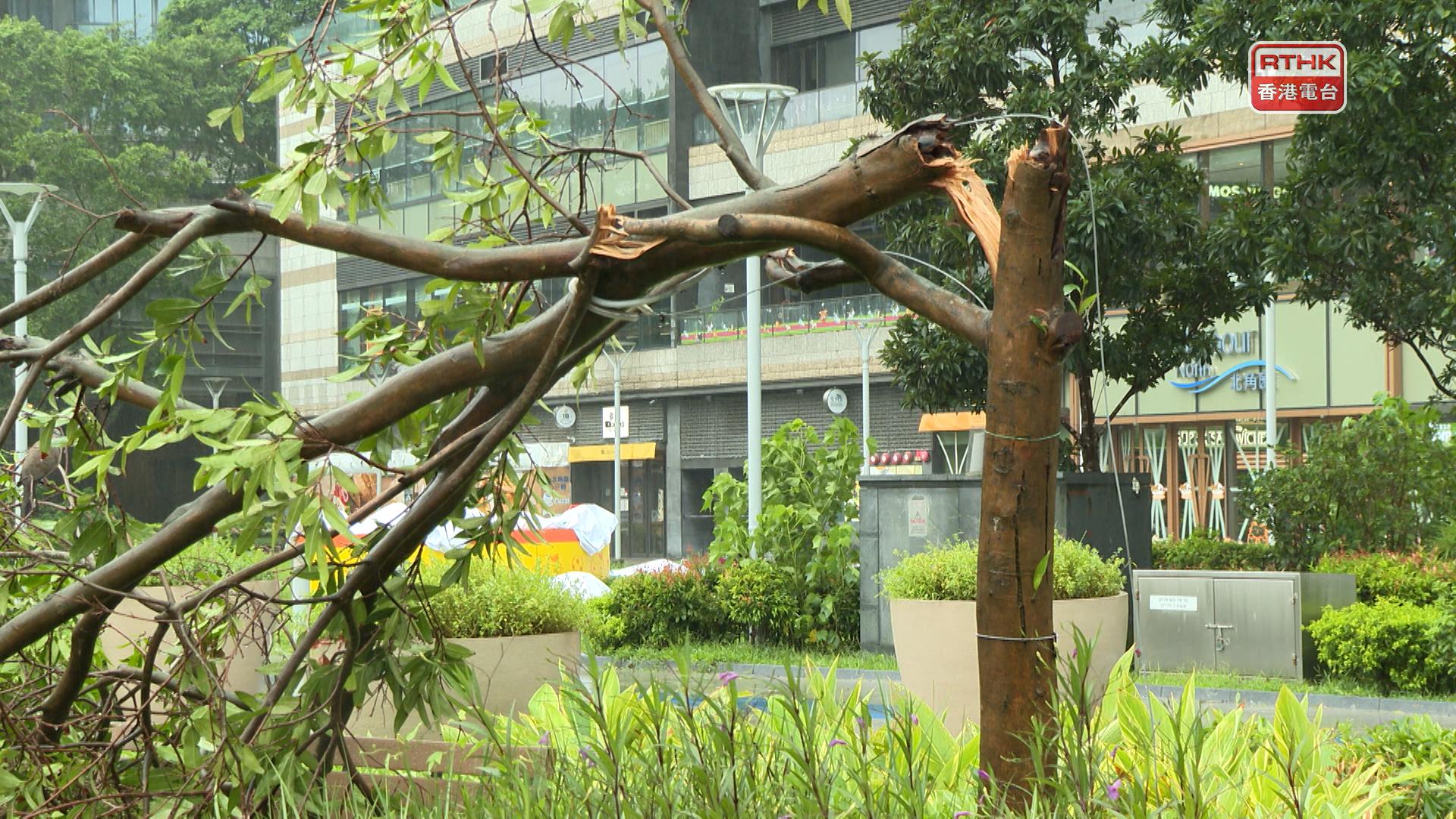
A former assistant director at the Observatory said Severe Typhoon Noul did not affect the city as much as it could have done due to it making landfall to the east of Hong Kong — the first time this happened in 17 years.
The storm prompted the city's weather forecaster to raise the No. 9 typhoon signal for about six hours on Sunday.
It was also the first tropical cyclone this year to pass within 80 kilometres of Hong Kong.
Leung Wing-mo, a spokesman for the Meteorological Society, said wind speeds near Noul's centre were no weaker than Super Typhoon Ragasa last year and Super Typhoon Mangkhut in 2018 — both of which triggered the T10 signal.
Speaking on an RTHK programme on Monday, he said the SAR was less affected this time round due to where the storm made landfall.
"A tropical cyclone is a system that rotates counter-clockwise. When it is on our east side, Hong Kong would be affected by northerly winds. When Noul hit, winds were blowing in from inland, and such air is impacted due to the frictional effect over land, high-rise buildings and mountains, making winds weaker," he said.
"But if the storm makes a western landfall, winds will blow from the southeast, south, or southwest. In that case, it is coming from the ocean, and winds will be much stronger since there is nothing to block it," he added.
The veteran meteorologist also said the impact of the storm would be entirely different if its eye was closer to Hong Kong.
Authorities received reports of more than 330 fallen trees, along with disruptions to flights and the railway system.
The East Rail Line experienced delays on Sunday as services between Tai Po Market and Fanling were suspended for hours because of damage to an overhead cable.
Lawmaker Chan Siu-hung said train services on open rail sections are subject to external conditions, especially under extreme weather.
Chan, who chairs the Legislative Council's subcommittee on matters relating to railways, told the same programme that the MTR Corporation had carried out risk assessments for trees located near the rail line.
"The corporation has a team that is dedicated to trimming trees, so when trees grow too close to railway tracks, the team would trim the trees in hope that it would not grow towards the tracks again," he said.
"When safety is guaranteed during and after the storm, the company has emergency response plans in place, as well as staff standby at all times, to clear the tracks and repair overhead cables," he added.
Chan also urged the railway giant to adopt new technology that could enhance the company's ability to respond to extreme weather.
Edited by Tony Sabine
'Noul brought fewer impacts due to eastern landfall'
2026-07-27 HKT 11:58
Share this story


