


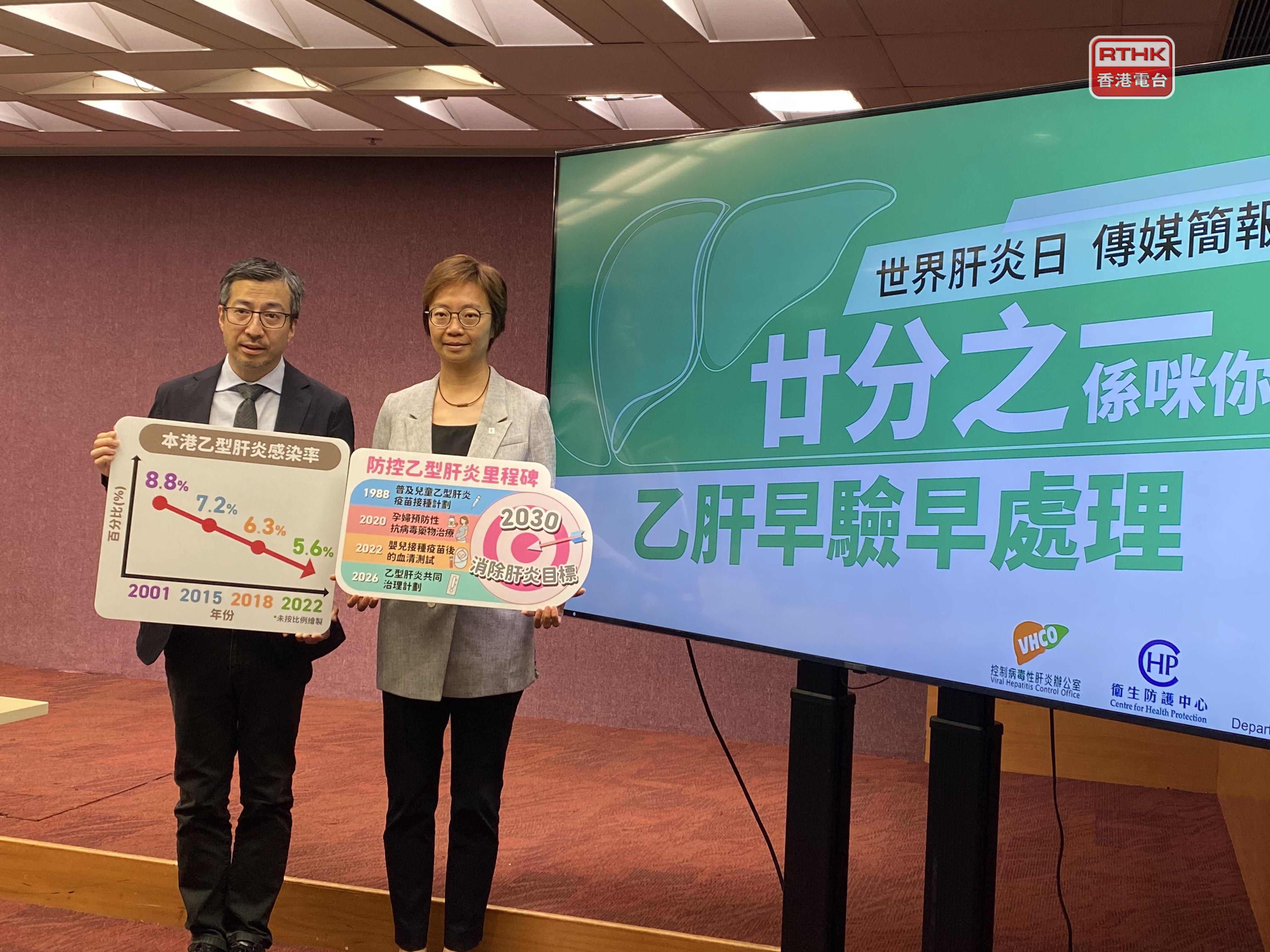
About 33,000 people have participated in the SAR’s Hepatitis B co-care programme, and the Department of Health is calling on Tuesday, World Hepatitis Day, for high-risk individuals to be screened for the disease early to avoid falling prey to more severe conditions and diseases.
The scheme was launched in February under the Primary Healthcare Commission, targeting those born before 1988, when the universal childhood hepatitis B vaccination programme was rolled out.
The ongoing vaccination programme has brought infection rates down to one percent among the younger generation.
Those who are family members and sexual partners of hepatitis B patients, are also eligible to undergo risk assessment and treatment for the disease under the commission.
Up until 2022, around 5.6 percent of the SAR’s population were estimated to suffer from chronic hepatitis.
About 80 percent of primary liver cancer cases were linked to chronic hepatitis.
But around 40 percent of patients were not aware of their chronic hepatitis B conditions due to the disease being asymptomatic.
The department called the illness a time bomb, as that meant liver cirrhosis or cancer could develop in these patients if they failed to get the appropriate treatment.
“Once patients develop symptoms, it will depend on the complications they develop,” said James Fung, who specialises in gastroenterology and hepatology.
“There are no specific symptoms [to look out for], and its all very vague, but by the time the symptoms develop it's at the late stage of liver disease.”
But the department stressed that the illness is controllable as medications have proven highly effective in suppressing virus replication to reduce inflammation in the liver as well as reversing early-stage liver fibrosis and cirrhosis.
It also reminded patients to attend medical appointments periodically to follow up on their condition despite being on long-term medication.
Liver cancer remains the third most lethal cancer in the SAR, claiming around 1,400 lives each year.
Edited by Aaron Tam
Wider net cast to catch Hepatitis B infections
2026-07-28 HKT 11:46
Share this story


