


Mainland stocks slipped to a one-week low on Tuesday, joining a broader tech selloff as investors reassessed lofty valuations amid concerns over rising chip production and heavy spending on artificial intelligence infrastructure.
In Hong Kong, the benchmark Hang Seng Index rose 103 points, or 0.4 percent, to 25,310 on turnover of HK$250.63 billion.
The tech index was 28 points, or 0.6 percent, higher at 4,730 while the China enterprises index gained 70 points, or 0.8 percent, to 8,436.
Hong Kong stocks were largely unscathed as money continued to rotate into cheaper valued sectors.
Up north, the Shanghai Composite Index closed down 44 points, or 1.16 percent, at 3,813 on turnover of 949.68 billion yuan while the blue-chip CSI300 index fell 2.8 percent to its lowest since July 20.
The Shenzhen Component Index slumped 639 points, or 4.52 percent, to close at 13,509 on turnover that was close to 1.08 trillion yuan while the ChiNext Index plunged 263 points or 7.35 percent, to close at 3,327 on turnover of 520 billion yuan.
The tech-heavy Star 50 Index lost 6.3 percent while the CSI AI Index slid 7.1 percent to a three-month low, and the semiconductor index fell 6.5 percent.
Shares in memory chipmaker CXMT lost four percent after surging in a Monday debut to become China's most valuable-listed company.
Other chip heavyweights also declined, with Gigadevice hitting its 10 percent daily limit and Cambricon falling 9.1 percent.
Uncertainty remains high at home and abroad as investors await US policy decisions, big tech earnings and signals from the Politburo meeting due this week, analysts at China Fortune Securities wrote in a note.
"A-shares are likely to remain volatile in the near term until there is more clarity on these key issues and a market bottom emerges," they said.
Chip stocks in South Korea and Japan took a heavier snub as investors questioned lofty valuations on concerns over AI infrastructure financing and intensifying competition from China.
Beijing has begun manufacturing domestically developed immersion deep ultraviolet lithography machines, US technology website The Information reported on Monday, in a major push to break dominance by Dutch supplier ASML and towards tech self-efficiency.
"China will very soon be supplying the world with high-quality memory chips at lower prices," Fan Liwen, a portfolio manager at Shenzhen New Thinking Investment Management said, adding that this has been adding pressure to Korean and US chip stocks.
Domestic Chinese chipmakers will likely benefit from a cost and stability perspective on existing production, said Jing Jie Yu, equity analyst at Morningstar.
The Kospi index closed down 732 points, or 10.84 percent, at 6,023, marking its biggest one-day decline since the early days of the US-Iran conflict in March.
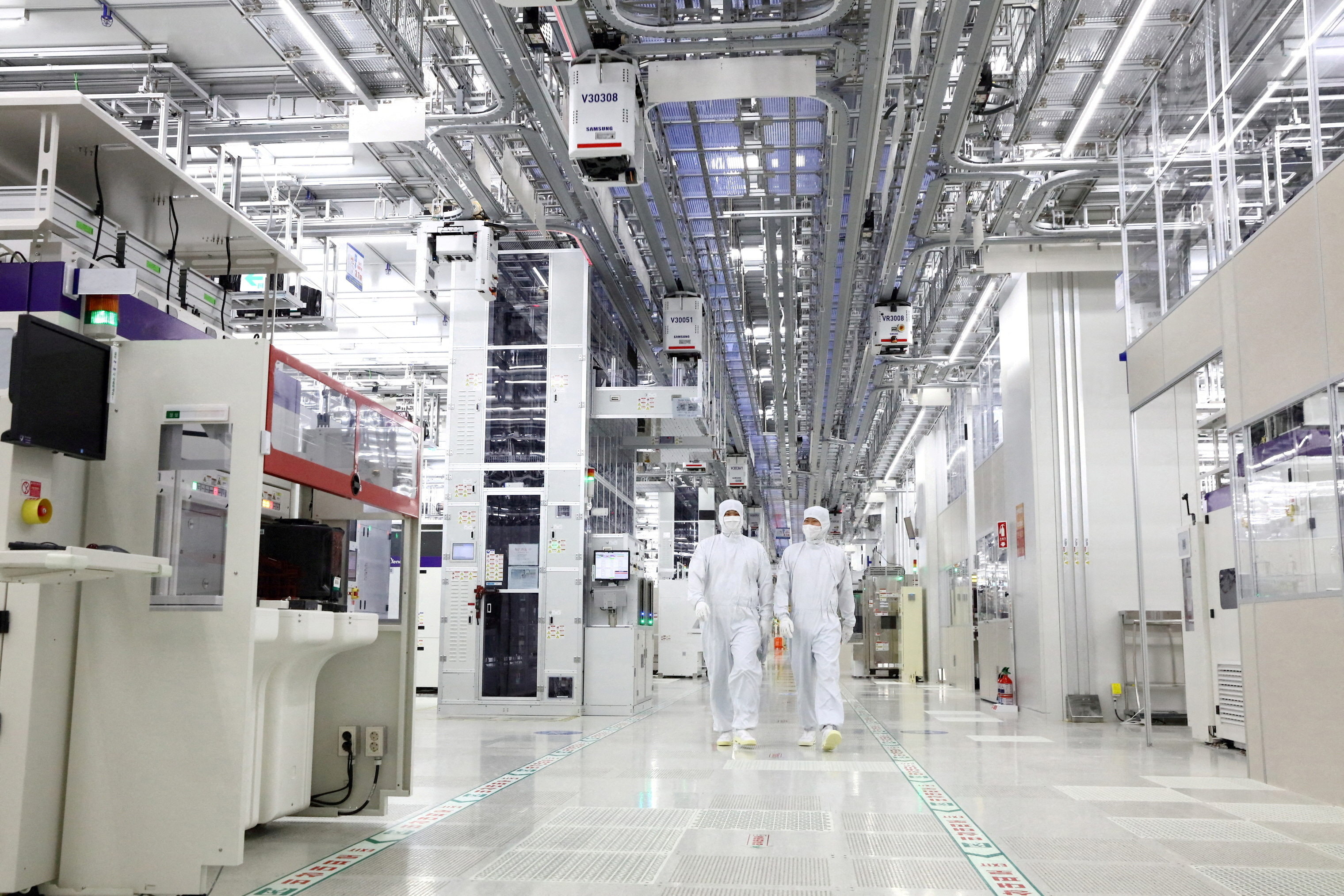
Shares in memory-chip giant Samsung Electronics closed 13.4 percent lower, notching their worst one-day fall in almost two decades, while SK Hynix dropped 14.7 percent, amplifying the Seoul market rout.
Together, the two companies account for nearly half of the Kospi benchmark.
In Tokyo, the Nikkei dived 2,566 points, or 3.95 percent, to 62,364, its lowest close since May 21, while the broader Topix fell 102 points, or 2.52 percent, to 3,963. (Reuters/Xinhua)
Edited by Tony Sabine
HK odd one out amid regional rout over AI, chip fears
2026-07-28 HKT 17:06
Share this story


