


Apple on Thursday reported sales and profits that beat Wall Street expectations, fuelled by its customers snapping up iPhones and MacBooks amid price increases across the consumer electronics sector.
But the tech giant forecast sales for the current quarter ending in September would grow more slowly than Wall Street targeted as the iPhone maker struggled to get the parts it needed to deliver products, and shares fell 6 percent in after-hours trade.
Apple Chief Financial Officer Kevan Parekh told analysts and investors on a call that the company expects revenue growth of 9 to 11 percent in the quarter compared to the year before. That’s less than the 12 percent rise predicted by Wall Street, according to LSEG data.
He forecast iPhone revenue would grow at a mid-teens rate, compared with Wall Street's target of 17.6 percent, according to LSEG, and that gross profit margins would be between 47 and 48 percent.
"We're seeing some very significant (supply) constraints currently with limited flexibility in the supply chain to remedy it," Chief Executive Tim Cook said during the conference call, adding that Apple was "evaluating all options" for alternative suppliers of components.
In an interview with Reuters, Cook said that the main supply constraint that Apple had during the just-ended fiscal third quarter was an industry shortage of advanced chipmaking technology used to produce the Apple silicon chips at the heart of its devices.
Cook said that was particularly true for the company's Mac lineup, whose sales grew 29 percent on the strength of the entry-level MacBook Neo and the high-end MacBook Pro despite price increases for those models.
"If you look at the root causes behind those, it's that we're having an incredibly strong product cycle beyond our expectations, and the (advanced chipmaking) supply chain just fundamentally has less flexibility in it to meet the high levels of demand," Cook told Reuters.
Apple is also grappling with a supply chain strained by hundreds of billions of dollars of spending to build out AI data centres, leading to a thinly concealed conflict with longtime memory supplier Micron.
Cook has previously noted shortages of both memory chips and the main processor for iPhones supplied by Taiwan Semiconductor Manufacturing Co.
Expectations were high for Apple, which recently regained the title of world's most valuable company. Its shares have risen more than 22 percent this year, retaking the top spot from AI chip leader Nvidia.
Apple said sales for its fiscal third quarter ended June 27 were up 16.4 percent to US$109.42 billion, compared with analyst estimates of a 15.5 percent rise to US$108.65 billion, according to LSEG data, and Apple's own forecast of 14 to 17 percent sales growth.
Apple's third-quarter profits were US$2.02 per share, with 11 cents attributable to tariff refunds from the US government.
Excluding the tariff refunds, Apple's profits were still above Wall Street estimates of US$1.89 per share.
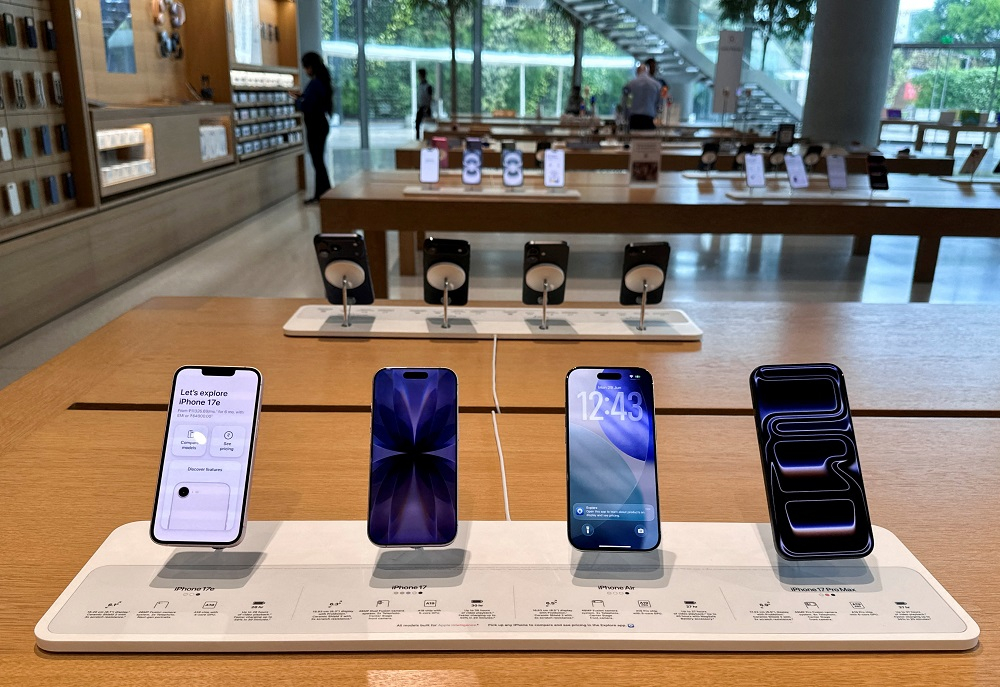
Driving Apple's results was a 21.7 percent increase in iPhone sales to US$54.25 billion, above analysts' estimates of US$53.86 billion, according to LSEG data.
Those iPhone sales were Apple's best-ever for a third quarter, when phone sales typically begin to slow as customers anticipate new models during the fall. But this year, Apple customers are racing to buy iPhones after a global crunch in memory chip supplies prompted Apple to raise prices of Macs and iPads.
Apple has so far spared its signature product, with Wall Street analysts increasingly expecting that Apple will hike iPhone prices around its annual fall launch event in September.
Bob O'Donnell, chief analyst at TECHnalysis Research, said that investors may have concerns that the third quarter reflected a buying flurry that may not carry through to the current quarter or beyond.
"I do think it’s possible people are going to continue to buy the existing phones, because of the price increases," O'Donnell said. "The big question is, what’s going to happen on Macs in this quarter, when the new prices are fully there?"
Apple's second-biggest area for revenue, its services business, including its App Store, iCloud and content businesses, rose 12.1 percent to US$30.74 billion, missing estimates of US$31.22 billion, according to LSEG data. (Reuters)
Edited by Cecil Wong
Apple beats expectations on strong iPhone sales
2026-07-31 HKT 06:56
Share this story


