


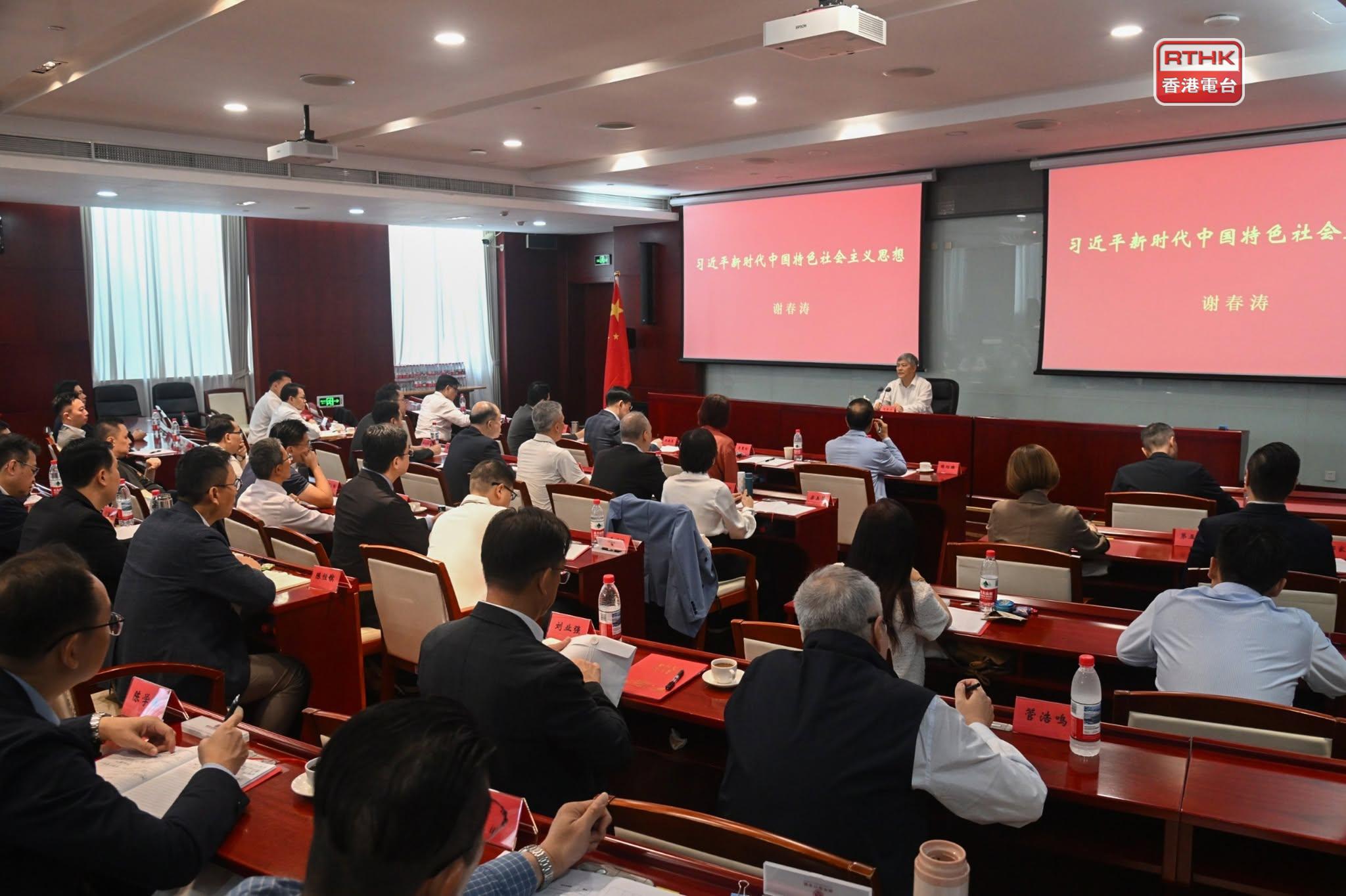
Lawmakers pledged to embed a "people-first" philosophy in upcoming consultations and legislative work, following a week-long study tour in Beijing last month.
Speaking on a Commercial Radio programme on Saturday, Ronick Chan, chairman of the Legco House Committee, stressed that public welfare must remain at the core of all policy decisions.
He said that when crafting major policies, legislators are obligated to first assess the genuine needs of ordinary citizens.
As a veteran banker, Chan pointed to several concrete areas for improvement in the financial services arena, including stepping up anti-fraud initiatives, strengthening cybersecurity education and simplifying access to financial products for underserved groups.
He also urged officials to explore whether everyday payment tools - such as the Faster Payment System and cross-border transfer platforms - could be continuously upgraded to better serve users.
"We should take what we've learned and make a fundamental shift in our mindset," Chan said.
"That means we should regularly make recommendations - whether in the annual Policy Address or the consultation for the upcoming five-year plan - we need to introduce more services in our professional fields that people can actually benefit from."
Chan expressed confidence that this approach would ultimately fulfill the true purpose of the study tour.
DAB lawmaker Holden Chow anchored his own "people-first" interpretation around the Northern Metropolis University Town, envisioning it as a launchpad to attract more world-class institutions to partner with Hong Kong varsities and set up permanent bases here.
"What does this help with? It truly brings global talent to Hong Kong to study," he said.
"It can ultimately help our country achieve [greater academic] exchanges. I think this is very important."
For Chan Hoi-yan, her focus is on technology adoption, with the lawmaker urging the government to draw inspiration from mainland developments and deploy more tech-enabled solutions for public welfare.
Her suggestions included introducing AI-driven patient monitoring systems in hospitals, employing home robotics to support elderly care, and using artificial intelligence for routine inspections of public infrastructure.
Edited by Azam Khan
Lawmakers vow people-first approach after Beijing trip
2026-08-01 HKT 21:03
Share this story


