


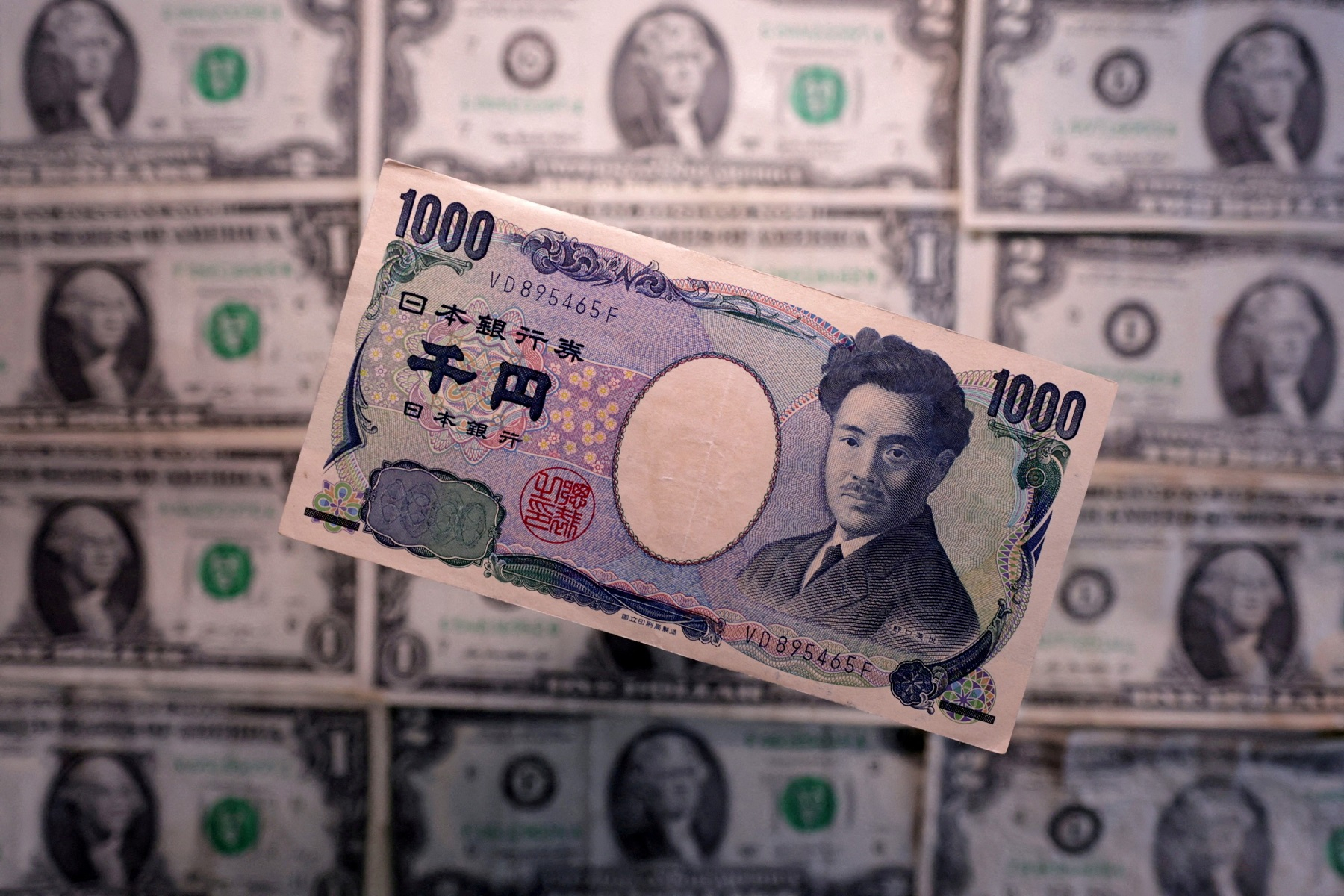
US President Donald Trump on Sunday confirmed that the United States had intervened to support the Japanese yen, calling the move a "signal of friendship" that was also "good for the world economy."
Asked aboard Air Force One why the US was moving to support Japan's currency, Trump said: "Because we have a good relationship with Japan."
The US would see "financial benefit" from the move, Trump insisted, but "it was really more than anything else, it was a signal of friendship."
He was speaking ahead of an expected announcement by Japan on Monday that it had taken joint action with the US to halt the yen's slide to 40-year lows.
Two Japanese government officials told Reuters over the weekend that Japanese Finance Minister Satsuki Katayama will announce on Monday morning that Tokyo and Washington acted together in the currency market last week to arrest what they consider excessive yen declines.
Her expected remarks to reporters follow what market sources say were rounds of yen purchases by the Japanese and US authorities, the first joint intervention in 15 years, seeking to support the battered currency.
Japan has been struggling to curb a relentless drop in the yen that pushes up import prices and stokes broader inflation, hitting households' wallets and Prime Minister Sanae Takaichi's public approval ratings.
Japan may have sold as much as US$58.97 billion to buy yen when it intervened in New York markets on Thursday, Bank of Japan data indicated, followed by another suspected foray into the market on Friday.
On Friday, the US Treasury told a number of banks it too might intervene in the yen market, a source told Reuters, while Treasury Secretary Scott Bessent – who had said the yen "seems very undervalued" – had a handwritten "To Do" list at a cabinet meeting that said, "Buy Japanese Yen (JPY) $5-10 bil", a Reuters photo showed.
In line with Bessent's repeated calls for higher Japanese interest rates, the Bank of Japan on Friday offered its most explicit signal to date of an early rate hike, even as it kept monetary policy steady.
In a sign of broader policy coordination, South Korea stepped in to buy its won currency on Thursday.
The US dollar ended Friday trading around 157.60 yen, having retreated from near 164 yen, the highest since 1986, which it hit earlier in the week.
Japan intervened in April and May, buying yen, causing only a brief rebound. The BOJ's June rate hike to a 31-year high of 1 percent also gave the struggling currency little lasting boost. (Agencies)
Edited by Cecil Wong
US support for yen a "signal of friendship": Trump
2026-08-03 HKT 06:59
Share this story


