


The United States was hopeful that a deal to reopen the Strait of Hormuz would be done "today or tomorrow", a top official said on Tuesday, sending oil prices tumbling on optimism for increased shipments in the vital waterway.
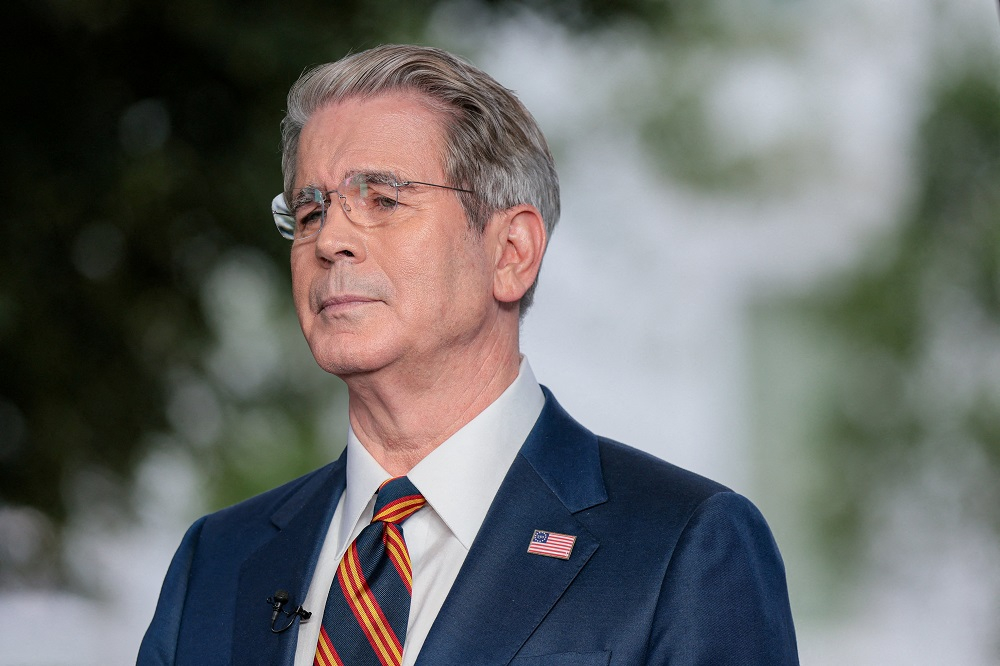
US Treasury Secretary Scott Bessent told broadcaster CNBC "there is a chance we may have a deal" in the coming hours, echoing remarks from US President Donald Trump the day before.
Speaking from the White House on Monday, Trump kept up his now familiar combination of optimism for diplomacy and bellicose threats, warning that this was Iran's "last chance before decapitation."
Tehran and Washington have been at war since February 28, when the US and Israel launched surprise attacks on Iran. Despite a ceasefire and a preliminary deal in the months since, diplomacy has failed to end the conflict.
Underlining the volatile situation, one crew member was listed missing on Tuesday on a merchant ship hit by a projectile in Hormuz, while an Indian ship in the Red Sea sank following an unattributed attack.
The Strait of Hormuz, a key conduit for global oil and gas supplies, has been the spark for repeated returns to fighting.
Iran wants to maintain control over and charge tolls in the strait, powers it did not exercise before the war and which the US fiercely opposes.
In what has become a regular pattern, Trump last week threatened to hit Iran "very hard", potentially with attacks against civilian infrastructure, only to pull back, hinting a deal was near. But Iran's foreign ministry denied negotiations with Washington, even as Trump insisted they were happening.
Secretary of State Marco Rubio said on Tuesday that the United States was involved in negotiations between Oman and Iran on increasing traffic through the Strait of Hormuz.
Oil prices plummeted on the rekindled hopes of reopening the strait, with benchmark Brent North Sea Crude prices falling over six percent to below US$79 per barrel.
Qatar, which has been mediating negotiations, said that diplomatic efforts were ongoing but that no direct Iran-US talks were planned. Its leader, Sheikh Tamim bin Hamad Al-Thani, spoke with Trump by phone on Tuesday, with Doha saying they discussed "efforts to de-escalate tensions".
Trump had previously said he expected to know by Tuesday how the talks were going, "one way or the other", but insisted "it's not very complex".
Early on Tuesday, Britain's maritime security agency UKMTO said an unnamed cargo vessel had been struck by an "unknown projectile" in the Strait of Hormuz off the coast of Oman.
Iran continues to impose an effective blockade on the strait and insists ships coordinate crossings with it.
The disruptions in Hormuz have only placed greater importance on shipping lanes through the Red Sea, where Iran-backed Houthi rebels in Yemen have declared a maritime blockade on Saudi Arabia.
The Saudi Red Sea port of Yanbu has enabled it to keep up shipments to global markets by circumventing Hormuz entirely. But since the Houthis announced their blockade, they have claimed attacks on multiple ships they say are in violation.
On Tuesday, the Indian ship MSV Faize Noore Oliya sank in the Red Sea off Yemen following an unattributed attack, with all of its crew rescued. The Red Sea is a gateway to the Suez Canal, and a previous campaign of Houthi attacks on commercial vessels during the Gaza war forced shippers to instead take lengthy detours around the southern tip of Africa. (AFP)
Edited by Cecil Wong
US hoping for Hormuz deal 'today or tomorrow'
2026-08-05 HKT 07:25
Share this story


Jamie Clarke reports

