


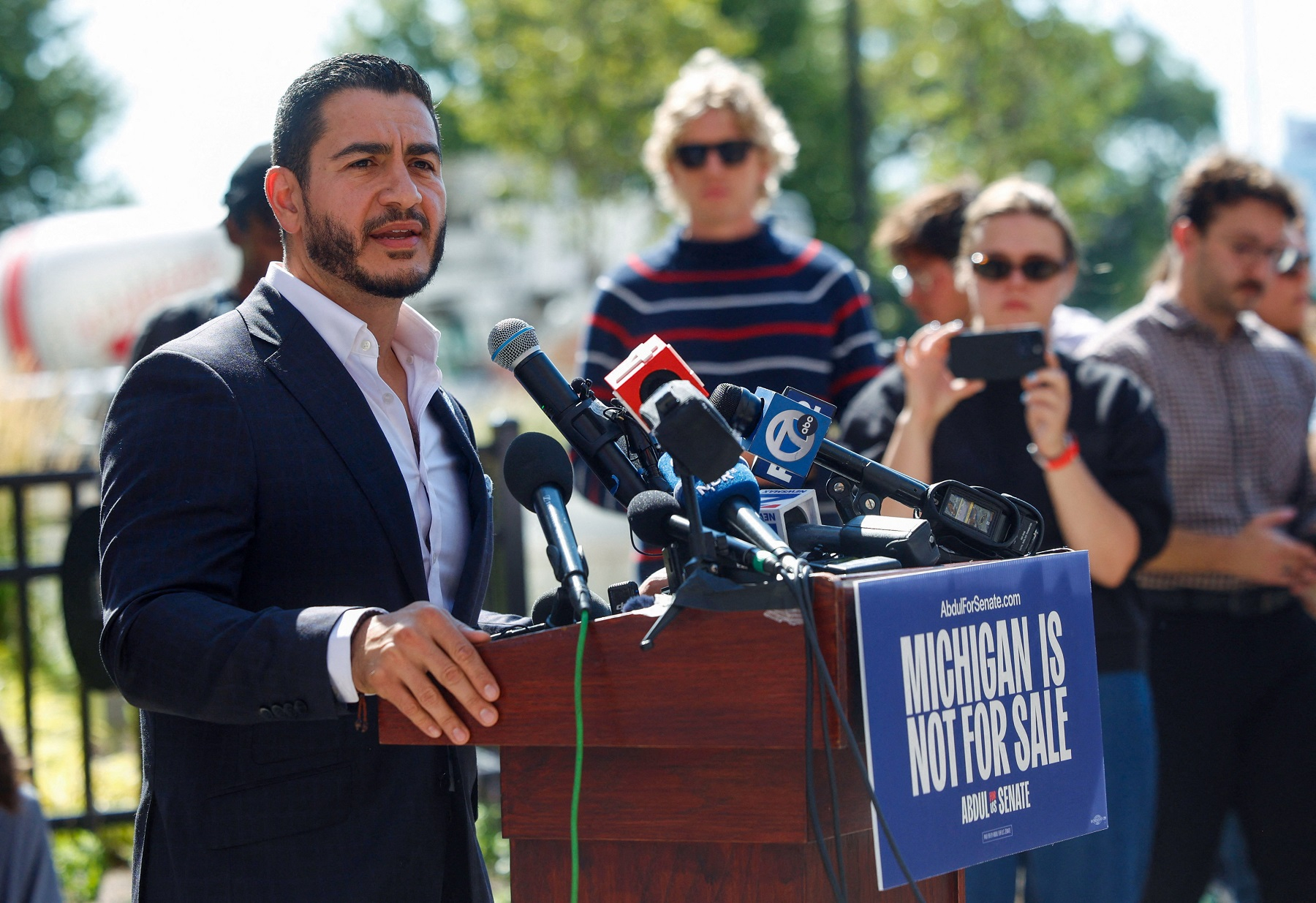
Left-wing candidate Abdul El-Sayed called for Democratic unity on Wednesday after narrowly defeating the party establishment's pick in Michigan and claiming the nomination for one of November's most important US Senate races.
"The things that unite us are so much bigger than the things that divide us," El-Sayed told supporters, promising to build a movement broad enough to include voters who had backed either Democrat Kamala Harris or Republican Donald Trump in 2024.
"You know, in the words of Muhammad Ali, we shook up the world," he said of his win over four-term congresswoman Haley Stevens after a bitter and expensive primary that became a national test of the Democratic Party's left wing.
The former public health official overcame tens of millions of dollars in outside spending supporting Stevens, including a record intervention by groups aligned with the influential pro-Israel lobby AIPAC.
He will face former Republican congressman Mike Rogers in November for a seat considered essential to Democratic hopes of regaining the Senate, where the party must defend Michigan while gaining four Republican-held seats.
The mid-western state backed Trump in the 2024 presidential election, even as Democrat Elissa Slotkin narrowly defeated Rogers for the other Senate seat.
El-Sayed said Republicans would seek to portray him as too radical for the battleground state and use his Muslim identity against him.
"They understand that the only way that they think they can win is to drag us into the mud," he said.
But he argued that voters who disagreed on politics could unite around affordability, health care and opposition to corporate influence.
"My name is not raising your gas prices. My name is not taking us to war. My name is not the reason you can't afford your groceries," he said.
El-Sayed was backed by progressive leaders including Bernie Sanders, Alexandria Ocasio-Cortez and Elizabeth Warren, as well as the United Auto Workers union.
His platform includes health care for all, higher taxes on billionaires, ending unconditional US military aid to Israel and reducing the role of corporate money in elections.
Republicans welcomed his nomination, believing his positions on Israel, immigration and health care could make him vulnerable in November.
Trump welcomed the result, noting during a speech in Las Vegas that "we do better against the communists, according to every poll," and calling El-Sayed a "man of hate." (AFP)
Edited by Cecil Wong
Leftist Democrat urges unity after victory in Michigan
2026-08-06 HKT 07:26
Share this story


Jamie Clarke reports

