


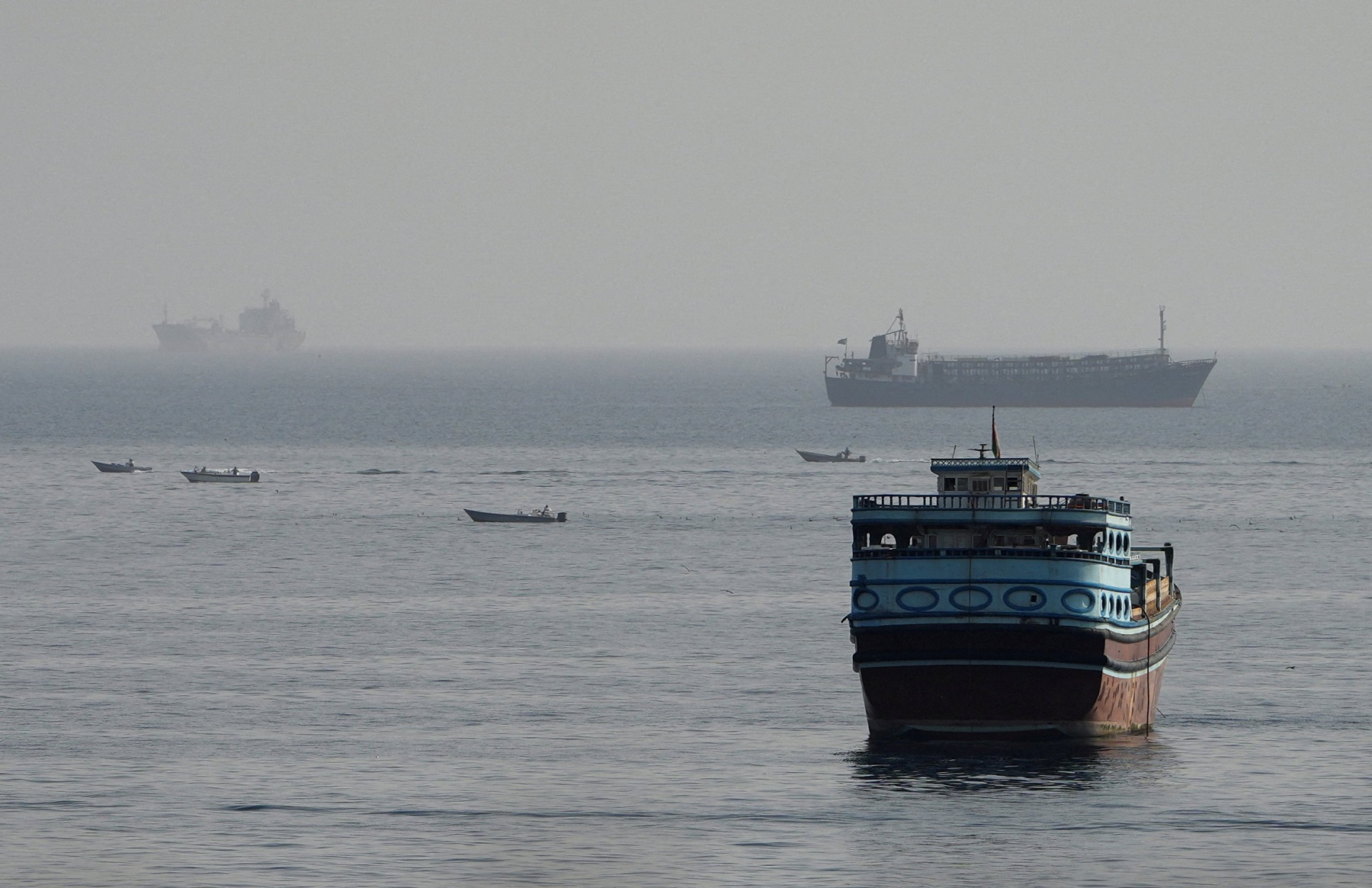
Iran and Oman have agreed a route for ships transiting the Strait of Hormuz and are putting the final touches on arrangements for jointly managing the waterway, Tehran's foreign ministry said on Wednesday.
Iran said both inward and outward journeys would pass through Iranian waters.
But official sources briefing Iranian media stressed that any reopening of the strait would depend on the United States fulfilling what Tehran sees as its commitment to end its own naval blockade of Iran's ports.
Iran has seized de facto control of the strait, a strategic waterway for global energy trade, since the United States and Israel launched their war against the country on February 28.
US President Donald Trump has repeatedly insisted Tehran is keen to do a deal to reopen the route to shipping, but Iran denies this and says it will instead make arrangements with its neighbour across the strait, Oman.
"The geographical coordinates of the route envisaged by the two sides have been agreed upon and, if certain third parties do not obstruct the process, the joint statement of the two countries, containing the main considerations and points of agreement, is also in the final review and drafting stage," spokesman Esmaeil Baqaei said, according to state news agency IRNA.
According to the report, Baqaei told journalists that talks with Oman were moving forward, but that even if an understanding was reached, it would not mean that the strait had become safe for all passing vessels.
"The factors making the Strait of Hormuz insecure still exist on the part of the United States, particularly the naval blockade and other aggressive and threatening actions against Iran and its interests," he said.
Before the war, Hormuz carried around a fifth of the world's oil and LNG exports and prices have repeatedly surged since the dispute over the waterway erupted, piling economic and political pressure on Washington.
After imposing an effective blockade on the strait, Iran has insisted ships take a route that hugs the Iranian coast.
Many vessels have instead chosen to take a southern route, close to Oman on the opposite side of the strait, occasionally coming under fire.
Iran wants to control the strait and charge tolls, powers it did not exercise before the war, a development that would be fiercely opposed by the US.
A senior Iranian source and two regional officials told Reuters that the proposed deal between Iran and Oman would give Tehran control over ships entering the Gulf through the Strait of Hormuz.
But the sources cautioned that significant issues remained unresolved and also pushed back against suggestions from Trump that a deal reopening the strait was imminent.
"The concession has already been made regarding some form of control over Hormuz," one of the regional sources told Reuters.
The other regional source said there were still details to be determined about how "control" would be defined, with Gulf negotiators insisting regional countries supervise inspections of ships, and that any payment of fees be voluntary.
According to the senior Iranian official, Iran is seeking fees of between 5 percent and 7 percent of the price of cargoes from ships using the strait. Oman is discussing fees of around 3 percent, while Washington wants no fees at all.
The senior Iranian source said the text of an agreement already on the table envisioned Iran having control of ships heading into the Gulf through the strait, and one of the main sticking points was what role Iran would also have over ships heading in the opposite direction.
In comments to Iran's official IRNA news agency, Iranian Deputy Foreign Minister Kazem Gharibabadi said the arrangement was "designed in such a way that commercial ships will pass through Iranian territorial waters, both on the inbound and outbound legs."
He said talks with Oman had "reached fundamental understandings" and added: "This progress is on the verge of being finalised."
Gharibabadi also said Iran had received messages from the United States indicating that it was "fully prepared to return to its commitments" under a mid-June memorandum of understanding with Iran that provided for immediate cessation of military operations.
He said this was a condition for reopening of the strait, while adding that no talks with the United States had been held in recent days. (Agencies)
Edited by Cecil Wong
'Iran close to Hormuz plan with Oman'
2026-08-06 HKT 07:18
Share this story


