


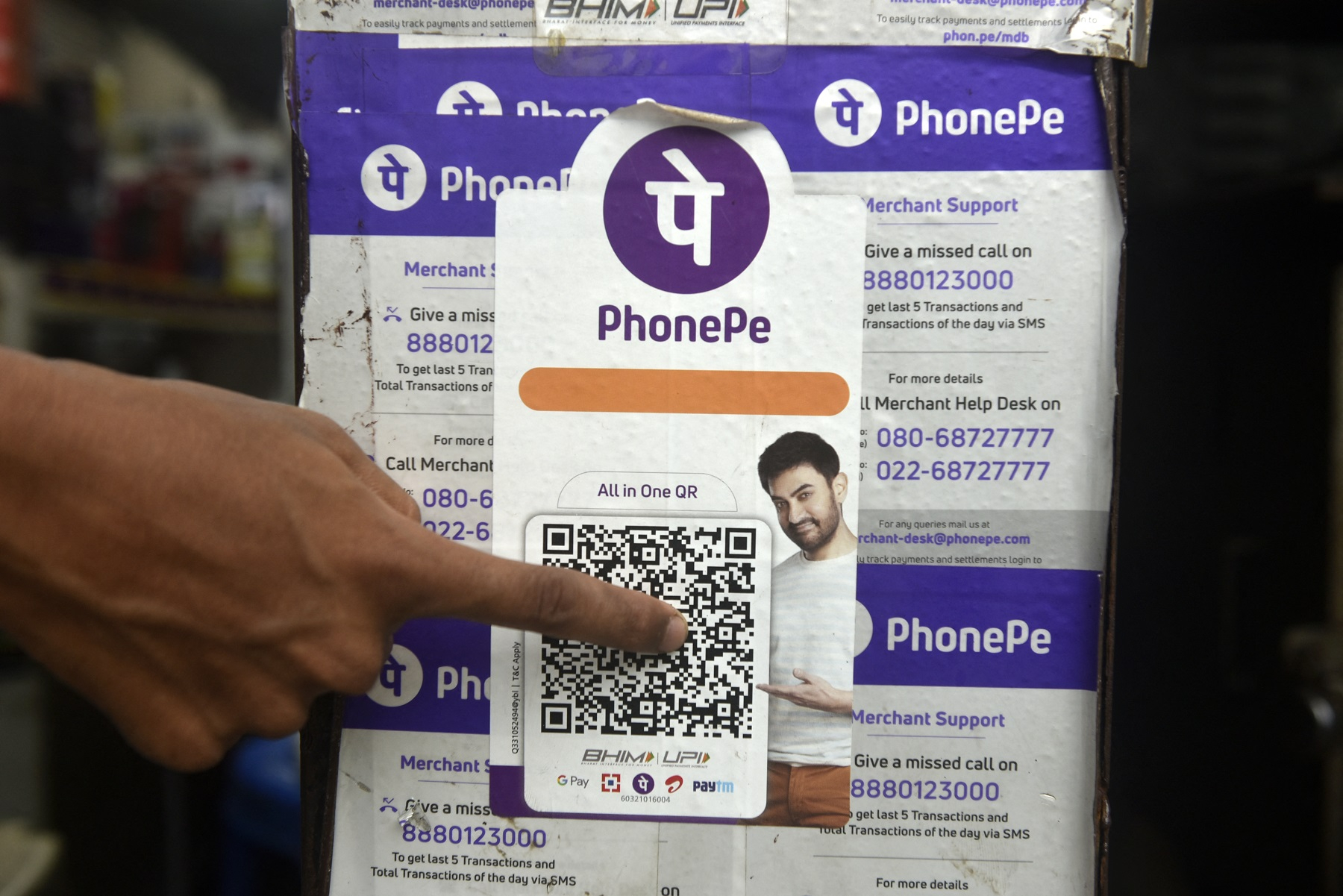
India has opened the door for charging merchant fees for using the vast digital payments system central to its economy, used by nearly 555 million people to transfer trillions of US dollars.
Legislation, passed on Monday by the parliament's upper house, paves the way to change its zero-fee model, with the government saying it could help pay for improving the infrastructure and bolstering cybersecurity.
The government-backed Unified Payments Interface (UPI) is the backbone of how the world's most populous country processes digital payments done through smartphones.
UPI has rapidly grown in scale since its 2016 launch, with transaction volumes rising fivefold in the past five years – to 241 billion payments worth about US$3.3 trillion in the last fiscal year, according to finance ministry figures.
The system, which allows payments to be sent across participating apps and banks, is "the largest real-time payment system in the world by volume" according to the International Monetary Fund (IMF), processing more transactions than Visa or Mastercard does globally.
The bill by itself does not impose fees – but provides a legal framework for banks and payment processors to allow charges on UPI transactions by businesses.
"It will support the banks and fintech to invest more on infrastructure, innovation and security," Finance Minister Nirmala Sitharaman said, after it was passed by the lower house last week.
On Monday, Sitharaman told the upper house that the bill "does not impose any tax or transaction charge on UPI users," reassuring that it will only be applied to large merchants for transactions above a certain threshold.
"The enabling provision that we are bringing in today does not impose any tax or transaction charge," she added.
The vast majority of transactions are small-ticket transfers below 2,000 rupees, according to industry figures.
India's government has heavily promoted the system since Prime Minister Narendra Modi's currency purge in 2016. (AFP)
Edited by Cecil Wong
India opens door to digital payment fees
2026-08-11 HKT 07:31
Share this story


