


Financial Secretary Paul Chan has reaffirmed the critical role of Hong Kong’s aviation sector in driving the city’s economic growth, citing a sharp rise in passenger numbers and major infrastructure overhauls that are cementing its status as an international aviation hub.
Writing in his weekly blog on Sunday, Chan highlighted the breadth of the city's air network, noting that around 140 airlines currently connect Hong Kong to more than 225 destinations worldwide.
This extensive system, he said, provides a seamless and highly efficient framework for arrivals, departures, and transfers, offering travellers a wide range of flexible options.
Backing up his remarks with data, Chan revealed that Hong Kong International Airport recorded over 200,000 aircraft movements in the first half of this year — a 4.4 percent increase year-on-year.
Passenger traffic climbed 11.7 percent during the same period, reaching 32.8 million travellers.
"Efficient and convenient international connectivity, coupled with a continuous lineup of mega events, has successfully attracted more business and leisure visitors to Hong Kong," he wrote.
The upward trend has extended into the tourism sector, with visitor arrivals in the first seven months of the year totalling 31.22 million — a 12 percent jump compared to the same timeframe last year.
According to Chan, this steady influx of people not only enriches the city's vitality, but also opens up new business opportunities across multiple industries.
Looking ahead, Chan emphasised that Hong Kong is proactively expanding its aviation network.
As regional trade patterns evolve, the city is exploring new bilateral civil aviation agreements and upgrading airport infrastructure.
The three-runway system, now in its second year of operation, is steadily boosting aircraft movement capacity.
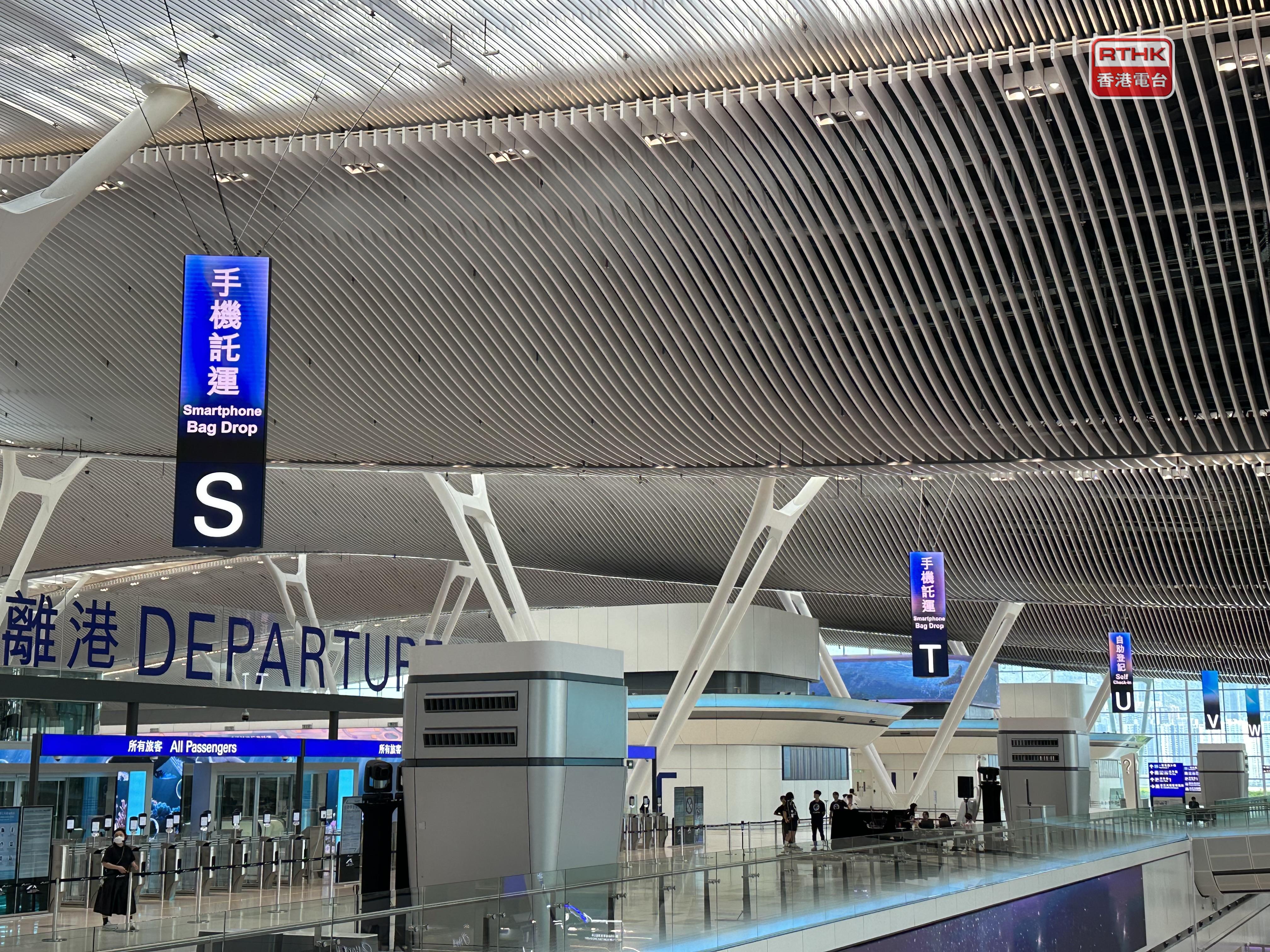
Meanwhile, the newly opened Terminal 2 departure facilities — which began service in May and currently host 15 airlines — are projected to handle approximately eight million passenger trips in their first year.
On the technology front, the Airport Authority’s "smart airport" initiative is leveraging biometrics and artificial intelligence to streamline the passenger experience.
Innovations already in place include facial recognition check-in, mobile express baggage drop-off, and smart security screening systems.
Chan also looked further into the future, pointing to the Skytopia project, which aims to transform the airport into an integrated tourism and commercial landmark.
Key components include a new arts hub integrating creation, trading, and storage set for early 2027, alongside the Phase 2 expansion of AsiaWorld-Expo and a 500-berth marina, both of which are slated for phased openings starting in 2028.
"Hong Kong’s status as an international aviation hub is not only the lifeline of the local aviation industry, but also the hardware foundation that enables Hong Kong to function as a 'super value-adder' and a 'super connector'," he wrote.
Edited by Tony Sabine
Paul Chan reaffirms Hong Kong airport hub strength
2026-08-16 HKT 13:14
Share this story


