


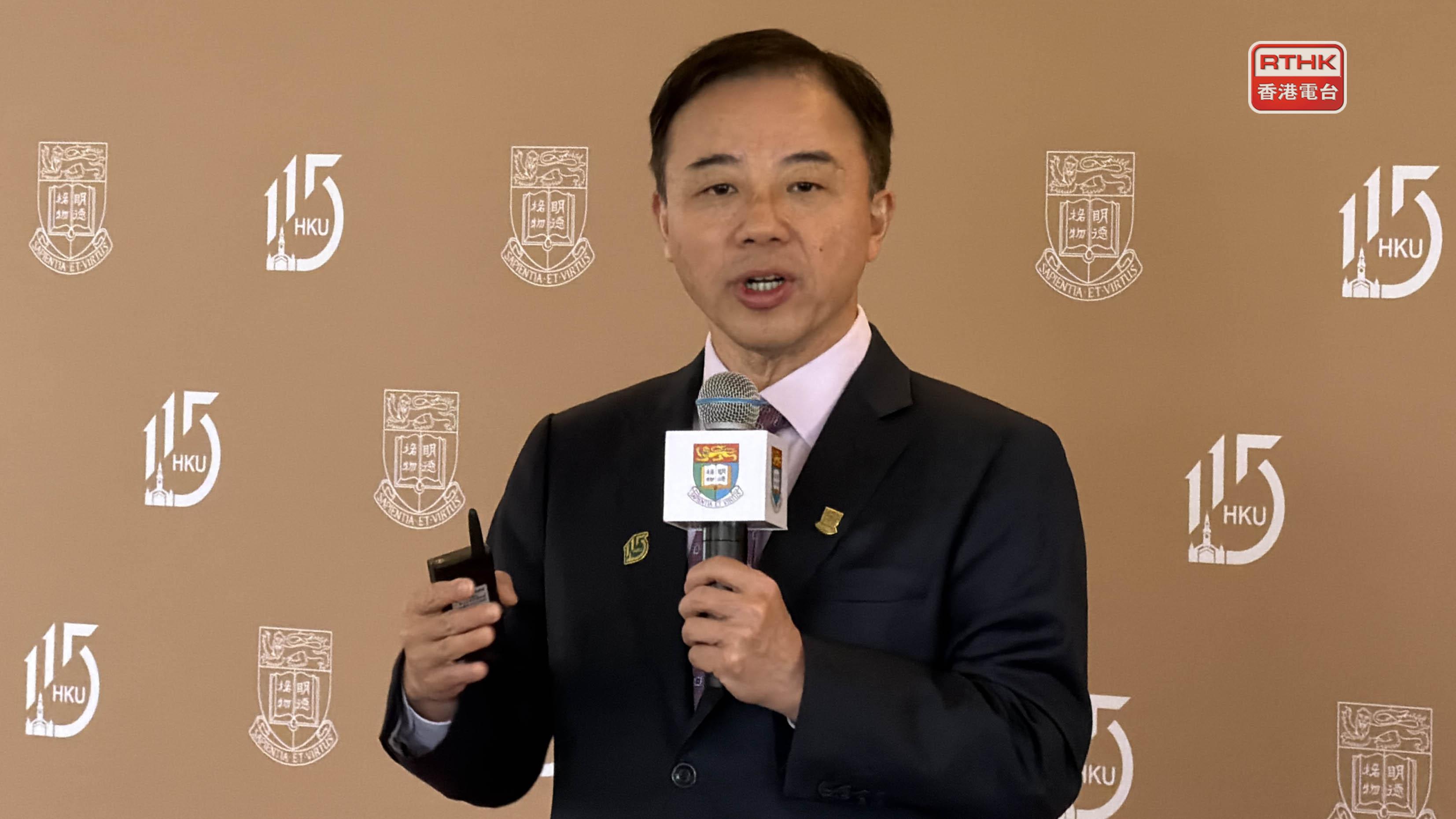
The University of Hong Kong's President and Vice-Chancellor Xiang Zhang has laid out a series of key initiatives he hopes to see through before stepping down in 2028.
Zhang announced his departure last month, confirming he would not seek a third term after completing a full decade at the helm.
In a message to the university community, he stated that HKU is ready for new ideas and that a change in leadership would best guide the institution through its next phase of transformation.
In an interview with the Hong Kong Economic Journal, Zhang acknowledged that his tenure had not been without its difficulties.
"If I said there were no low points, that would be untrue. We certainly did experience a lot of frustration," he said.
"Yet, I never thought about giving up. My goal has always been clear: I came to Hong Kong to help HKU to become a world-class university."
Addressing speculation that he might seek a third term, Zhang dismissed the idea as "totally, completely false."
He felt content with his decision and said he feels optimistic about HKU’s future.
Zhang remains focused on the work ahead.
He noted that several of the university’s administrative and management systems are still outdated, and he is prioritising governance and institutional reform during his final stretch.
Central to his vision is a push for greater efficiency.
Zhang believes that by modernising HKU’s administrative framework, the university can create an environment that attracts and retains top-tier scholars — allowing them to concentrate on their academic pursuits without unnecessary distraction.
One concrete example of this reform effort involves the university’s employee benefits.
HKU has been vigorously revising its self-insured medical benefits model over the past year, and plans to transition to a more comprehensive group medical insurance scheme this autumn.
The new plan, he said, is expected to enhance coverage for more than 16,000 staff members and their families.
Zhang is also looking ahead to the role of technology in higher education.
He views artificial intelligence as a transformative force and announced that HKU would launch an "AI Hub" in the autumn to encourage interdisciplinary collaboration.
He said the university is also exploring ways to embed AI components into traditional academic disciplines.
When asked how he would like to be remembered, Zhang remained humble.
"It's too early to think about how others might evaluate me. I would prefer to let everyone make that assessment when I leave office in two years' time," he said.
He added that he announced his departure early to give the university sufficient time to find a suitable successor.
The HKU Council promptly responded by launching a global search for the next president the following day.
Edited by Tony Sabine
HKU chief outlines final goals before leaving in 2028
2026-08-17 HKT 11:21
Share this story


