


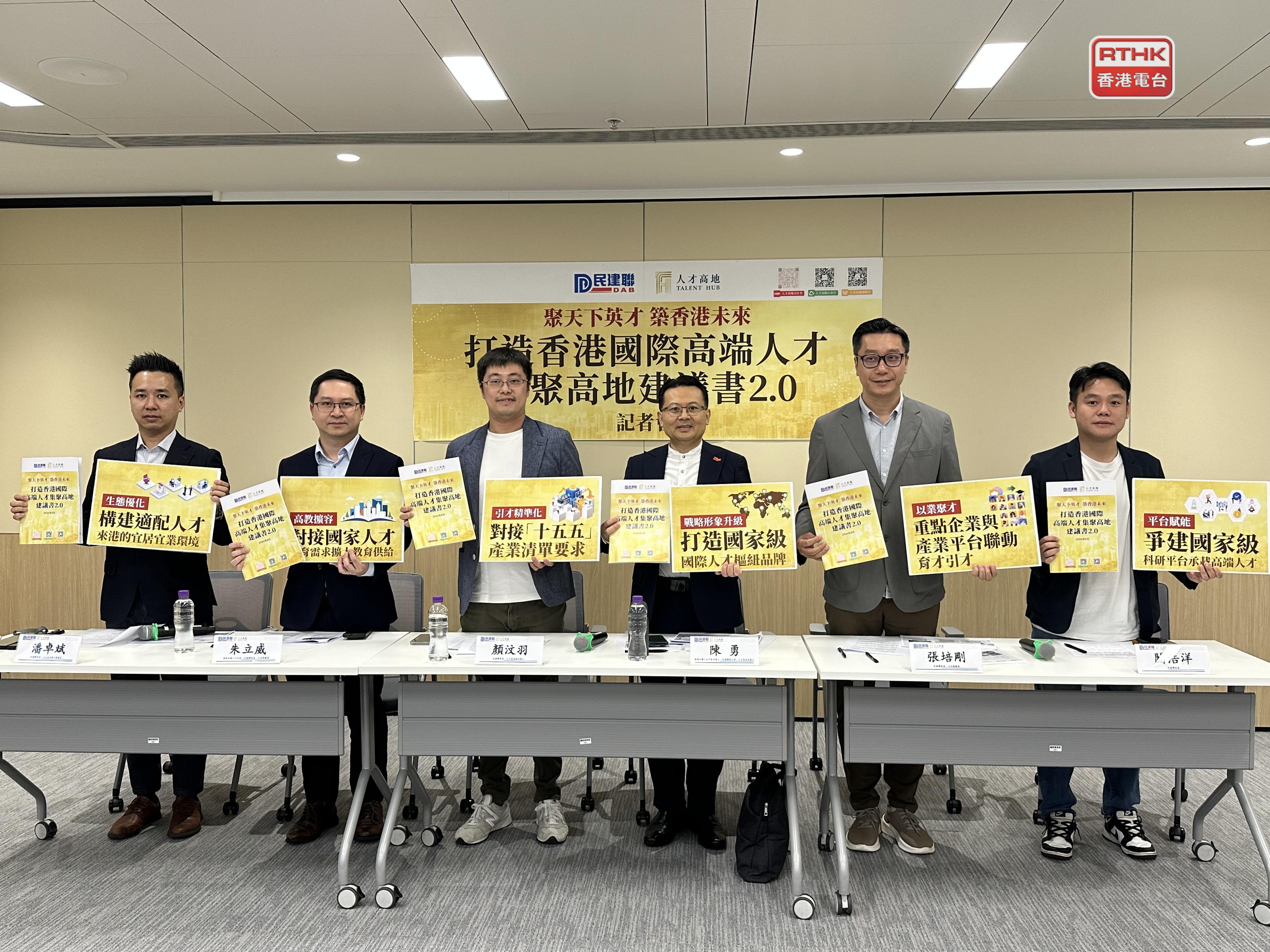
The DAB has proposed that Hong Kong shift its push to attract talent from one that's driven by volume to one that's industry focused so as to better build it into an international hub for the highly skilled.
The government has put in place a series of schemes since 2022 that has attracted more than 300,000 professionals so far.
For instance, it said, more than 50 percent of those arriving under the Top Talent Pass Scheme had applied to extend their stay as of the end of February.
Group vice-convenor Frankie Ngan suggested the government allocate quotas for industries, such as AI, instead to avoid a mismatch.
Currently, applicants do not have to secure a job beforehand.
"Hong Kong is restructuring so ... when the top talent policy was introduced, we welcome talent [from all] over the world to come to Hong Kong for life and for work," he said.
"But we found that some top talent, after they came to Hong Kong, could not find a suitable job."
As a result, Ngan added, they had to switch to other industries rather than stick to the field in which they had always been working.
He also proposed that authorities slash the annual cap for category C applicants – that is, people who have graduated from designated universities with bachelor’s degrees within the past five years and have less than three years of work experience – to half of the existing 10,000.
The other 5,000 should, Ngan said, be allocated to a new category that focuses on new quality productive forces to cater to the need for new industries.
He also said the government should review its manpower shortage more frequently, such as once every six months instead of the existing practice of once every two years, to see which sectors are facing a manpower crunch so as to give a clearer picture of available job opportunities for people of talent.
"That is very key information for all the people, for the potential talent, for local labour, and also for the universities and schools, [and] more importantly for those new industries and businessmen."
Edited by Tony Sabine
HK's talent schemes should be industry-driven: DAB
2026-08-17 HKT 18:19
Share this story


DAB's Frankie Ngan speaks to Janice Lo

