


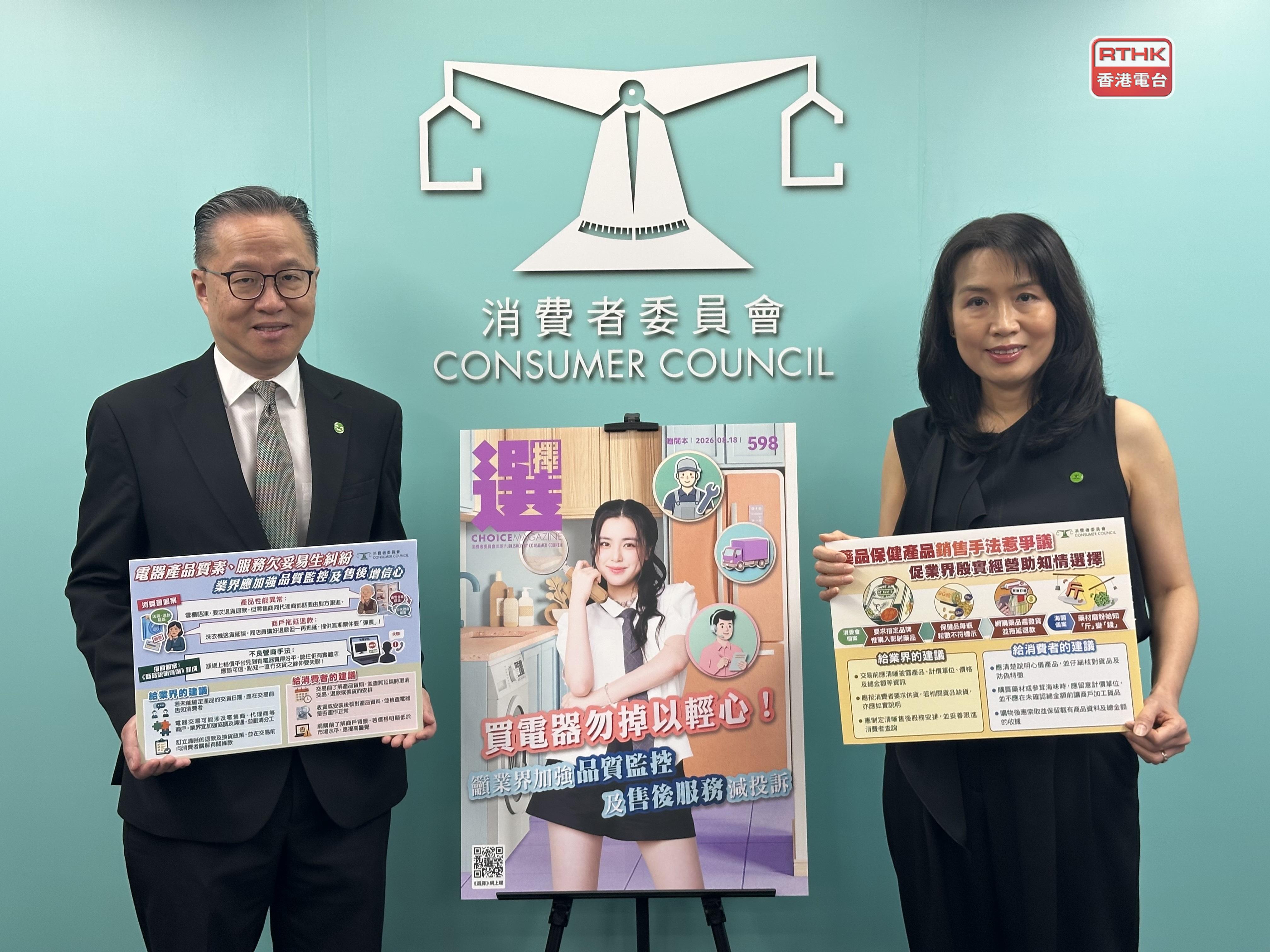
The Consumer Council on Tuesday urged the electrical appliances sector to step up quality control measures and spell out responsibilities among relevant parties to avoid disputes with customers.
The watchdog said it had received more than 8,400 relevant complaints since 2023.
In the first seven months of this year alone, the figure surged 18.2 percent year-on-year to 1,432.
In one case, a complainant sought a refund from the seller after an agent, who was tasked with handling and fixing technical problems, found out that a newly purchased refrigerator failed to cool.
When the consumer made the refund request to the retailer, staff at the store told him they were awaiting further instructions about how to proceed.
During that time, the complainant also contacted the agent directly, who said the matter should be handled by the retailer.
Consumer Council chief executive Alaina Shum said all parties, including sellers, agents and contractors should step up communication, even though retailers are usually responsible for handling returns, exchanges and refunds.
"If retailers and agents can strengthen the coordination and exchange of information while providing consumers with clear channels for follow-up and communications, this will help avoid giving consumers an impression that the responsibility is being shifted between parties," she said.
"It would also enable consumers to better understand the progress of their cases and reduce misunderstandings arising from unclear allocation of responsibilities or insufficient communication."
In another case, a complainant sought assistance from the watchdog after the refund arrangement was delayed multiple times as her purchase could not be delivered as promised.
At the same time, the post-dated cheque that was given to the consumer could not be cashed.
Upon the council's intervention, the store provided a full refund in cash.
In response, the watchdog said it is crucial for sellers to set up clear refund and exchange policies, including the time needed to step up transparency.
It also called on consumers to always verify whether the shops exist through various means when making purchases online to prevent being scammed, after a case from the Customs and Excise Department revealed that a trader was convicted for continuing to accept payments after the business ceased operations.
Edited by Tony Sabine
Call for electronic vendors to improve quality control
2026-08-18 HKT 12:43
Share this story


