


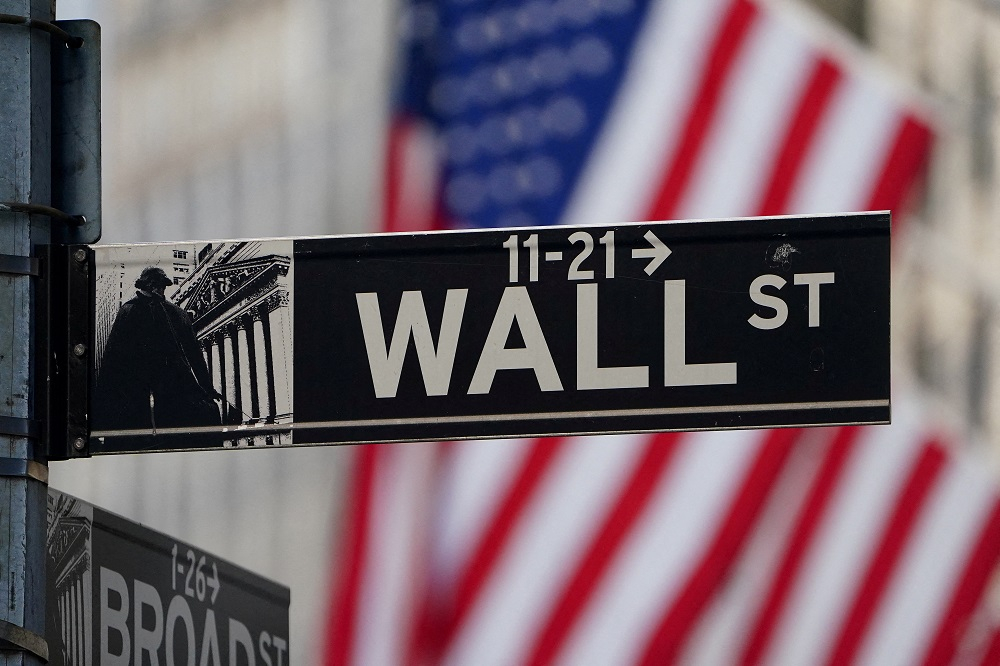
Wall Street's main indexes closed lower on Tuesday with semiconductors leading technology declines as Middle East uncertainty pushed bond yields to multi-year peaks, feeding concerns about borrowing costs and inflation.
Fading hopes for Middle East peace pushed oil prices higher, which in turn triggered an increase in US 30-year Treasury bond yields to their highest levels since 2007. The 10-year bond yields touched their highest levels since January 2025.
The Philadelphia SE Semiconductor Index tumbled 5 percent as investors fled stocks that had rallied previously on booming AI-related demand.
Rising borrowing costs lowered how much investors were willing to pay for potential growth in technology profits.
"It starts off almost like a domino effect. Talks break down. That leads to oil prices going up. That leads to higher inflation expectations and bond yields rise," said Burns McKinney, portfolio manager at NFJ Investment Group.
He added that "every time bond yields rise, that tends to disproportionately hit the technology names."
The S&P 500 lost 53 points, or 0.7 percent, to 7,691 and the Nasdaq Composite shed 355 points, or 1.3 percent, to 26,289, marking the biggest daily percentage decline since July 29 for both. The Dow Jones Industrial Average fell 116 points, or 0.2 percent, to 53,343.
Among the S&P 500's 11 major sectors, information technology created by far the biggest index-point drag and was the benchmark's biggest percentage loser, falling 1.9 percent.
The S&P 500's biggest drags from individual stocks came from chip companies, including leading AI chipmaker Nvidia, down 2.3 percent, and memory chipmaker Micron Technology, which fell 7 percent after rising almost 18 percent in the previous five sessions.
Other hard-hit stocks included data storage firms Sandisk and Western Digital, which fell 9 percent and 7.4 percent respectively. The Roundhill Memory ETF tumbled 8.8 percent after five straight gains.
"There's nothing that can crack a momentum rally quite like interest rates moving higher and you're getting evidence of that today," said Tony Welch, chief investment officer at SignatureFD, who added that rising yields suggested that Federal Reserve policy is too easy for the growth and inflation outlook.
Leaving high-growth sectors, investors flocked to more defensive sectors such as healthcare, which added 1.6 percent, and consumer staples, which finished up 1.1 percent.
Wall Street's fear gauge finished up 0.65 points at 15.84 for its highest close since August 4.
With support from rising oil prices, the S&P 500 energy sector was the benchmark's biggest sector gainer on the day, adding 1.8 percent.
By late afternoon, US crude oil futures had pared most of their gains but still settled up 0.5 percent, after Iran threatened to shift to a "fully offensive" military posture and Washington ruled out extending a ceasefire deal. (Reuters)
Edited by Cecil Wong
Tech selloff drags Wall Street as bond yields climb
2026-08-19 HKT 06:39
Share this story


