


Stock markets mostly rose on Wednesday and the US dollar fell sharply after the US Treasury signalled action to push down government bond yields, easing fears that higher borrowing costs would weigh on economic growth worldwide.
Oil prices again moved higher on doubts of any quick deal to reopen the Strait of Hormuz to tanker traffic, stoking the inflation fears that have rattled markets since the US-Iran war began nearly six months ago.
Those fears and worries about ballooning US government deficits have sent bond prices falling – increasing the rates that investors demand to keep financing state borrowing.
Higher interest rates are a particular threat to tech companies, which are borrowing massively to fund AI investments that have spurred momentum for stocks across the board.
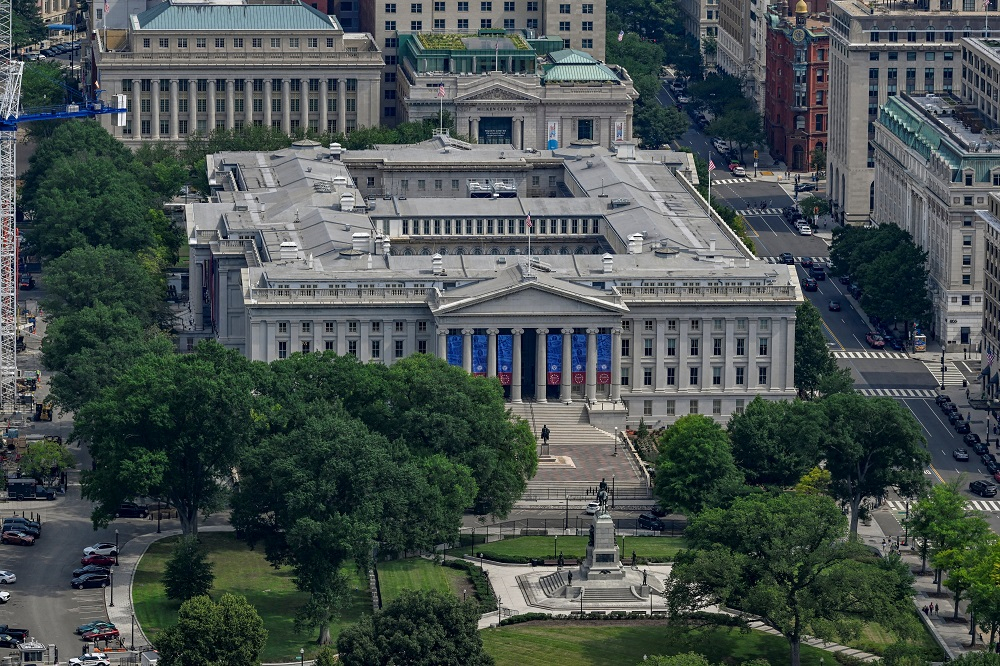
But the US Treasury surprised markets on Wednesday by saying it would increase "by at least double" its sovereign bond buy-backs to push down 30-year yields that have soared in recent days.
After three straight losing sessions, Wall Street indices advanced, though the gains were modest. The S&P 500 ended up 0.2 percent.
The announcement on sovereign bond buy-backs represents "a very strong sign that the Treasury has decided higher US yields are unacceptable," said Neil Wilson, a strategist at Saxo Markets, noting the shift in bond yields provided relief for equities "which had come under pressure from the rumble towards multi-year/decade highs for sovereign yields."
Minutes from the US Federal Reserve's last meeting showed that many policymakers believe that interest rate hikes will be necessary if inflation does not decline. The minutes chronicled conversations from a late July meeting at which three of the 12 voting members of the Federal Open Market Committee (FOMC) dissented from the majority decision to hold rates steady.
Policymakers noted that economic activity had continued to expand at a "solid pace," but noted that business investment was concentrated in AI industry expenditures.
Oil prices continued to rise as the prospect of any Middle East deal dimmed after US President Donald Trump said he would not extend a 60-day truce with Iran.
Despite a recent lull in hostilities between the United States and Iran, the Strait of Hormuz remains a flashpoint, where Washington's naval blockade on Iran's ports and Tehran's attacks on commercial ships have continued.
Iran's armed forces warned Gulf countries against assisting the US military on Wednesday, hours after the United Arab Emirates announced it was severing economic ties with Tehran following new attacks on shipping.
Elsewhere, official data on Wednesday showed that UK inflation jumped to 2.9 percent in July, driven by higher energy bills.
On the corporate front, US biopharma group Moderna saw its share price more than double after positive results for a key skin cancer vaccine being developed with Merck.
Moderna's stock finished up 177 percent at US$174.38, while Merck jumped 12.6 percent.
The S&P 500 rose 0.2 percent, to 7,707, the Dow also rose 0.2 percent, to 53,463, while the Nasdaq rose 0.2 percent as well, to 26,331. (AFP)
Edited by Cecil Wong
Stocks waver as US Treasury moves to lower bond yields
2026-08-20 HKT 06:36
Share this story


