


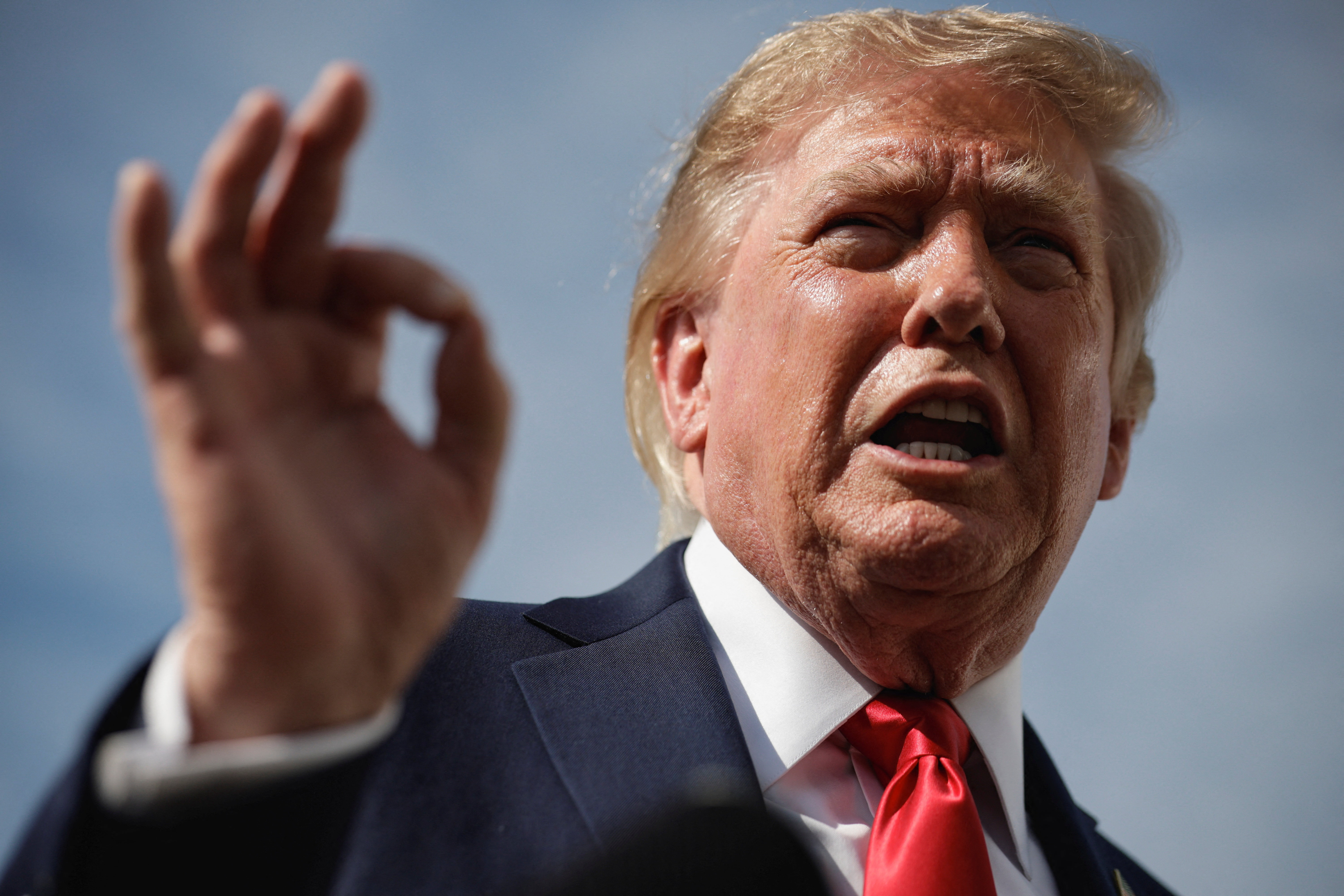
US President Donald Trump said on Friday that growth in the US will take care of the country's growing national debt levels.
Total US debt has topped US$40 trillion for the first time, the Treasury Department said this week, drawing fresh warnings that a fiscal crisis is brewing as ballooning costs for social safety-net programmes and interest payments far outstrip revenues held back by tax cuts.
A reporter asked Trump if he had been discussing the figure as he was about to board Air Force One at Joint Base Andrews in Maryland.
"I have, and it's been a problem for 35 years. And what we have now that we've never had before, we had a pretty good piece of it in my first term, as you know, is we have tremendous growth. And the way you take care of debt is with growth. And we have tremendous growth. We've never had growth like we have right now. The growth will take care of that very easily," he said.
The federal government's debt has now more than doubled in less than a decade, from US$19.95 trillion when Trump was sworn in as president for the first time in January 2017.
Roughly one-third of that increase occurred during two years of frantic government borrowing to fund the Covid-19 pandemic responses undertaken by Trump and former president Joe Biden, while the fiscal policy choices of both presidents combined with long-running tax-and-spending imbalances account for the rest.
On Wednesday, US Treasury Secretary Scott Bessent surprised the market by doubling the size of a buyback programme for long-dated US government bonds. The move led to a fall in the yield of the 30-year US Treasury, which on Tuesday had hit a 5.34 percent 19-year high on inflation fears. Trump was asked whether he told Bessent to intervene in the market.
"No, not at all. No, he's a very capable man. He wanted to do it. He's very good at it. He has a good touch, very good natural touch for the bonds and interest. He did that, yeah," Trump said.
Yields have since risen, and Trump was asked whether he had talked to Bessent about any other type of intervention.
"We have many types of intervention, that's one. The ultimate intervention is our military. And if we have to use that we will," he said. (Reuters with additional contributions by RTHK)
Edited by Robert Kemp
Trump says growth will take care of US national debt
2026-08-22 HKT 08:42
Share this story


