


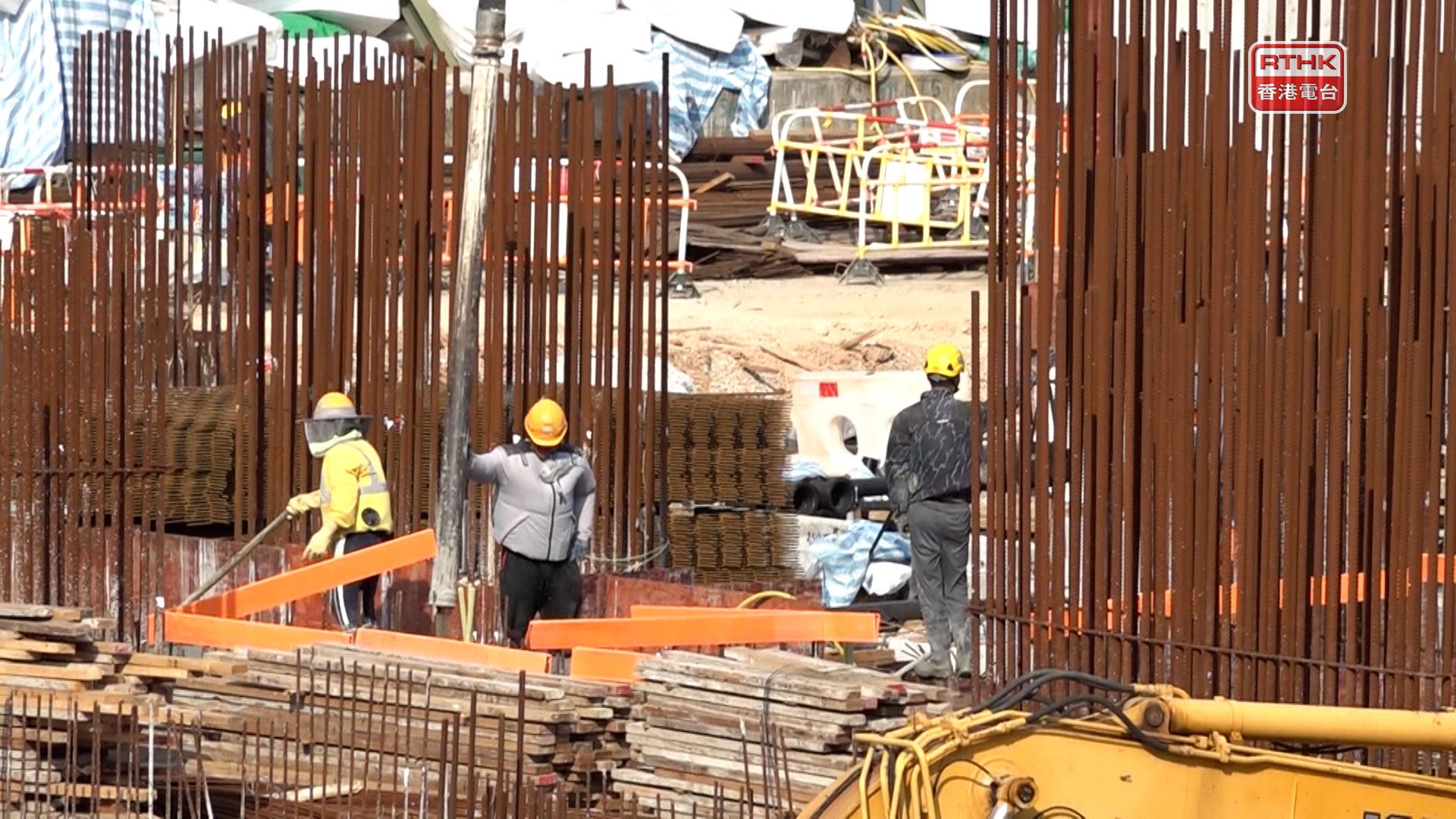
Unionist lawmaker Lam Chun-sing said on Thursday that he welcomed the enhanced heat stress at work warning, especially with its almost immediate implementation that could better protect workers during extreme weather conditions next month.
His comments came after the Labour Department said that starting Friday, two new triggers will be added to the refined system to improve its responsiveness to better safeguard workers.
Lam, who also heads the Federation of Hong Kong and Kowloon Labour Unions told RTHK that there is still room for review despite the quick fix.
"We appreciate that the Labour Department this time is based on the existing mechanism to do some adjustment, so that we can implement the new mechanism immediately to deal with the situation in September,” Lam said.
“But for the long term, we also hope that the Labour Department can see whether we can adopt the Wet Bulb Globe Temperature (WBGT), which is internationally recognised."
Moreover, instead of solely relying on the system to offer rest times for workers, the lawmaker called on employers to also take into consideration individual situations.
For instance, older outdoor workers could be given longer breaks, as they are more prone to heat stroke, Lam added.
DAB lawmaker Cheung Pui-kong, meanwhile, described the revamp as a breakthrough for the system.
But he pointed out that the calculation formula for the Hong Kong Heat Index had not changed this time, and the refined system has not completely resolved the fundamental issue of significantly underestimating the perceived heat stress outdoor workers have to face.
Authorities should also offer subsidies for firms to equip workers with devices that help monitor their heart rate and body temperature to help prevent heat stroke, Cheung said.
The Association for the Rights of Industrial Accident Victims, for their part, said the enhanced system could boost sensitivity and trigger the issuance of higher alerts more easily.
The government should keep monitoring its operation and carry out a review a year later to see if WBGT should be adopted, it said.
The group suggested that the suspension of work should be adopted for all outdoor workers, instead of only allowing those carrying out heavy or very heavy work to enjoy such breaks under the existing system.
Edited by Aaron Tam
'Refined heat stress system still has room for review'
2026-08-27 HKT 20:39
Share this story


Lawmaker Lam Chun-sing speaks to Janice Lo

