


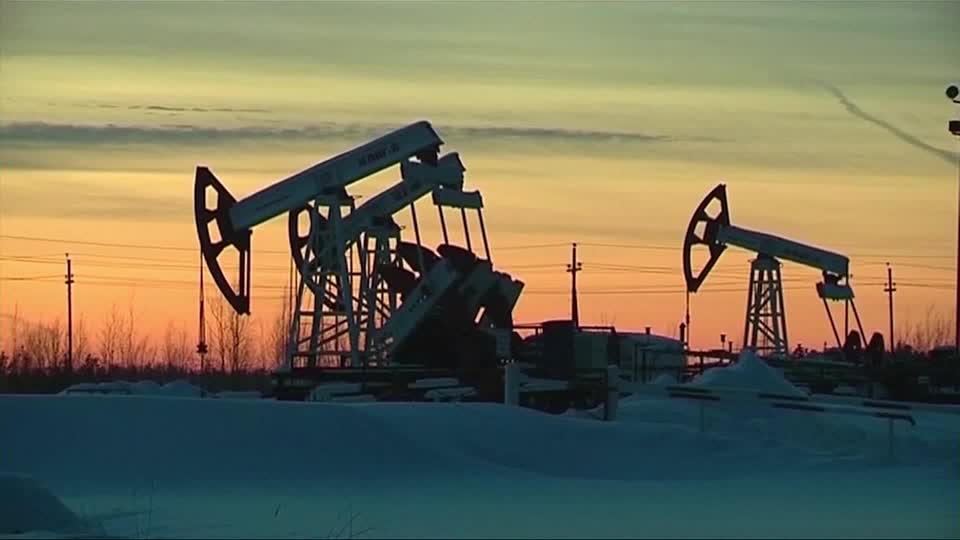
Oil prices jumped more than two percent on Monday, with the Brent international benchmark rising above US$90 a barrel after a fresh flare-up in the US-Iran war.
In equity trading, Wall Street and Europe's main markets dipped as investors continued to react to hawkish comments from US Federal Reserve chief Kevin Warsh.
After a run lower for most of last week, oil prices spiked again on Monday, a day after the United States said it had attacked Iranian rocket launchers on a small island in the Strait of Hormuz, its first strikes on the country in a month.
Tehran retaliated by launching missiles at US military targets in Jordan.
US President Donald Trump said on Monday that the US would hit back against the Iranian strikes, according to Fox News.
The exchange came shortly after the US-Iran war hit the six-month mark, and with hostilities subsiding until the weekend's flare-up.
The news revived concerns about the conflict in the Gulf, with peace talks appearing to be going nowhere and the Hormuz strait – through which a fifth of global crude and gas normally passes – largely closed.
"For oil traders, (the) move is another reminder of how quickly the geopolitical premium can return," said Quintex Intel's Stephen Innes.
"Physical flows through Hormuz have improved materially from their worst levels, which is precisely why crude had started giving back some of the fear premium, but the latest exchange shows how fragile that progress remains and how quickly the shipping story can be pushed back onto the trading desk," he added.
Trump will be meeting oil refining executives on Tuesday in a bid to tame soaring US domestic gas prices that have been a political headache for his Republican Party heading into upcoming midterm elections.
With inflation remaining stubbornly high – largely on the back of elevated energy costs – the US Federal Reserve has come under pressure to act, with Warsh's refusal to provide guidance stoking uncertainty in recent weeks.
But in a highly anticipated speech at the Jackson Hole symposium of central bankers and economists in Wyoming on Friday, Warsh gave his strongest signal yet that rate hikes were likely coming – and soon.
All three main indexes on Wall Street fell on Friday as investor expectations for an interest rate increase at the Fed's next meeting in September surged.
They fell further on Monday, with the Dow losing 0.7 percent at the close.
More key US data is due this week, with job market metrics to be released on Friday – any strength in the employment numbers will likely mean the Fed will be free to focus on the inflation side of its mandate.
"This could be another 'good news is bad news' report for the market," said Jay Woods at Freedom Capital Markets.
"A hotter-than-expected payroll number, particularly if wages accelerate and unemployment remains near 4.1 percent, would reinforce the idea that the economy can handle tighter monetary policy."
Asian stock markets struggled in the morning but some markets rallied as the day progressed, leaving some in positive territory and others just below Friday's close.
In Europe, Paris rose but Frankfurt dipped, while London was closed for a holiday.
The dollar retreated against its major rival currencies after having initially gained on Warsh's comments. US long-term bond yields remained elevated, with the 10-year US Treasury bill at its highest level since January 2025.
The S&P 500 fell 0.3 percent, to 7,686, the Dow fell 0.7 percent, to 53,185, while the Nasdaq fell 0.1 percent, to 26,370. (AFP)
Edited by Raymond Yeung
US stocks dip, oil prices surge on renewed hostilities
2026-09-01 HKT 06:00
Share this story


