


Trials for three potential vaccines against the Ebola strain that has killed thousands in the DR Congo should begin by October or November, the World Health Organisation said on Wednesday.
The official death toll from the Democratic Republic of the Congo's deadliest-ever Ebola outbreak passed more than 3,000 people on Wednesday, out of over 6,000 infected.
The vast central African country's 17th Ebola outbreak was declared on May 15.
But the WHO believes the deadly virus began spreading under the radar as early as late January.
Responders have been playing catch-up and scrambling for ways to halt the spread as a result, in the restive east of the country plagued by a litany of armed groups.
Among the many challenges facing the response is the lack of any approved vaccines or treatments for the Bundibugyo species of Ebola behind the outbreak.
The WHO said efficacy trials for three potential vaccines were drawing closer.
"Two new vaccines against Bundibugyo virus are now in safety trials in the UK and Canada," WHO chief Tedros Adhanom Ghebreyesus told reporters in Geneva.
One is being developed by the US-based Moderna group using mRNA technology and another by the University of Oxford.
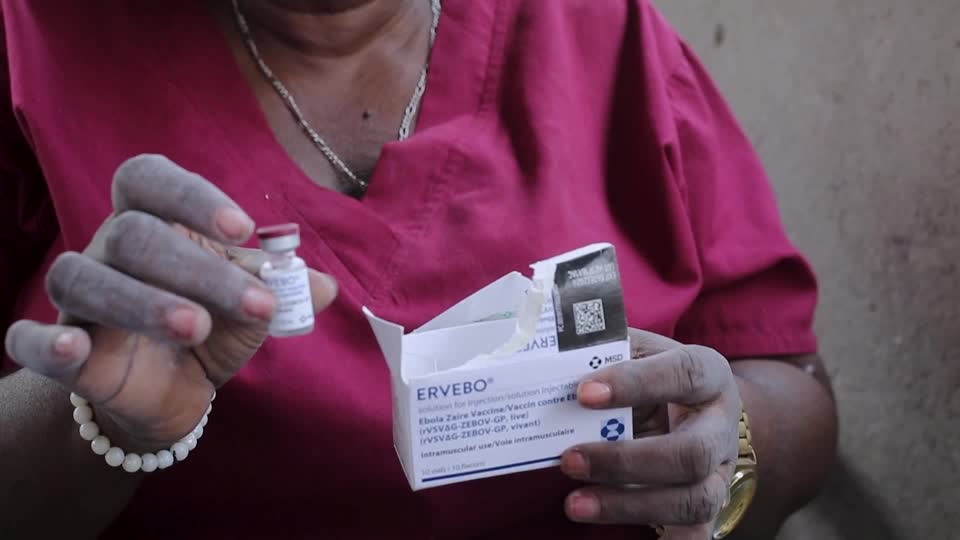
The WHO has also recommended a full-scale human trial of Ervebo, a vaccine approved for use against the more common Zaire strain of Ebola, to see if it offered any cross-protection against Bundibugyo.
Early data suggests that Ervebo, which is made by Merck, could offer some degree of protection in humans against the other strain.
But Tedros insisted that trials were necessary as "we do not know whether it is effective against Bundibugyo." Much of the early data came from animal testing.
Tedros said the WHO was "working with partners to progress all three vaccines to efficacy trials in (the) DRC, starting in October or November."
The UN health agency's vaccines chief Kate O'Brien explained that the plan was to set up a single trial to test the efficiency of multiple vaccines.
"Given that Ervebo is a licenced vaccine, it will be probably the first vaccine that will go into the trial," she said.
A batch of 16,250 doses for use by frontline medical personnel arrived in the DRC in July. Vaccination began shortly afterwards in Kisangani, the capital of the north-eastern Tshopo province.
In recommendations published on Tuesday, the WHO advised that, for the time being, Ervebo should only be used against Bundibugyo as part of a clinical trial.
O'Brien said that frontline healthcare workers should also only be vaccinated with Ervebo as part of research into whether it was effective against the strain or not. (AFP)
Edited by Robert Kemp
DR Congo Ebola vaccine trials to begin by November
2026-09-03 HKT 07:43
Share this story


