


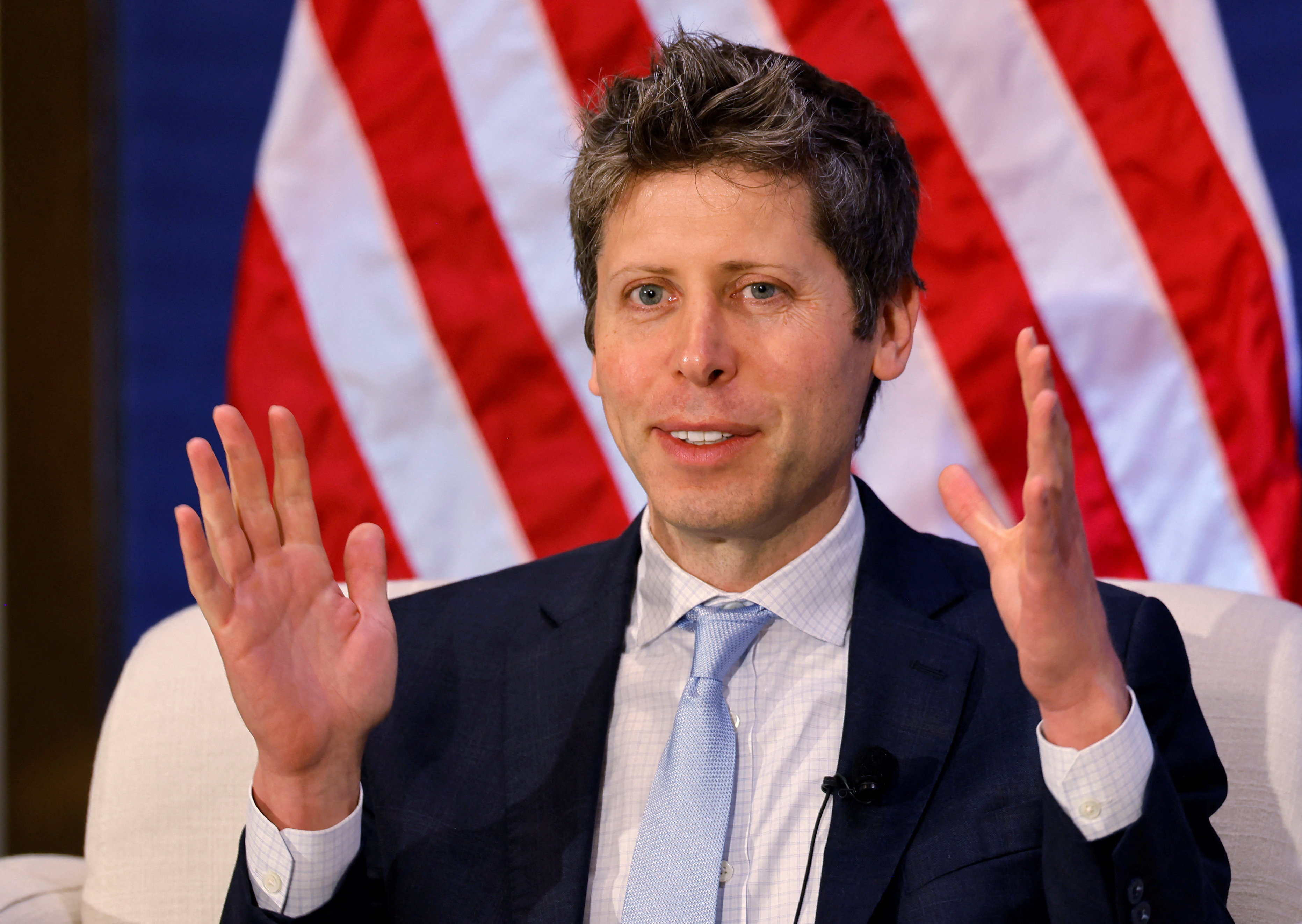
ChatGPT maker OpenAI has said it will begin rolling out its newest and most powerful artificial intelligence model to select customers, saying it had built in safeguards to mitigate security risks.
"At this level of capability, safety has to become our top priority," OpenAI president Greg Brockman said on a call on Thursday about the release of GPT-6, also known as Astra.
Just over a year has passed since OpenAI launched the previous version of its flagship model, GPT-5.
Concerns about the capabilities of advanced models have grown since then, following incidents involving systems built by OpenAI and rival developer Anthropic.
OpenAI paused some model development for two weeks this summer after two models it was testing were involved in a security breach at AI platform Hugging Face.
The San Francisco-based company said Astra was developed with stronger safeguards after that incident, though Astra itself was not involved in the hack.
Some cybersecurity customers will get access to the new model on Thursday, the company said, with a wider rollout to other paying customers to follow. Users on the free tier or the cheapest paid plan will not get access.
"We are working towards getting Astra in everyone's hands as quickly as we can; I know it is frustrating and I appreciate the patience. It should be quick," OpenAI CEO Sam Altman posted on social media on Thursday.
In a blog post, OpenAI said Astra can autonomously handle a wide range of "tedious" computer tasks, including website creation, scientific analysis, game development, cybersecurity and coding.
To illustrate the time savings of building autonomous AI agents with Astra, the company said the model could cut apartment hunting from six hours to under 10 minutes.
"It's not unreasonable to feel that we are now in the AGI era," Brockman said on the call, referring to artificial general intelligence, a hypothetical stage at which AI systems match human intelligence across most tasks.
OpenAI chief scientist Jakub Pachocki acknowledged there was still uncertainty about how a new model behaves once released.
"A model can become very good at achieving a goal, and it can still act in ways that go against what the person intended," Pachocki said on the same call. (AFP)
Edited by Aaron Tam
OpenAI takes it slow and safely in GPT-6 rollout
2026-09-04 HKT 11:47
Share this story


