


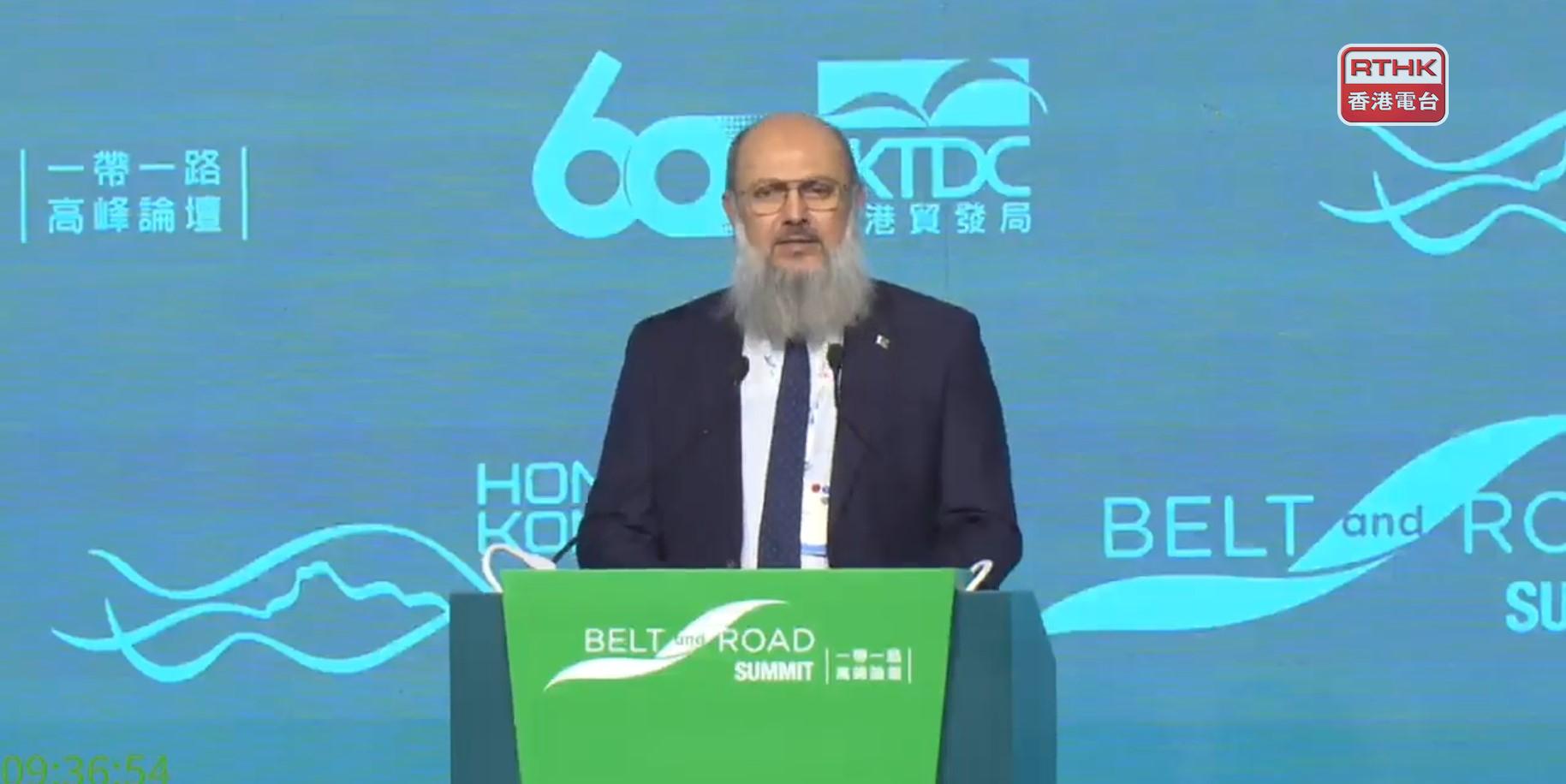
Pakistan's Federal Minister for Commerce Jam Kamal Khan reaffirmed Islamabad's commitment to the Belt and Road Initiative on Thursday, saying the China-Pakistan Economic Corridor had turned his country into a major regional connectivity hub linking landlocked Central Asia and western China to warm-water ports.
Speaking at the Belt and Road Summit in Hong Kong, Khan said deeper collaboration in energy, infrastructure and industrialisation in the corridor, a flagship project of the Belt and Road Initiative (BRI), was reshaping Pakistan's economic landscape.
He described the initiative as a transformative vision of a global community with a shared future.
"The Belt and Road Initiative represents a transformative vision of a global community with a shared future and over the past decade has inspired nations to accelerate development, unlock economic opportunity and deepen cultural ties," Khan said during a special address at the summit.
He said regional cooperation was evolving from transport routes towards integrated value chains and that Pakistan was positioning itself as a link between west, central and east Asia.
He cited the Trans-Afghan Railway Initiative and expanded rail and road linkages with China as steps towards making the country the shortest viable route for trade with Central Asia while also opening up markets among the 1.5 billion people in African states.
Khan said Pakistan's economic strategy rested on export-led growth, industrial modernisation and deeper integration into global supply chains.
He noted the country's vast agricultural potential, mineral wealth – from copper to gold and critical minerals – and a young, growing population as key areas for Belt and Road Initiative partnership.
Khan also extended an invitation to Chief Executive John Lee to visit Pakistan, praising his leadership and Hong Kong's initiative in offering around 150 scholarships to students from Belt and Road partner countries.
"Building on BRI's green agenda, we seek deeper cooperation with partners like Hong Kong on climate adaptation and sustainable growth. Our shared future also rests on people-to-people ties," he said.
Edited by Tony Sabine
Pakistan vows deeper Belt and Road ties at HK summit
2026-09-10 HKT 11:55
Share this story


