


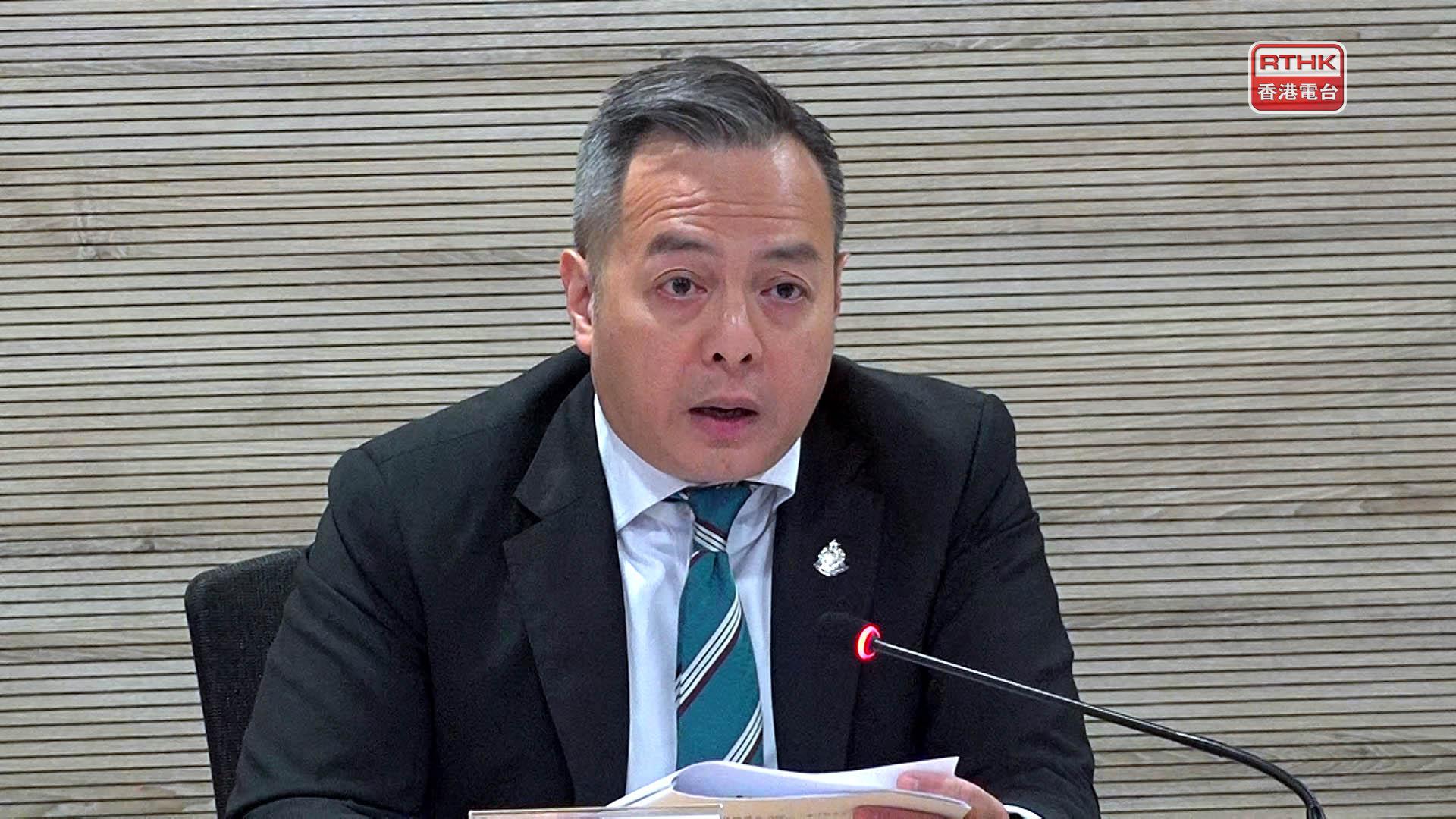
Police chief Joe Chow said on Tuesday all transactions related to 1,503 suspected credit card scams were halted following the pre-sale of Apple's new iPhone models earlier this month, with no losses incurred by cardholders, banks or the company.
Chow said the total amount involved exceeded HK$30 million and police have requested Apple to review its transaction process to prevent similar cases during the pre-sale of another handset model expected in mid-October.
"We have maintained close communication with Apple and the banks. At our request, all transactions involved have been cancelled. In other words, throughout the entire process, neither the cardholders whose cards were misused, nor the banks, nor even Apple, have incurred any losses," he told Kowloon City district councillors during a meeting.
"We are currently continuing to investigate the syndicate behind and have requested Apple to review its transaction procedures to prevent similar incidents from occurring during the pre-sale of its other new smartphone on October 16," he added.
The police commissioner said Apple had disabled its online commerce protection measures during the online transaction process, waiving transaction verification – a loophole fraudsters exploited by using illegally obtained credit card data to place bulk orders.
Investigations found that scammers used virtual private networks and provided false or incomplete recipient information. When delivery failed, Apple would email a confirmation asking for an alternative delivery location, and the fraudsters would specify a public spot where a "gofer" would collect the goods, Chow said.
He also gave an update on the city's overall crime situation, saying 59,213 cases were recorded in the first eight months of the year, up 0.2 percent year-on-year.
Fraud cases reached 29,670, up 4.5 percent, accounting for a record 50 percent of all crimes. The amount involved rose 3.8 percent to HK$5.21 billion.
Phone scams surpassed online shopping scams to become the most common type of fraud, making up 27 percent of all fraud cases, followed by online shopping scams at 23 percent.
Chow said phone scams surged last month, with over 2,000 cases recorded in a single month, 80 percent of which involved scammers impersonating customer service staff.
Officers found that three-quarters of those calls were made using local phone numbers. Chow noted that currently, renting, lending or selling SIM cards does not constitute an offence, and that even if a registered user is arrested, they can claim ignorance. He also pointed out that each person can register up to 10 SIM cards per telecom operator, providing favourable conditions for fraud syndicates.
Chow said he hoped the law would be amended as soon as possible to address the problem.
Edited by Aaron Tam
Apple asked to review online transaction process
2026-09-29 HKT 17:05
Share this story


