


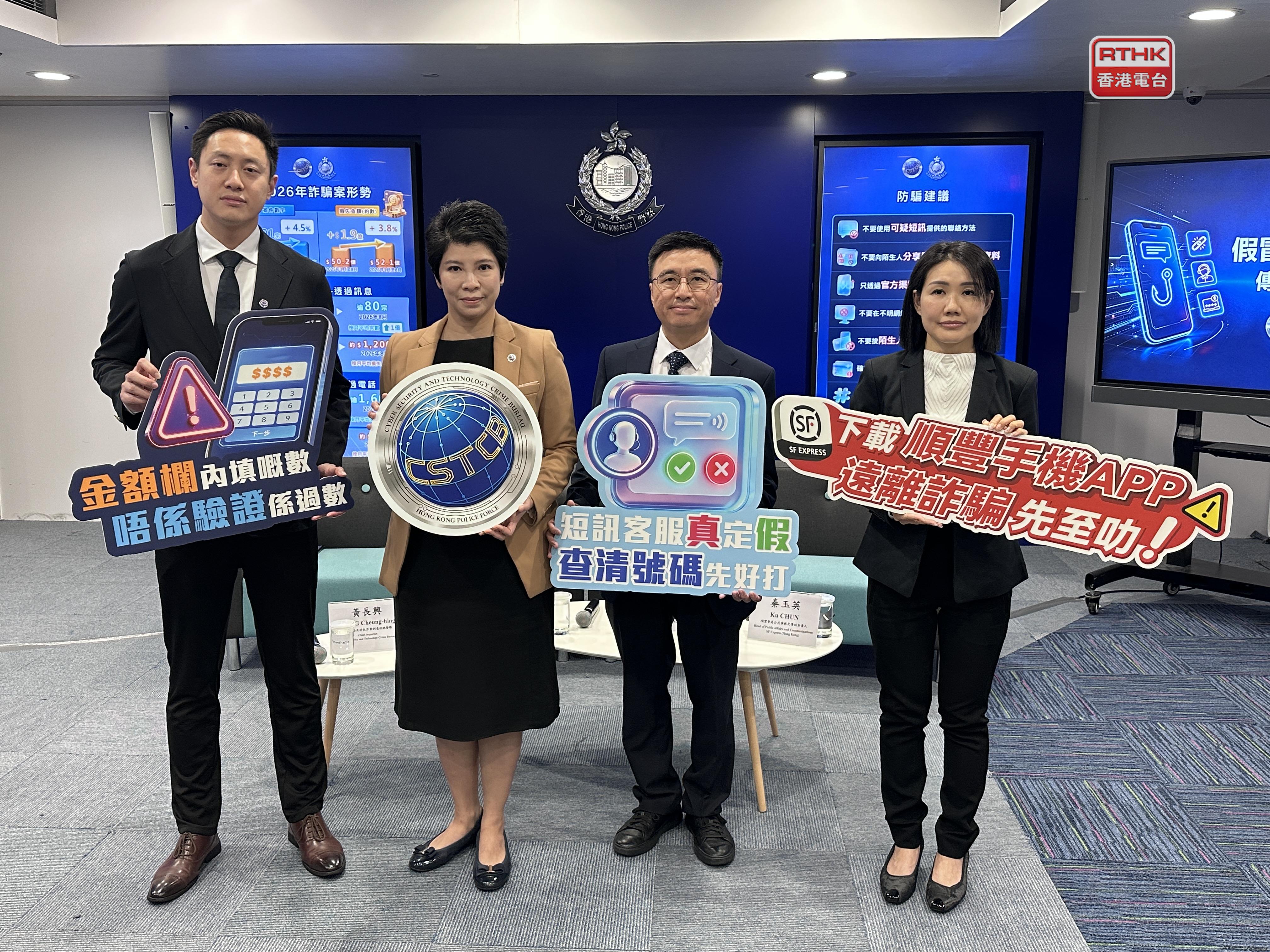
Police have urged residents to stay alert to new tactics used by scammers posing as customer service agents, including a technique that effectively allows scammers to use victim's credit cards remotely.
The force said around 5,000 scam cases between January and August involved fraudsters posing as customer service staff, accounting for 17 percent of all reported fraud during the period.
In August alone, 1,680 impersonation cases were recorded – a rise from the monthly average of 480 seen over the first seven months of the year – resulting in more than HK$220 million in losses.
Chief Inspector Wong Cheung-hing explained that fraudsters are exploiting two new technical methods.
In the first method, he said, scammers instruct victims to download malware, enable Near Field Communication, and hold their credit card close to their phone, allowing scammers to make payments remotely.
The second tactic involves instructing victims to register a designated bank account as a new payee and enter a verification code into the transfer field of their e-banking platform. Believing they are completing a verification step, they are in fact authorising a money transfer.
Wong noted that banks first flagged these tactics in August, adding that precise victim numbers are still being calculated.
“We received the intelligence from the bank. But when the victim gave the statement to the police, they cannot exactly tell us about the full details, and that's why we cannot extract the exact figure right now,” he said.
Wong added that almost half of all scam victims are aged between 31 and 50, stressing that everyone should stay vigilant as scammers do not target any particular age group.
Meanwhile, Chan Kin-leung, Principal Regulatory Affairs Manager at the Office of the Communications Authority (OFCA), said over 880 companies and institutions had joined the SMS Sender Registration Scheme as of the end of August.
Under the scheme, launched nearly three yeas ago, only registered senders can send SMS messages with a sender ID containing a # prefix so that the public can check if they are genuine.
While banks and telecommunications firms are mandated to join, Chan stressed that firms in other sectors may not have joined due to operational considerations.
“Participation by corporates from other sectors is totally voluntary. We cannot force every one of them to join the scheme at this stage because they do have their business considerations whether to join or not," he said.
"Say, for example, for a company to join, they might have to revise their internal workflow; they might have to do some system upgrade for themselves.”
Chan said the OFCA would continue to encourage more firms to join the scheme, while exploring additional approaches to proactively intercept fraudulent messages.
“But on the other hand, I hope you understand the practical concern. We cannot assume all incoming SMS is a scam in the first place,” he added.
Edited by Aaron Tam
Police issue warning on new types of scams
2026-10-03 HKT 09:16
Share this story


