


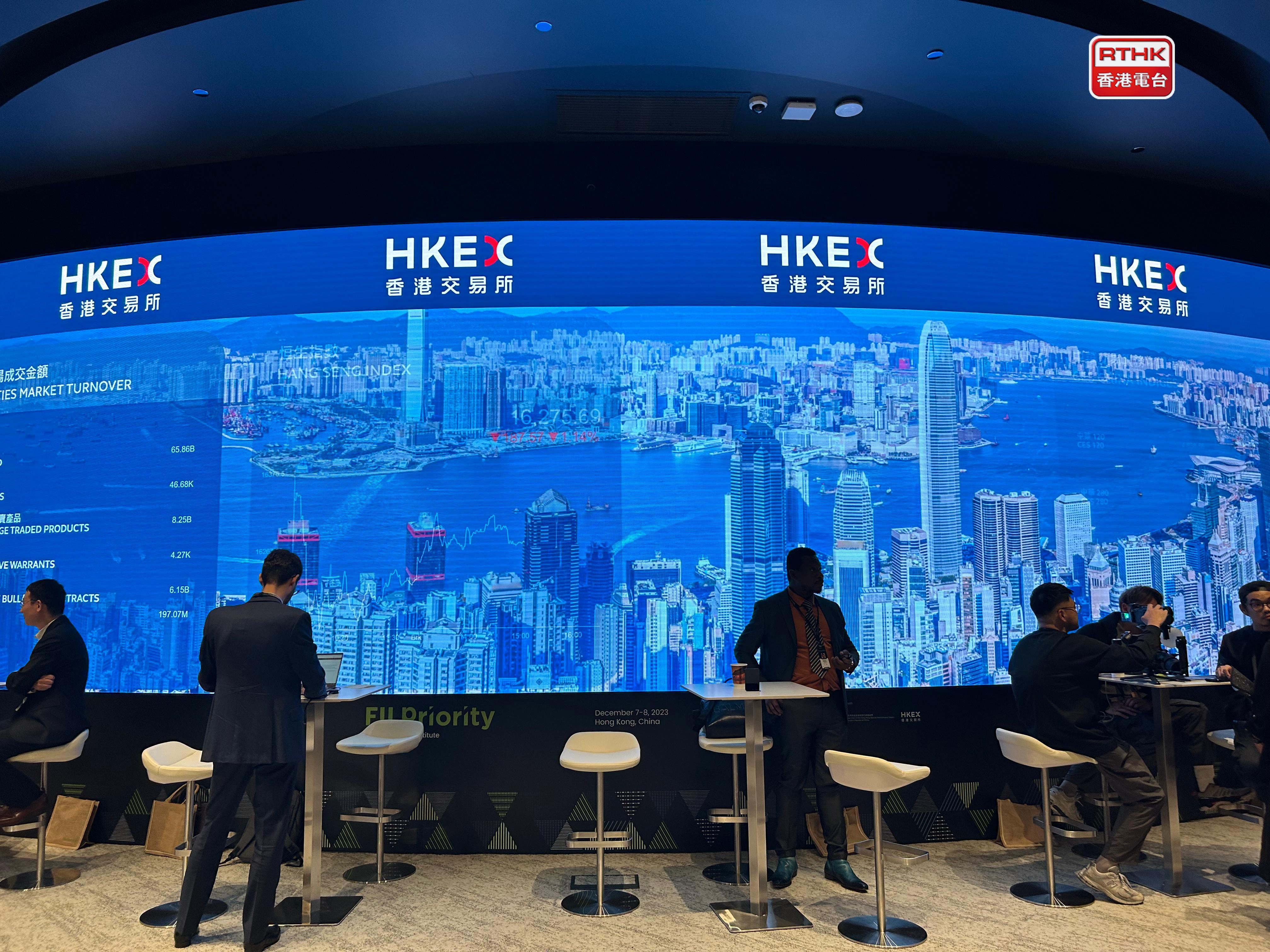
The mainland's blue-chip index fell to a one-year low on Thursday as traders returning from a week-long holiday faced renewed geopolitical tensions, higher global yields, and a looming earnings season that threatens still-lofty valuations of Chinese tech shares.
In Hong Kong, the benchmark Hang Seng Index dropped 344 points, or 1.4 percent, to 23,785, touching its lowest level in three months, on turnover of HK$207.26 billion.
The tech index dropped 121 points, or 2.9 percent, to 4,073, its lowest level in two years, while the China enterprises index fell 71 points, or 0.9 percent, to 8,010.
Up north, stock benchmarks are now near where they were two years ago, when a stimulus bonanza from Beijing lit up share prices and boosted hopes for a slow bull run, which is now limping in a three-month downtrend.
The blue-chip CSI300 Index closed down 1.1 percent.
The index has hit its lowest level since August 2025 and is down roughly 15 percent from its June peak.
The Shanghai Composite Index closed down 30 points, or 0.79 percent, at 3,811 on turnover of 811.18 billion yuan.
The Shenzhen Component Index plunged 266 points, or 2.07 percent, to 12,620 on turnover of 870.9 billion yuan while the ChiNext Index dived 98 points, or 3.15 percent, to 3,036 on turnover of 422.75 billion yuan.
The tech-focused Star 50 Index slumped nearly five percent to hit a five-month low.
Following a tumble that wiped out more than one third of its value since July 1, the Star 50 Index still trades at roughly 100 times earnings.
Shanghai Zhuozhu Investment partner Wang Zhuo said excessive optimism in the first half towards "hard tech" shares such as chipmakers fuelled irrationally high valuations but that "bubbles would inevitably burst".
Risk appetite was also curbed by renewed Sino-US tensions as optimism from last month's leadership meetings faded.
Also signalling tensions, the Federal Communications Commission on Wednesday said it would vote on October 29 to bar all Chinese labs from testing electronic devices for use in the United States, widening a previous action targeting Beijing.
Traders are also monitoring Sino-EU trade talks this month as China has reportedly rejected a European Union request for voluntary curbs on hybrid car exports.
In another damper on sentiment, brokerage China Securities said that despite a smaller chance of a follow-up US rate hike this month, "rapidly rising 30-year US Treasury yields will continue to curb China stocks," as the widening yield gap induces capital outflows.
Tech shares led the decline in China on Thursday, with indices of chip-making, biotech and robotics all shedding four percent or more.
But energy, real estate and banking shares gained, signs that money is rotating out of growth stocks into cyclical sectors.
In Tokyo, the Nikkei fell 993 points, or 1.42 percent, to close at 69,042, down for a second consecutive session, as investors paused after recent rallies, wary of the US rate outlook, higher yields and geopolitical tensions.
The broader Topix slid 52 points, or 1.51 percent, to 4,091.
In Seoul, the Kospi South Korean shares closed down 177 points, or 2.62 percent, at 6,625 for the day and 5.79 percent for the week as shares of Samsung Electronics fell 2.42 percent despite the chipmaker projecting a record profit for the latest quarter. (Reuters/Xinhua)
Edited by Tony Sabine
HK hits three-month low, tech fears weigh on mainland
2026-10-08 HKT 17:15
Share this story


