


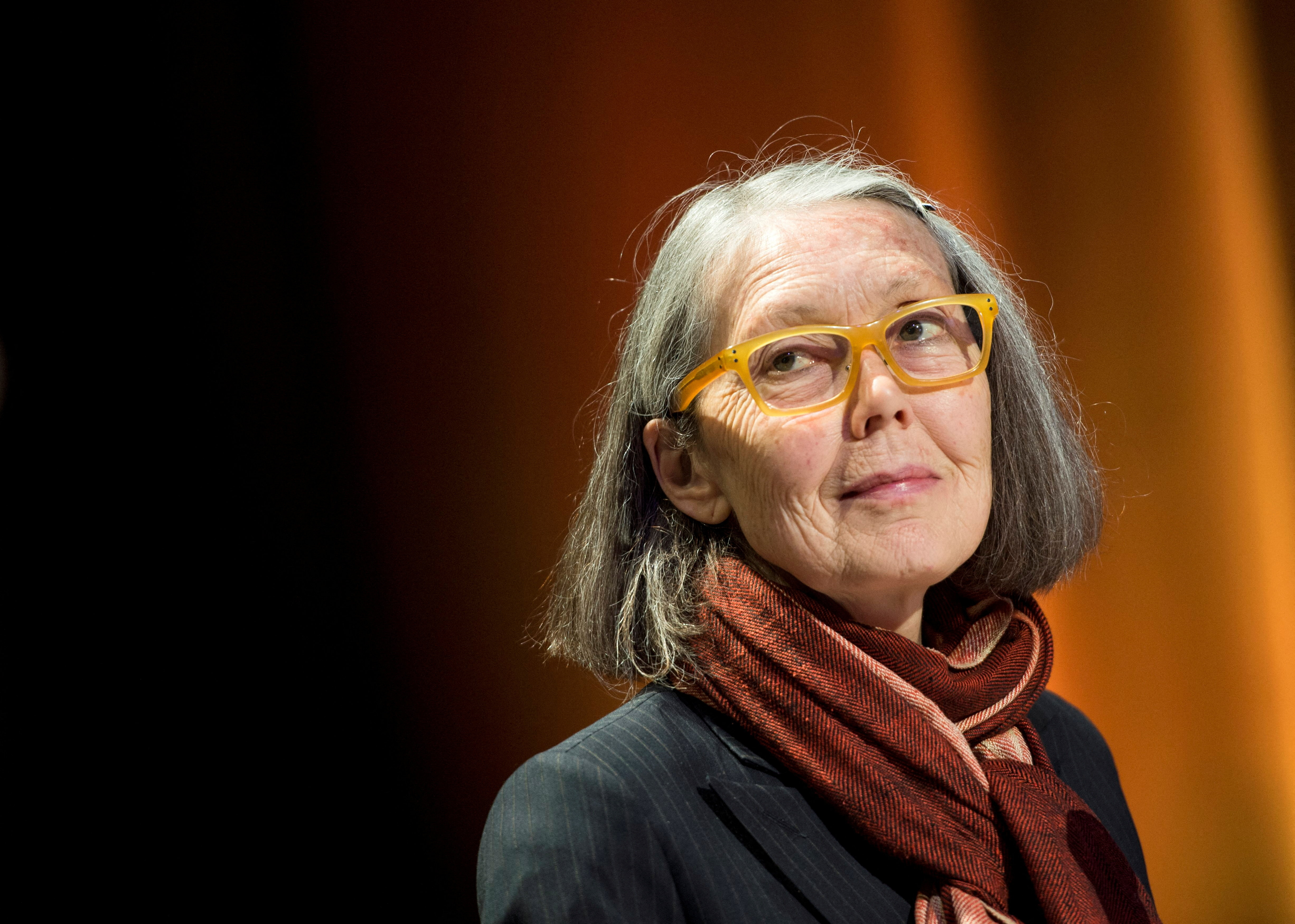
The Nobel Prize in Literature was awarded on Thursday to Canadian poet Anne Carson for her modern twists on Greek mythology and antiquity that have inspired new forms of contemporary writing, the Swedish Academy said.
The 76-year-old – who announced in 2024 that she has Parkinson's disease – was honoured "for her bold and inventive oeuvre that, in playful dialogue with the classical tradition, has created new forms for contemporary literature", the Academy said.
The permanent secretary of the Academy, Ingrid Carlberg, said she had briefly spoken to Carson.
"We didn't have so much time to speak. All she had time to tell me was that she is for the moment in Iceland, where she's listening to the wind."
"She was taken by surprise, but very happy. I could hear that in her voice."
Carson has for more than 15 years spent part of the year in Iceland, where she holds citizenship, according to Icelandic broadcaster RUV.
A professor of classics with a background in dead languages, literature, anthropology and history, she was described by The New York Times in 2001 as "one of the great pasticheurs".
Her unique contemporary poetry earned her several key literary prizes in the 1990s, including the 1996 Lannan Award and the 1997 Pushcart Prize.
A year later, "Autobiography of Red: A Novel in Verse" – loosely based on the Greek myth of the monster Geryon and Herakles – received widespread praise.
The Academy called it a "spectacular form of epic poetry with its great lyrical qualities".
It also said almost all of Carson's literary production "has centred upon the intersection between the philologist's obsession with words and the poet's desire for new meaning".
And it singled out her 2010 poem "Nox", printed on one continuous sheet of paper in homage to her brother who died in 2000, as "an unforgettable work". (AFP)
Edited by Aaron Tam
Anne Carson wins Nobel for modern spin on classics
2026-10-08 HKT 20:42
Share this story


