


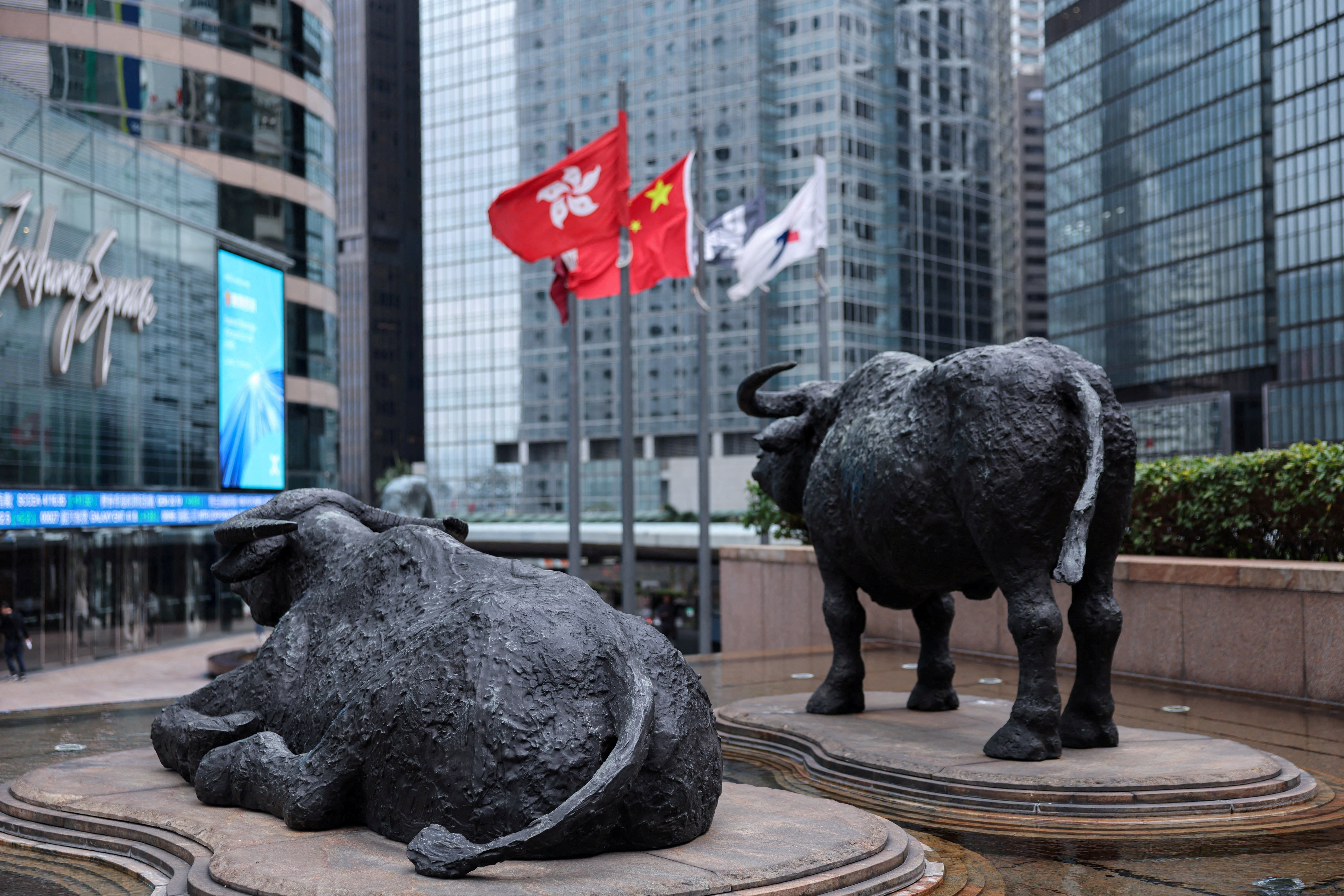
Asian stocks slipped on Friday and were poised for a second straight weekly drop as investors fretted about elevated energy prices, bond market ructions and the huge sums needed to fund AI investment.
In Hong Kong, the benchmark Hang Seng Index opened up 155 points, or 0.65 percent, at 23,941 and was 239 points higher in early trading.
The China enterprises index rose 46 points, or 0.58 percent, to 8,057 and the tech index was 11 points, or 0.29 percent, higher at 4,085.
The Shanghai Composite Index opened down seven points, or 0.21 percent, at 3,804.
The Shenzhen Component Index slipped 63 points, or 0.51 percent, to 12,557 while the ChiNext Index was 15 points or 0.5 percent, lower at 3,021.
With South Korean markets closed for a public holiday, the Nikkei in Tokyo opened 393 points, or 0.57 percent, down at 68,648 and was 479 points lower at one stage before noon.
The mixed market openings came soon after US President Donald Trump said the United States would not launch an attack on Iran before November's US midterm elections, although traders remained sceptical of any progress being made to end the war.
"The big question for markets is whether Trump sticks to his word if Iranian attacks intensify," said Nick Twidale, chief market strategist at ATFX Global. "Any indication that the White House is reconsidering military action could see oil prices spike sharply higher, particularly with tanker traffic through the Strait of Hormuz already under significant pressure."
Tech stocks led Wall Street's main indices lower overnight after a report that OpenAI's annualised revenue was US$20 billion less than the company previously signalled hit sentiment.
"It has been a sea of red across technology, AI infrastructure and semiconductors, with the OpenAI headlines seemingly providing the catalyst for investors to take some exposure off the table," said Chris Weston, head of research at Pepperstone.
"For now, though, the price action suggests investors are becoming more selective about where they want exposure and, importantly, what price they are prepared to pay for future growth," he said in a note.
Investors were also weighing a massive round of fundraising that appears to be on the way, with SpaceX, Broadcom and Oracle all expected to raise billions to buy high-end AI chips.
Australia's Firmus, a data centre operator backed by Nvidia , shelved its US$5 billion initial public offering, citing market volatility and conditions, and said it would opt for a private fundraising round instead.
A toxic mix of higher energy costs, expectations of central bank interest rate hikes and concerns over rising government debts have fuelled a months-long global bond selloff, pushing borrowing costs to multi-decade highs.
"With long-term yields back around multi-decade highs, investors no longer have the luxury of valuing AI growth in a low-cost-of-capital world," said Charu Chanana, chief investment strategist at Saxo.
Chanana said higher sovereign yields and now rising corporate issuance to fund AI infrastructure mean capital is becoming "both more expensive and more selective, which puts balance sheets and the quality of future earnings firmly in focus". (Reuters & Xinhua)
Edited by Edmond Fong
HK stocks up as Asian markets get bout of AI jitters
2026-10-09 HKT 10:47
Share this story


