


Asian stocks rose on Tuesday as a drop in oil prices after US President Donald Trump said he planned to hold off on new military strikes against Iran lifted sentiment ahead of US inflation data that could sway the near-term interest rate outlook.
In Hong Kong, the benchmark Hang Seng Index opened up 172 points, or 0.7 percent, at 24,621.
The China enterprises index rose 38 points, or 0.47 percent, to 8,298 while the tech index climbed 31 points, or 0.78 percent, to 4,072.
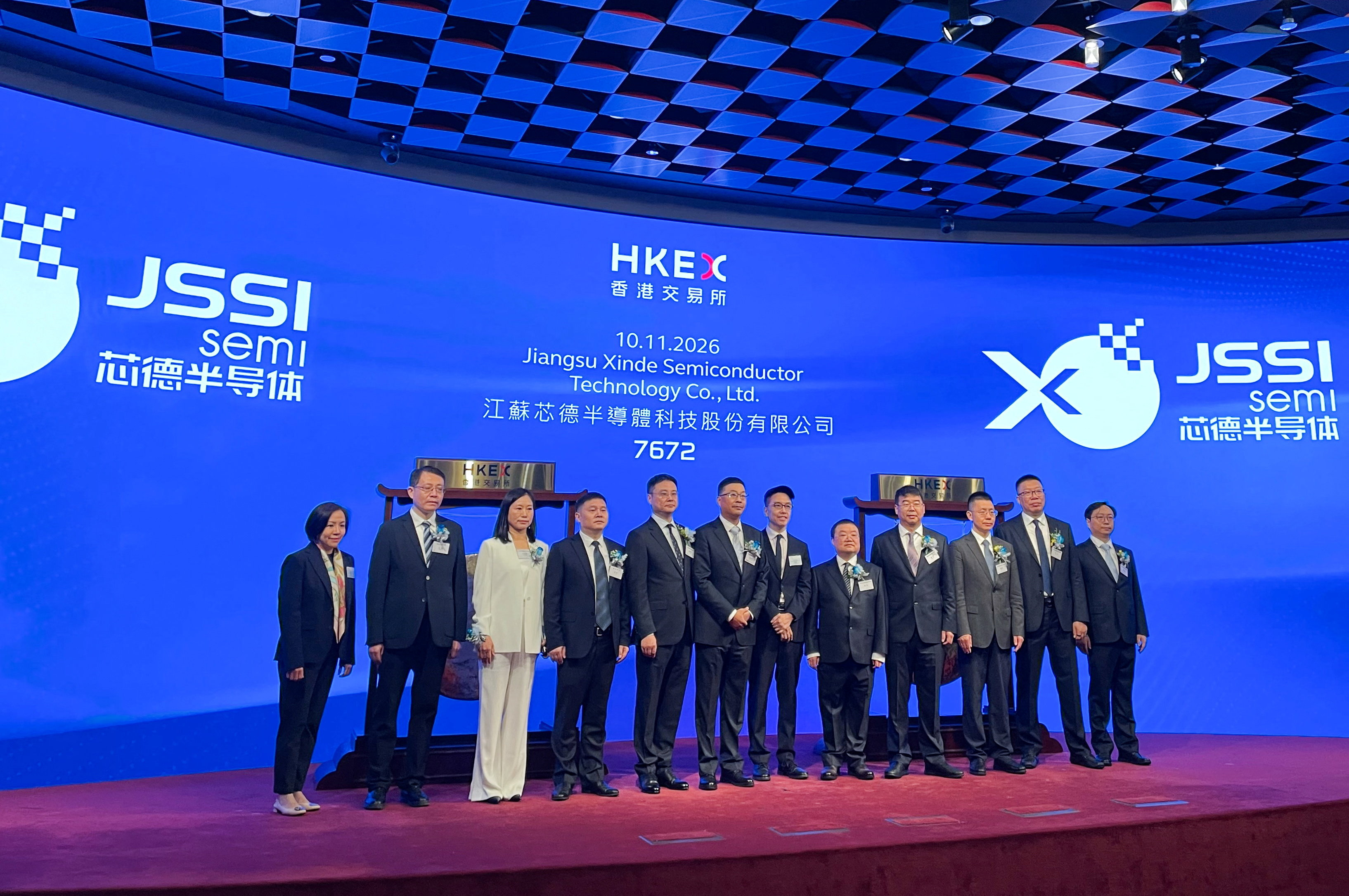
Two chip-sector firms debuted in Hong Kong, with AI chip designer Suzhou Denglin Technology falling into loss territory at the start of trading and semiconductor packager and tester Jiangsu Xinde Semiconductor Technology making a much stronger debut.
Across the border, the Shanghai Composite Index opened up 21 points, or 0.58 percent, at 3,682.
The Shenzhen Component Index put on 167 points, or 1.51 percent, to open at 11,313 while the ChiNext Index rose 59 points, or 2.44 percent, to 2,518.
In Tokyo, the Nikkei opened 596 points, or 1.02 percent, higher at 59,372 and was 1,725 points or almost three percent higher at one stage before noon.
In Seoul, the Kospi surged 228 points, or 4.55 percent, to open at 5,247 amid gains for its heavyweight chipmakers – 3.74 percent for Samsung Electronics and 5.28 percent for SK Hynix.
The gains came as Brent crude futures were hovering at their lowest levels since early September, well below US$100 per barrel, as investors pinned their hopes on possible talks between the United States and Iran.
They were last down one percent at US$91.56 a barrel.
The US-Israeli war with Iran, which erupted at the end of February, has stoked inflationary concerns across the globe, spurring major central banks to raise rates in recent months.
Nick Twidale, chief market strategist at ATFX Global, said the latest developments offered hope that an end to the conflict could be approaching, but there was still a considerable gap between diplomacy and a lasting peace agreement.
"The risk now is that markets have moved too far, too quickly... any indication that negotiations are faltering could see a substantial rebound in prices as traders rapidly rebuild the geopolitical risk premium," he said.
The slump in oil prices eased inflation worries and helped lift stocks after last week's rout as a sweeping victory by Democrats in the US midterm elections fed concerns that new regulations could dent the durability of the AI trade.
On Monday, the S&P 500 clocked its biggest one-day jump since April, closing up 2.35 percent while the Nasdaq closed 2.7 percent higher, its best day in over four months.
"We believe resets in expectations are healthy, and the AI trade appears to be working through a reset of its own at the moment," said Anthony Saglimbene, chief market strategist at Ameriprise.
Earnings reports due this week from tech companies such as CoreWeave, a barometer of investor anxiety over AI, will be another test for markets as investors fret about the cost of the AI buildout.
Saglimbene said Anthropic's prospective IPO could be an important test of investor confidence.
Market focus remains on Nvidia after the second-most valuable company in the world said its board was probing whether CEO Jensen Huang had been the target of a foreign intelligence operation.
A media report alleged he had a close relationship with a Chinese businesswoman who passed information to Beijing.
Huang has said he was unfaithful to his wife.
Shares of Nvidia, which is due to report earnings next week, fell 4.2 percent.
Daniel Morgan, a portfolio manager at Synovus Trust who holds Nvidia shares, said certain personalities in the technology space were so intertwined with the success of the company it was hard to separate the two.
"But the companies can still be successful long after the original founders have taken on a lesser role," he said, adding he remained confident that Nvidia would continue to maintain its lead in the GPU AI chip market even if Huang was forced to step down to a lesser role.
All eyes will be on US inflation data later in the day, with prices likely to have increased at a moderate pace in October, economists said, and remaining stubbornly high enough for the Federal Reserve to raise interest rates next month.
Traders are pricing in an 84 percent chance of a rate hike next month versus 74 percent a week earlier, a CME FedWatch tool showed after a blowout October jobs report on Friday. (Agencies)
Edited by Tony Sabine
HK, regional markets get a bump from Wall St gains
2026-11-10 HKT 11:10
Share this story


