


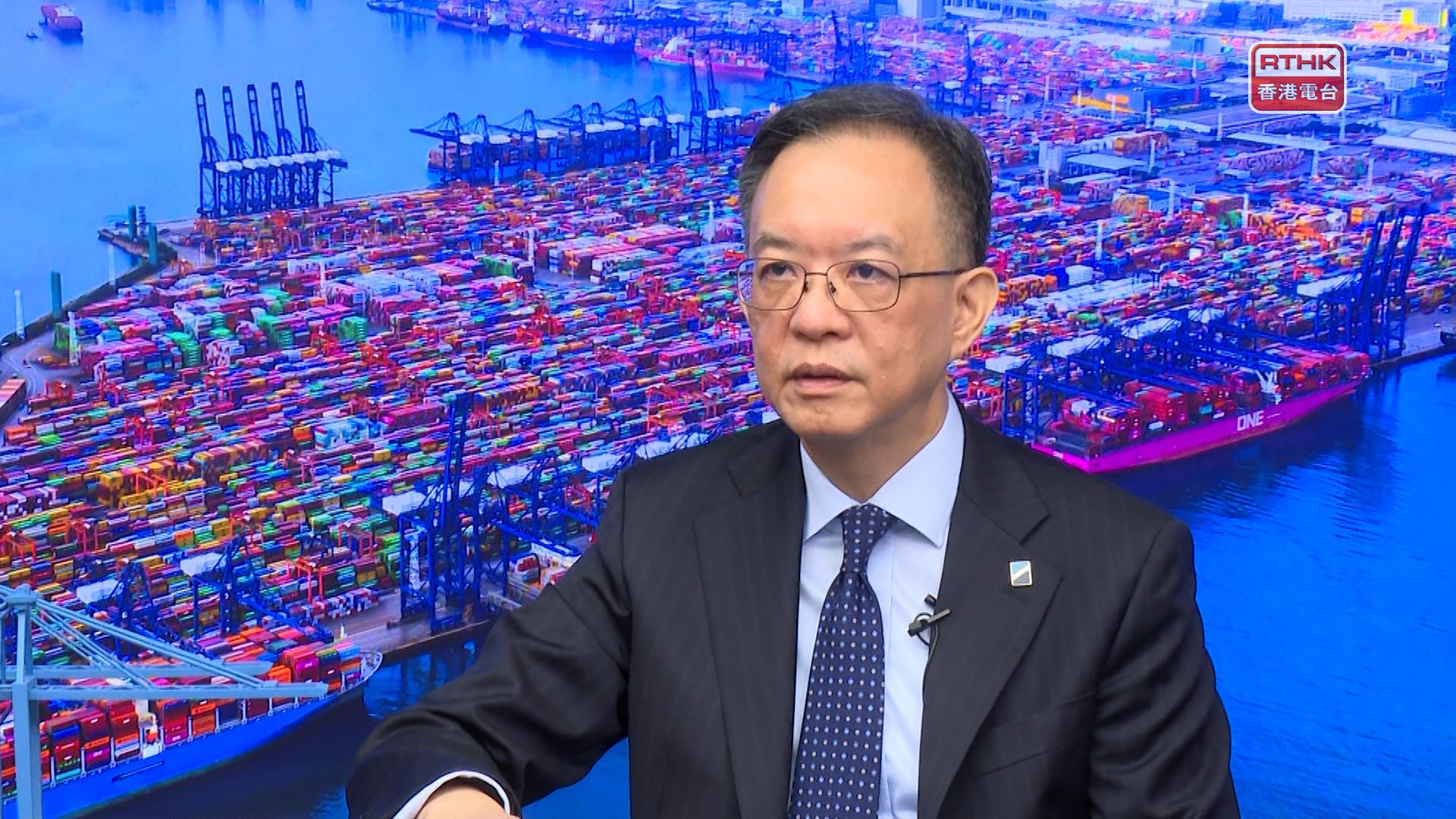
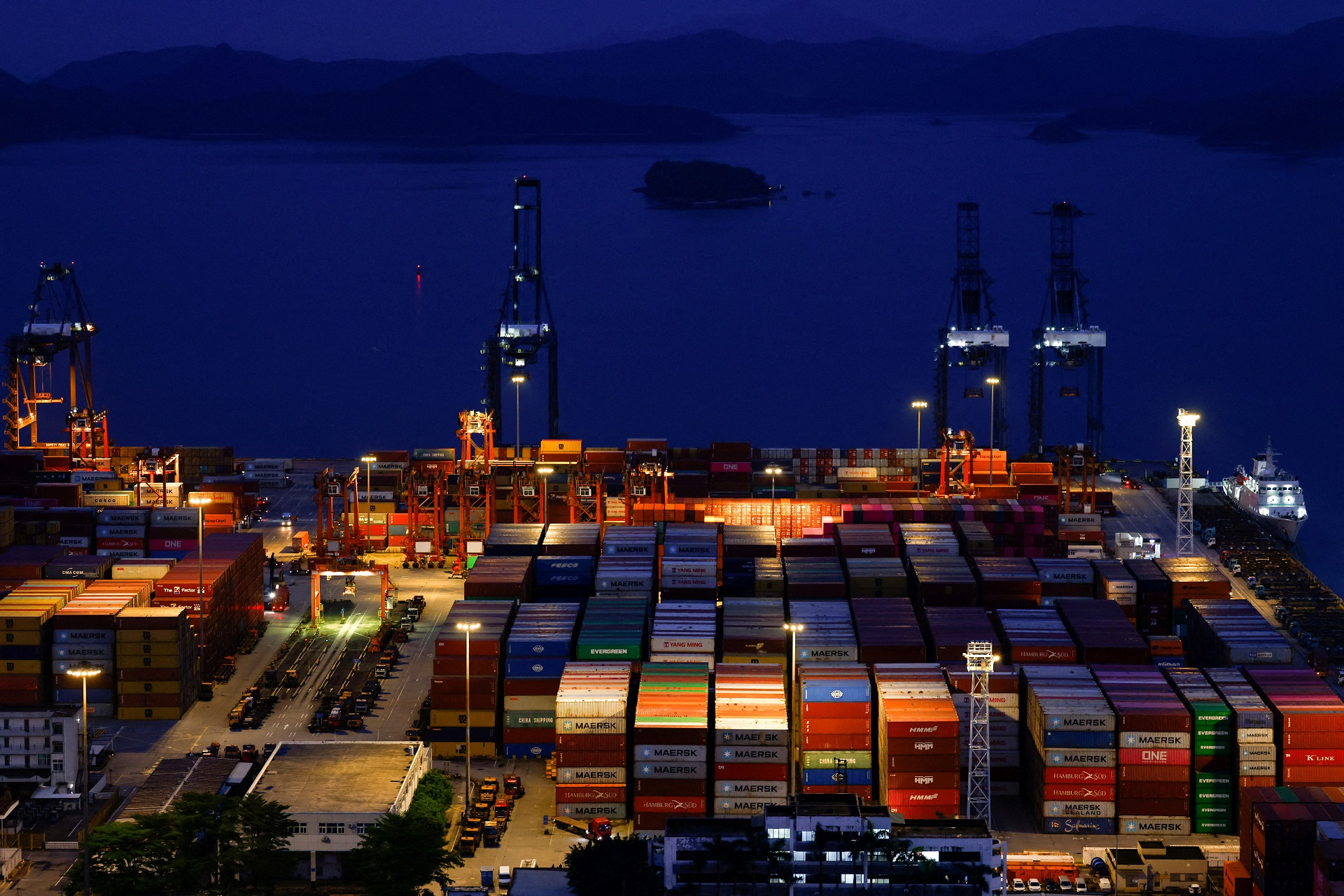


As Shenzhen's maritime logistics industry has taken off in recent years, a senior official at one of the world's busiest container terminals said Hong Kong still had much to offer as the nation forges closer ties with the world.
Yantian Port, in eastern Shenzhen, is a vital gateway between the nation's manufacturing engine and global markets.
It handles more than one-third of Guangdong's foreign trade and a quarter of the country's container exports to the United States.
According to the Shenzhen municipal government, the deep-water port handled 16.1 million TEUs, or twenty-foot equivalent units, in 2025, representing a 7.1 percent year-on-year increase.
Lawrence Shum, managing director of Yantian, a subsidiary of Hutchison Ports, said the terminal operates nearly 100 international routes on a weekly basis.
Fifty-three of those routes are linked to Apec economies.
"Since the start of this year, we have added 14 new routes to and from Apec economies, further expanding our international network and fostering regional trade," he said.
"According to the customs figures, Shenzhen continues to lead the country in both imports and exports to Apec economies. We even set a record in the first nine months of this year, with a trade value of 3.23 trillion yuan, a 40 percent jump."
Shenzhen is the host of this year's Apec leaders' summit scheduled for November 18 and 19.
Shum explained that Yantian had a unique advantage over other Shenzhen ports when handling shipments from inland regions.
"Yantian houses Shenzhen's only railway that reaches directly into the port area. Through sea‑rail intermodal transport, port services can be extended to inland regions such as the southwest and central areas, making it more convenient for enterprises in Chengdu and Chongqing and bringing them closer to international markets," he said.
Under Shenzhen's 15th Five-Year Plan, Yantian is to strengthen cooperation with Hong Kong's Kwai Tsing Container Terminals.
Shum said six daily vessel trips between the two ports mean cargo can arrive at its destination in about six to eight hours.
"For inland foreign trade enterprises, transportation time can be more stable, more efficient, and more environmentally friendly. Shenzhen and Hong Kong can further tap into inland cargo trade ... and achieve a win‑win for the three regions," Shum said.
Edited by Tony Sabine
'SZ, HK should join hands to grow external trade'
2026-11-10 HKT 15:37
Share this story


2026-11-09 HKT 13:05
2026-11-06 HKT 16:41
2026-11-03 HKT 18:39
2026-10-25 HKT 10:58

2026-10-23 HKT 12:09

2026-10-21 HKT 18:38
2026-10-21 HKT 18:08
2026-10-21 HKT 14:05
2026-10-21 HKT 11:52
2026-10-20 HKT 18:07
2026-10-20 HKT 15:49
2026-10-20 HKT 12:12
2026-10-20 HKT 10:59
2026-10-20 HKT 07:50
2026-10-19 HKT 18:59
2026-10-15 HKT 07:45
