


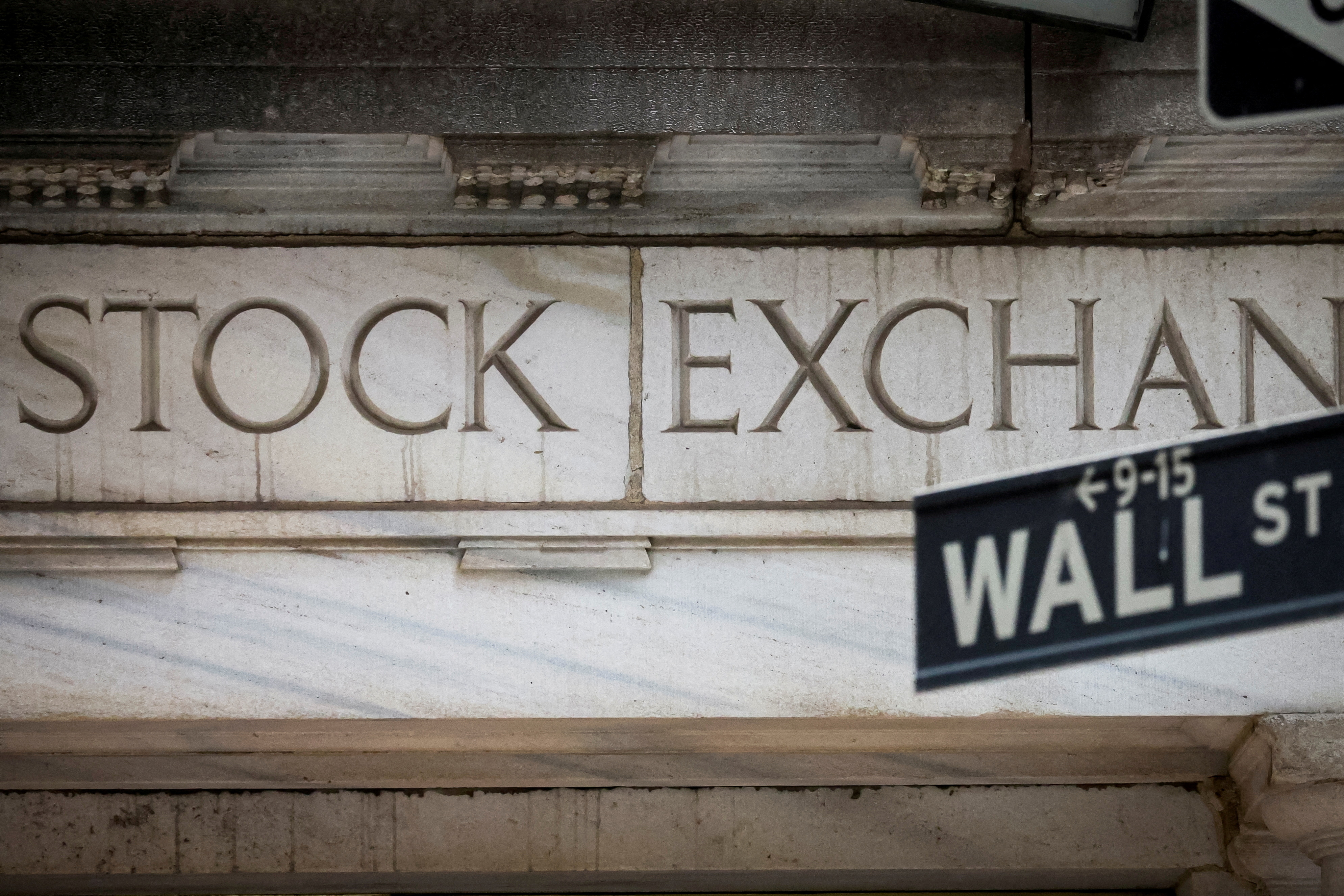
A pullback in big AI-focused companies weighed on the market, capping a turbulent week on Wall Street.
The S&P 500 fell 0.4 percent, but managed to post a 2.5 percent gain for the week.
The Dow Jones Industrial Average recovered from an early slide and eked out a 0.1 percent gain. The Nasdaq composite fell 0.9 percent, but also notched its first weekly gain in five weeks.
The S&P 500 fell 30.73 points to 7,561.67, the Dow Jones Industrial Average gained 50.46 points to 52,347.55, and the Nasdaq lost 229.82 points to close at 25,136.27.
The major indexes have been shaky this week as some of the biggest AI companies pushed and pulled the market.
The market remained unsteady a day after the AI industry was rocked by the resignation of Nvidia CEO Jensen Huang.
Nvidia’s longtime chief financial officer, Colette Kress, will be its interim CEO. The ensuing fallout cost Nvidia’s market cap more than US$600 billion this week.
Nvidia fell 2 percent. Broadcom fell 4.8 percent and Advanced Micro Devices lost 8.8 percent.
Nvidia in particular has been slipping for weeks amid wider concerns about a potential slowdown for the industry.
“Nvidia's pullback serves as a reminder of the concentration risk embedded in a market where a small number of mega-cap technology stocks have driven an outsized share of returns,” said Angelo Kourkafas, senior global strategist at Edward Jones, in a research note.
Microsoft rose 0.2 percent, despite suffering a global outage for its web services that disrupted email accounts and other applications.
A report on Friday showed that wholesale inflation cooled slightly last month, but remains high . The report measures inflation experienced by businesses, before it can reach consumers. Inflation at the consumer level remains stubbornly high at well above 3 percent. That's higher than the Fed's preferred target of 2 percent.
The latest wholesale inflation report also showed food prices and other costs gaining ground, despite some easing for energy costs.
“That suggests inflation is working its way into the broader economy rather than remaining concentrated in the original areas of price pressure,” said Chris Osmond, chief investment officer for Fifth Third Wealth Advisors, in a research note. “If that continues, it becomes much harder for the Fed to simply look through inflation as temporary.”
The central bank held rates steady at its last meeting, following a previous rate hike. The latest hot updates on inflation have prompted economists to overwhelmingly expect a rate hike at the upcoming December meeting, with another hike likely to follow in January. (AP)
Edited by Robert Kemp
US markets end lower as Nvidia casts a pall
2026-11-14 HKT 05:58
Share this story


