


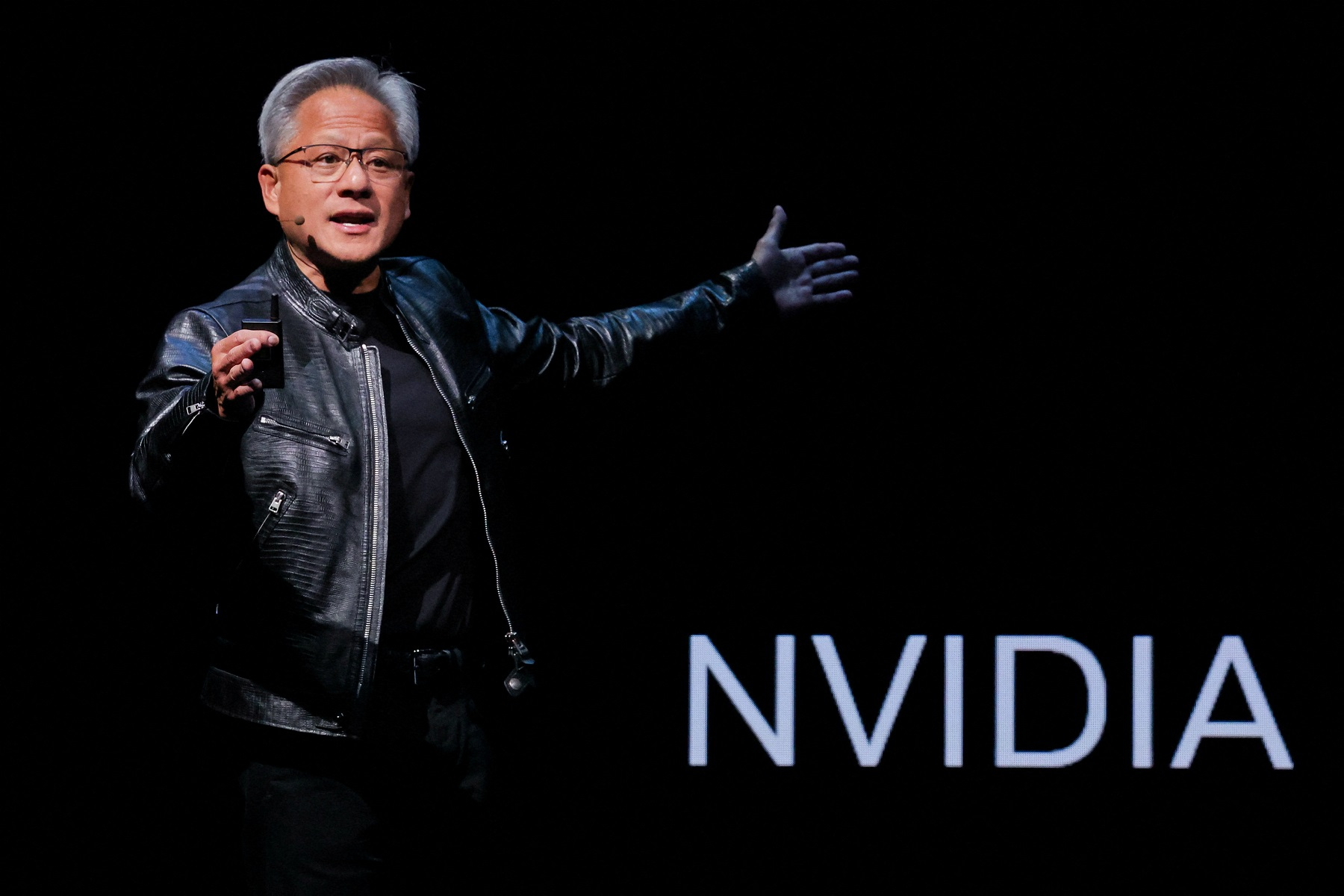
AI chip giant Nvidia does not plan to bring its embattled co-founder back as chief executive despite Jensen Huang saying he was ready to return, the company's board chairman said on an earnings call.
"The Nvidia board unanimously accepted his resignation and does not intend to reinstate Jensen as CEO," chairman Harvey Jones said, adding that the board would not be addressing the circumstances of Huang's resignation on the call, and would communicate further when appropriate.
Jones' start to a call about quarterly results was a forceful response to a movement to bring back Huang, who stepped down last week.
With Huang gone, investors are eager for clues about Nvidia's future and strategy, from its commitments of billions of dollars to cloud providers, suppliers and AI startups to who will ultimately lead the world's most valuable chipmaker.
Shares of the company rose 2 percent in extended trading, after Nvidia forecast sales ahead of Wall Street targets.
"It's no surprise that they're doing very well, and there'll be people who will breathe a sigh of relief about it," said Rick Meckler, partner at Cherry Lane Investments.
"But the story here is very complicated, and it's hard not to factor that in as an additional risk for people buying stock."
Jones said the board had hired executive search firm Heidrick & Struggles to help find a new CEO.
Interim CEO Colette Kress, who is also finance chief, kept her focus on financials and products in the statement accompanying results.
"Our momentum is real," she said, without addressing the leadership issue.
"Vera Rubin is off to an explosive start, our roadmap is on track," she added, referring to the company's latest flagship AI chip.
Huang, the AI boom's most prolific salesman, resigned on Thursday after revelations of extramarital affairs, including one with Chinese businesswoman Alice Huang and two with Nvidia employees.
Jensen Huang's exit ended three decades of founder-led control over Nvidia's chip roadmap, customer deals and Washington ties, making execution a bigger risk than near-term AI demand, analysts say.
The company expects fourth-quarter revenue of US$130 billion, plus or minus 3 percent, above analysts' average estimate of US$125.25 billion, according to LSEG data. Nvidia said the outlook assumes no data-centre chip sales to China.
Adjusted gross margin is expected at 71 to 72 percent, compared with analysts' estimate of 71.7 percent.
Anshel Sag, principal analyst at Moor Insights & Strategy, said Nvidia's outlook was "quite positive, albeit not as ambitious as in previous quarters, which many have already anticipated."
He added, "I don't think anything near-term will be affected by Jensen's departure. His executive leadership team is capable and has followed his leadership and executed effectively for years, reaching this point."
The board is considering internal and external candidates for CEO, with Kress seen offering steady leadership during the selection process.
But a growing "Stand With Jensen" campaign has complicated the search, and Huang said on Tuesday he would be "honoured" to return if the board deemed it best.
"Since my departure, I've seen an outpouring of calls from Nvidia's employees, investors, business partners, and customers for me to return as CEO," Huang said in his first statement since his resignation.
Earlier on Tuesday, Nvidia's board created a committee on national security and export controls, its first major governance move since Huang's departure, as scrutiny grows over the chipmaker's national security role.
Washington has also tightened licensing rules for chip shipments to Southeast Asia and overseas data centres serving Chinese firms, while lawmakers prepare to question Huang, who had pushed for greater chip exports to China.
Investors were already uneasy about AI spending after the Democrats' sweep of the US midterm elections fuelled fears of tougher scrutiny and slower data-centre expansion.
They also want to know whether Nvidia's next CEO will continue financing customers, a practice critics call circular.
Nvidia's third-quarter revenue more than doubled to US$115.8 billion, beating analysts' estimate of US$109.1 billion. The company has topped Wall Street's revenue expectations for 17 straight quarters.
Adjusted gross margin rose to 74.9 percent from 73.5 percent a year earlier, also beating analysts' estimate of 74.1 percent, despite soaring memory prices and production ramps. (Agencies)
Edited by Cecil Wong
Jensen Huang won't be back as chief: Nvidia board
2026-11-18 HKT 06:59
Share this story


