


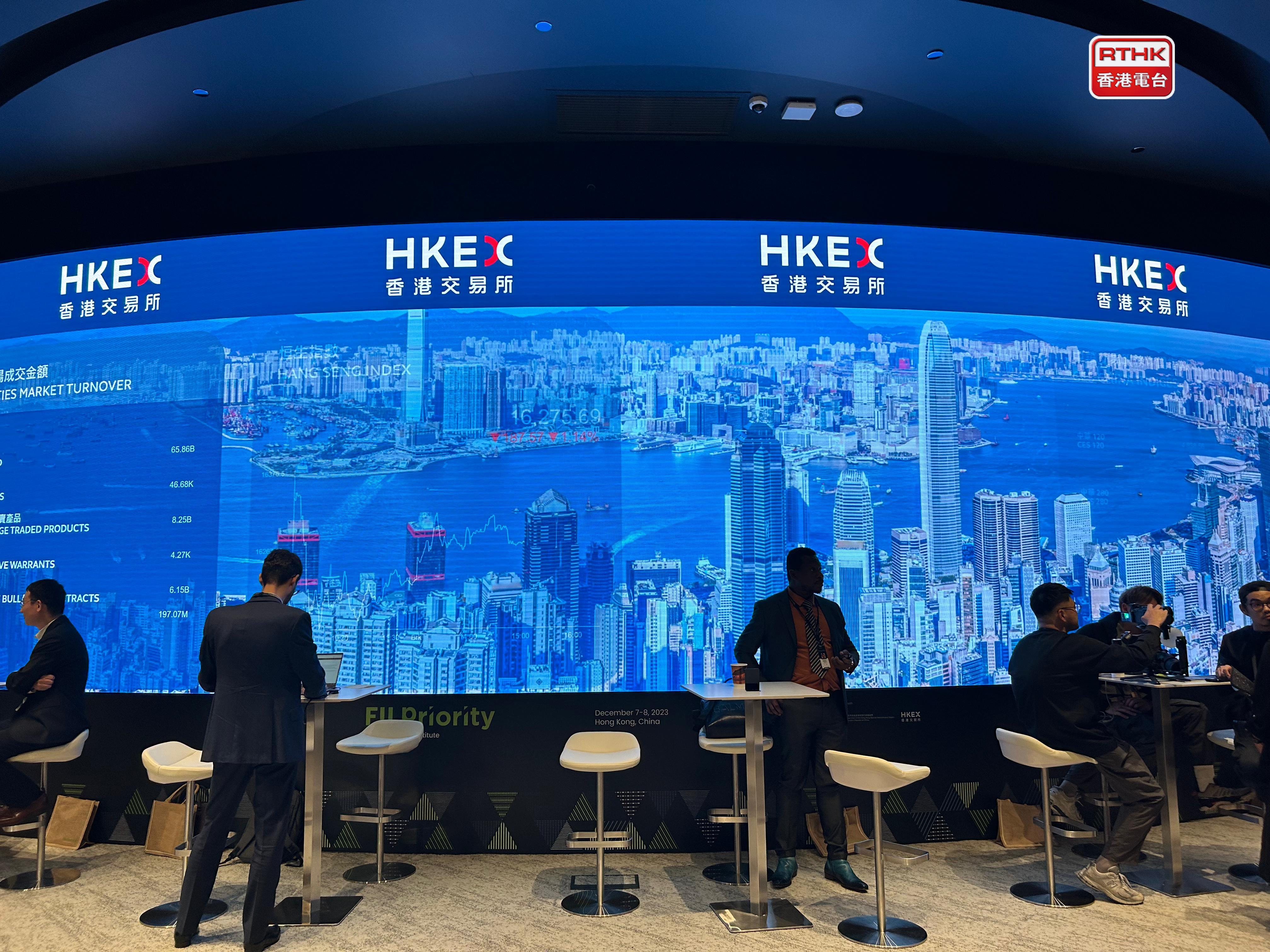
Hong Kong's benchmark sank to four-month lows while mainland stocks remained under pressure, as fresh trade tensions flared up between China and the United States despite meetings between Presidents Xi Jinping and Donald Trump in Shenzhen.
The benchmark Hang Seng Index closed 453 points, or 1.9 percent, down at 22,841 on turnover of HK$229.55 billion.
The tech index fell 87 points, or 2.3 percent, to 3,649, hitting a 26-month low as it extended its losing streak to seven sessions, while the China enterprises index stumbled 145 points, or 1.9 percent, to 7,690.
Hong Kong-listed AI model developers and AI hyperscalers, whose competitiveness depends on advanced computing power, tumbled.
MiniMax slumped as much as 11 percent to record lows while Z.AI lost two percent.
Tencent tumbled nearly seven percent to a 31-month low after its third-quarter revenue missed forecasts, and the company said new US chip curbs may slow model training.
Alibaba tanked 5.5 percent to a 22-month low while Shanghai Iluvatar CoreX Semiconductor slumped 17 percent.
On the mainland, the Shanghai Composite Index fell 10 points, or 0.28 percent, to close at 3,577, its lowest level, in more than 15 months on turnover of 636.9 billion yuan.
The Shenzhen Component Index dropped 76 points, or 0.71 percent, to close at 10,583 on turnover of 668.23 billion yuan while the ChiNext Index declined 18 points, or 0.79 percent, to close at 2,293 on turnover of 310.12 billion yuan.
Tech stocks that rely on advanced chips, including cloud computing, AI and big data, led the declines
The losses came as Xi said on Thursday he remained committed to working with Trump to steer ties between their countries on the "correct course", even as the Commerce Ministry voiced strong opposition to a recent series of economic and trade restrictions the US imposed against China.
The Nvidia saga has led to tighter scrutiny of US chip exports to China.
The Trump administration is also considering requiring US companies to publicly disclose their use of Chinese AI models to discourage reliance on the technology.
Meanwhile, a US House panel asked Microsoft on Wednesday to brief lawmakers on a report that said the company could allow the Chinese firm ByteDance to use OpenAI models through Microsoft's Azure cloud platform.
These developments deepened investor worry that the world's two largest economies are careening towards a fresh tit-for-tat trade war, after the Republicans' defeat in the US midterms appears to have prompted the White House to take a more hawkish policy towards China.
In Tokyo, the Nikkei ended 419 points, or 0.71 percent, higher at 59,444, with Softbank Group gaining 4.5 percent and Advantest edging down 0.55 percent. The broader Topix edged down 0.04 percent to 3,822 in, like with the Nikkei, similarly choppy trading.
In Seoul, the Kospi recovered from early losses to end 70 points, or 1.39 percent, higher on a rebound by chipmakers, with Samsung Electronics rising 1.13 percent and SK Hynix gaining 3.41 percent. (Agencies)
Edited by Edmond Fong
HK, mainland stocks fall amid chip clampdown
2026-11-19 HKT 17:24
Share this story


