


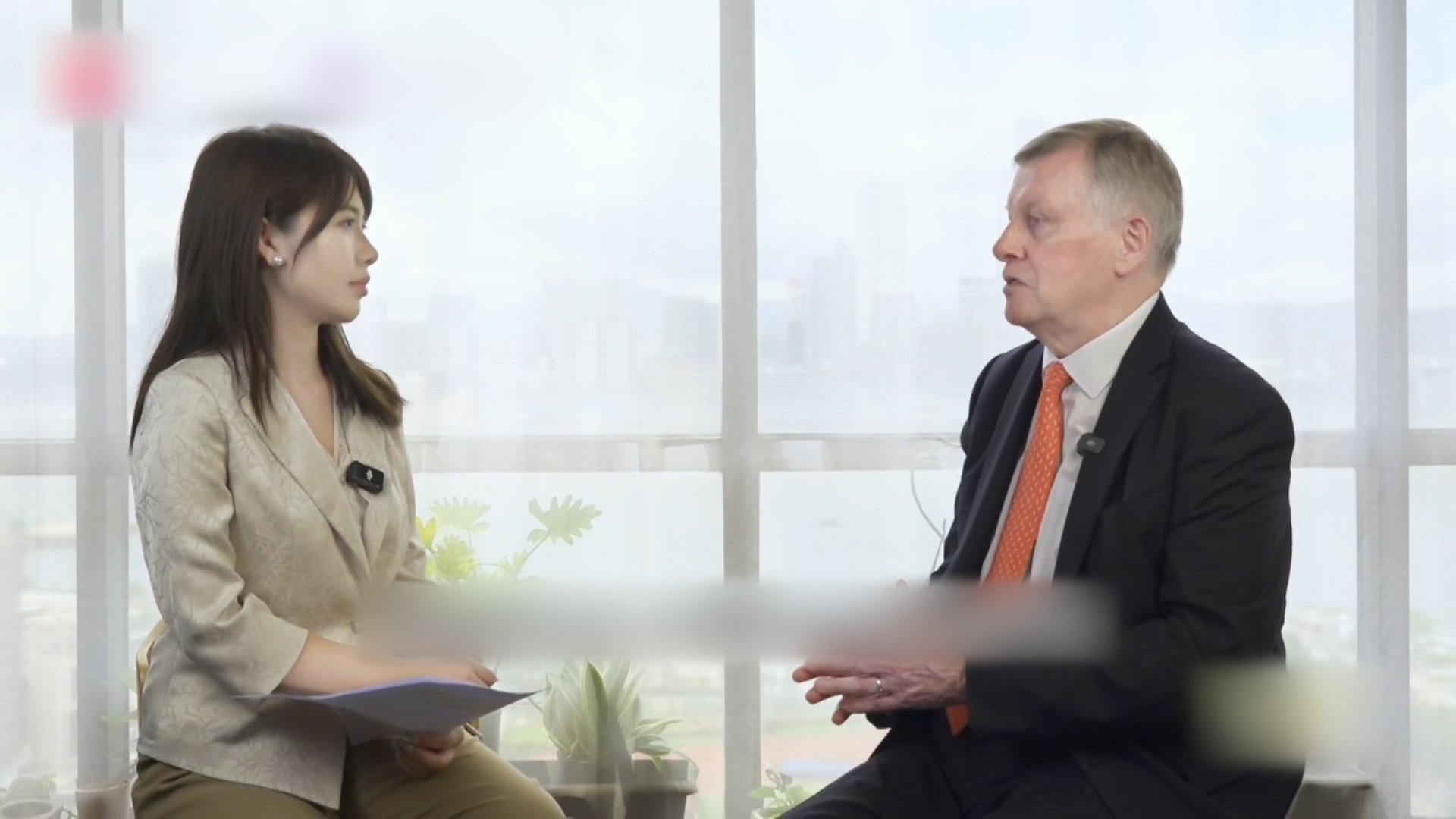
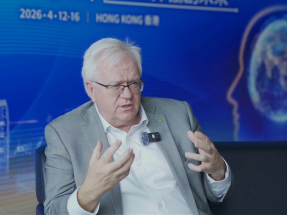
The chairman of the New Zealand Chamber of Commerce in Hong Kong, David Whitwam, has urged participants at the ongoing Apec meetings in Shenzhen to step outside the conference halls and experience the dramatic changes China has undergone over the past three decades.
The call came as he warned that Western narratives about the country were stuck some 20 years behind reality.
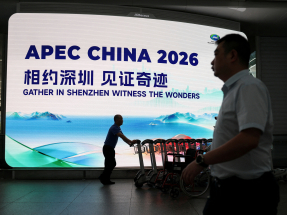
Whitwam, who has been based in Hong Kong since 1993, made the remarks ahead of the 2026 Apec Economic Leaders' Meeting, which will be held in Shenzhen.
He said the unprecedented gathering of people is also an opportunity for more people to understand the real China.
Drawing on his own experience, Whitwam recalled arriving in Hong Kong in 1993 and travelling to the mainland, when foreign visitors had to use foreign exchange certificates to buy goods in shops.
"I've got 300 RMB in my wallet. It's been in there for two years, I haven't used it, because now everything is on WeChat or Alipay," he said.
"In fact, even going to the dentist in Shenzhen, we use Alipay to pay our bills.
"It's an incredible transition from where we were 30 years ago to where we are now."
Whitwam served as chief representative of the New Zealand National Bank's Hong Kong office and, over more than three decades, travelled frequently between Hong Kong and the mainland.
He said the shift in payment methods is one of the most vivid details of China's development he has witnessed, while the accelerating integration of Shenzhen and Hong Kong is evident in the growing convenience of commuting between the two places.
After attending his first Canton Fair as a buyer, Whitwam later founded a consultancy and took up a role with the New Zealand Chamber of Commerce in Hong Kong.
Over the years, he has led multiple New Zealand business delegations to China for trade exhibitions, promoting bilateral trade and witnessing first-hand the role that efficient movement of people and goods plays in driving the economy.
On New Zealand-China relations, Whitwam noted that his country is probably the smallest partner among the Five Eyes grouping and therefore tends to maintain its own viewpoint on foreign relations.
He pointed out that New Zealand was the first, or one of the first, countries to establish a free-trade agreement with China, and the first country in the world to have a free-trade agreement with Hong Kong.
"There are times when New Zealand and China have differences of opinion, but we tend to think that the two countries have a very mature relationship, and therefore when friends have arguments they usually sit down and settle those arguments in a constructive way," Whitwam said.
Whitwam stressed the importance of openness to the movement of people.
From a New Zealand perspective, he said, people need to travel to China so they understand the market.
"If you're an exporter, you need to understand the consumer culture, you need to understand the way that supermarkets display their products. It's no good just having your product on a shelf and hoping that people are going to pick it up and take it to the checkout," he said.
Whitwam also encourages visitors to explore beyond the boardroom, noting that he visits some of the more extreme, outlying areas of Shenzhen and goes hiking there about once a month.
He singled out Red Ribbon Walk in the Guangming area, describing it as a spectacular facility where people can walk four kilometres among the treetops.
"I'd recommend that people get out of their office and go and do a bit of that stuff," Whitwam said.
Edited by Tony Sabine
Chamber chief urges Apec visitors to see real China
2026-11-16 HKT 14:34
Share this story


2026-11-16 HKT 15:42
2026-11-16 HKT 12:54
2026-11-16 HKT 10:08
2026-11-15 HKT 18:32
2026-11-14 HKT 14:54
2026-11-13 HKT 11:49
2026-11-13 HKT 11:32
2026-11-12 HKT 12:25
2026-11-11 HKT 16:50
2026-11-10 HKT 18:26
2026-11-10 HKT 15:37
2026-11-09 HKT 13:05
2026-11-06 HKT 16:41
2026-11-03 HKT 18:39
2026-10-25 HKT 10:58

2026-10-23 HKT 12:09
