


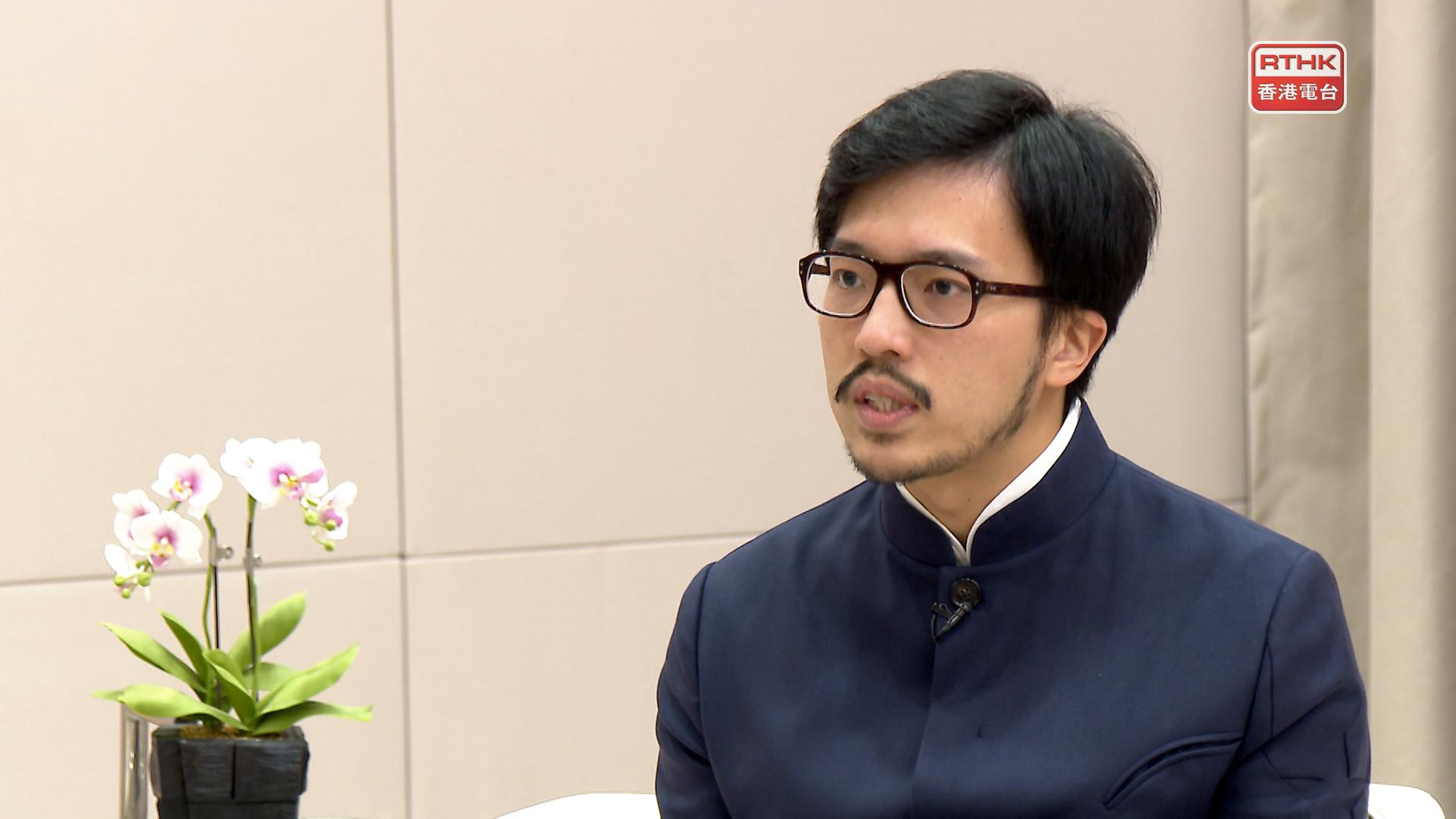
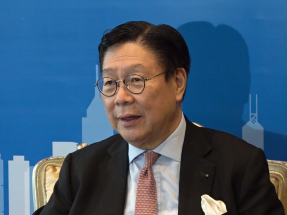
Commissioner for Belt and Road Nicholas Ho on Friday said the city's professional services sectors are expected to get a boost from the government-led trip to Central Asia early next month, but called for more flights to aid the development of ties.
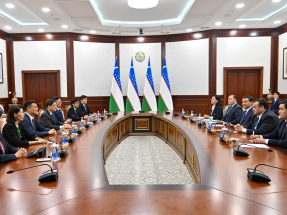
The remarks came as Chief Executive John Lee is set to lead Hong Kong's largest-ever delegation, including 60 business leaders from both the SAR and the mainland, to visit Kazakhstan and Uzbekistan to explore new opportunities.
The two Central Asian nations together account for 80 percent of the region's gross domestic product and are key members of the Belt and Road Initiative, Beijing's signature plan to grow global trade.
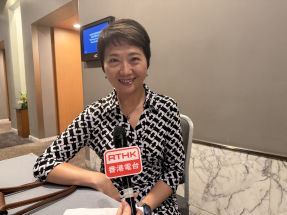
Speaking on RTHK's BackChat programme, Ho pointed to a "huge potential" for Hong Kong to cooperate with the resource-rich Central Asian region, especially over mining, commodities and artificial intelligence.
"Given Hong Kong's capabilities as an international financial centre, we can see that a lot of these high-quality mining companies, natural resource companies, are looking to Hong Kong to raise funds in order to reinvest to carry out more explorations because the natural resources field is extremely wide and some of them are still relatively untapped," he said.
"We are [also] seeing that funds being raised are used to build airports and new infrastructure, as they are looking to diversify in the non-mining proportion of their gross domestic product."
The energy crisis triggered by the US-Israeli attacks on Iran has, Ho noted, increased the region's strategic importance as more countries look to diversify their resource supply lines .
As such, he pointed out, Hong Kong is well placed to offer the region its expertise in green finance, green technologies, as well as green standards and professional services.
The city, Ho said, can also partner with the region to build up artificial intelligence and data centre capabilities, at a time when Kazakhstan is pushing for such a centre to be established in the country.
"That's also where Hong Kong's professional services, companies and enterprises can benefit," he said.
"Particularly in the field of AI development as there's a big debate going on at the moment about being able to generate enough power for these AI data centres, so somewhere with natural resources would be a great place."
Ho also said Hong Kong's strategy of pursuing a "hub-to-hub" model of development could generate enormous economic impact as the city lies at the heart of the Greater Bay Area, which has a population of 87 million, while Kazakhstan and Uzbekistan are key centres in Central Asia, with a combined population of 85 million and average economic growth rates of between six and seven percent.
He called on authorities to build up air connections with the region – given the current lack of direct flights.
"Given there's 80-plus million people there, they want our service providers in Central Asia and yet we still don't have a [direct] passenger flight. I think there's a huge demand there," Ho said.
"I think in the future we must definitely explore and drive it."
Edited by Tony Sabine
Central Asia trade push 'calls for more air links'
2026-05-22 HKT 15:45
Share this story


2026-08-20 HKT 13:32

2026-06-13 HKT 15:28
2026-06-11 HKT 18:58
2026-06-08 HKT 13:43
2026-06-07 HKT 16:26

2026-06-07 HKT 11:55
2026-06-06 HKT 07:02
2026-06-05 HKT 21:50
2026-06-05 HKT 18:22
2026-06-05 HKT 13:13

2026-06-05 HKT 09:24
2026-06-04 HKT 21:48
2026-06-04 HKT 16:44
2026-06-04 HKT 15:31
2026-06-04 HKT 09:11
2026-06-03 HKT 19:03
