


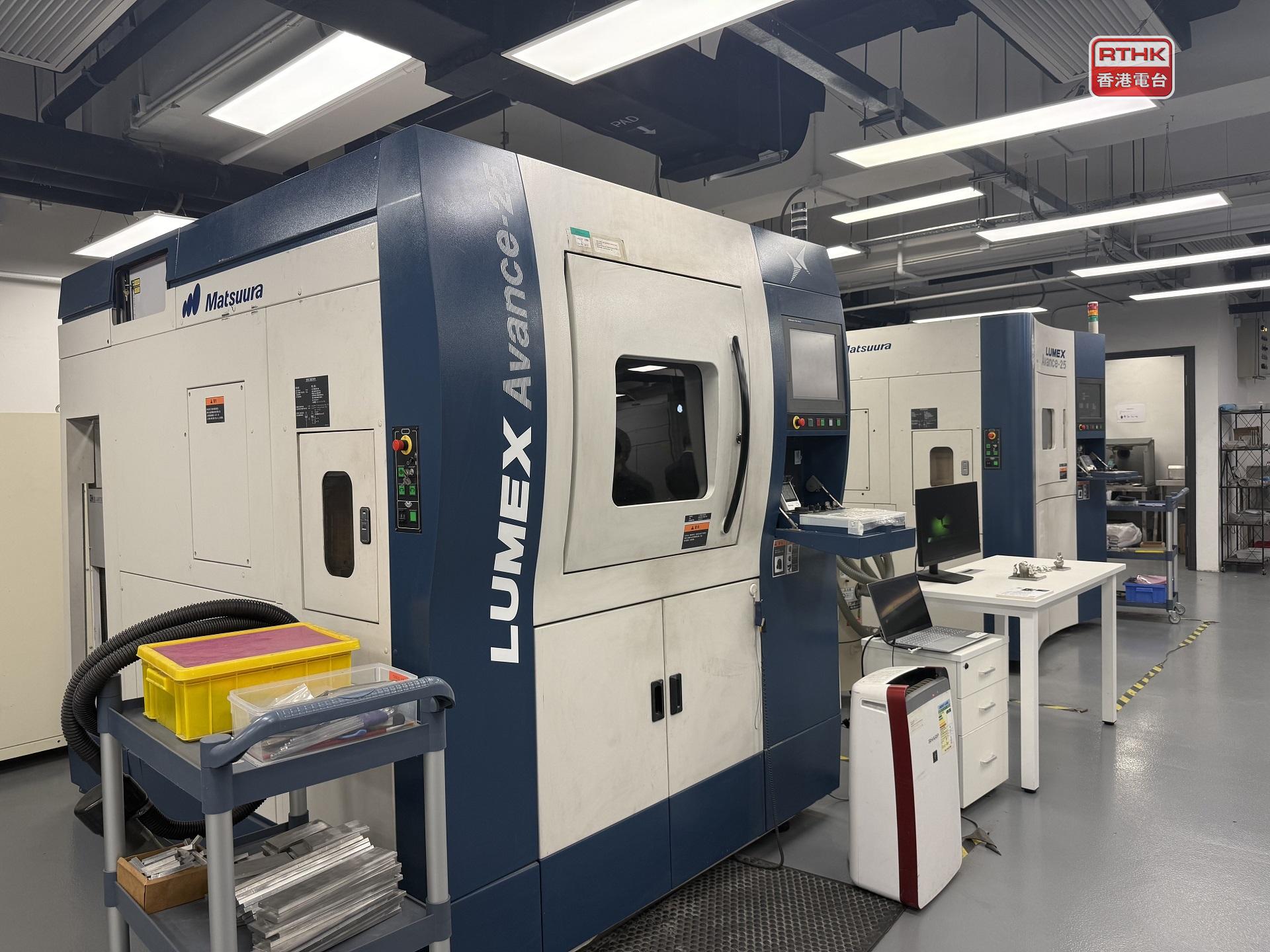


A Hong Kong company that produces 3D-printed metal implants is confident that Chief Executive John Lee's upcoming trip to Central Asia will lead to a collaboration agreement that will bring cutting-edge medical technology to patients in the region.
Koln 3D Technology (Medical) uses metal 3D printing to create custom bone implants that surgeons insert into patients' bodies, helping treat rare bone diseases that otherwise have no cure.
The technology was first applied on a patient in Hong Kong 10 years ago. Since 2022, the company has participated in the treatment of 12 bone cancer patients in Kazakhstan.
It has now received official approval to export metal implants there.
Haoran Sun, the company's chief technology officer, said bringing SAR-developed products into Central Asia will boost the reputation of the Hong Kong brand across the region.
"We will have more cases and potential local manufacturing centres in Kazakhstan because they actually have a quite good foundation of industrial systems so we can build the sites there," he said.
"Both Kazakhstan and Uzbekistan have very good foundations and large populations. The income levels and medical service levels are good. But previously, they could only seek overseas brands or even go to South Korea for medical services. I think we can bring the standard of Hong Kong technologies and clinical services to both countries – and not only to them, but to all the other Central Asian countries."
Sun advised firms looking to tap into the Central Asian market to invest time and understand the local culture.
"I think in Central Asia, because we have so many barriers in language and culture - we're so different - so we need to know each other first," he said.
"So I think when you have patients, we need to understand their diversity and also their background, their medical services, procedures. And once we build this understanding and trust, we can gradually increase. And once we build the correlation, there will be very strong support for future collaborations."
The company's founder and CEO Edmond Yau said his team will continue to work with universities in Hong Kong to overcome challenges in implant technology.
It's also looking to innovate, including the creation of "micro-channels" inside 3D-printed bones which can store slow-release medicine for treatment and sterilisation purposes.
Edited by Raymond Yeung
'CE's Central Asia trip to boost HK medical tech'
2026-05-27 HKT 09:13
Share this story



2026-08-20 HKT 13:32

2026-06-13 HKT 15:28
2026-06-11 HKT 18:58
2026-06-08 HKT 13:43
2026-06-07 HKT 16:26
2026-06-07 HKT 11:55

2026-06-06 HKT 07:02
2026-06-05 HKT 21:50
2026-06-05 HKT 18:22
2026-06-05 HKT 13:13

2026-06-05 HKT 09:24
2026-06-04 HKT 21:48

2026-06-04 HKT 16:44
2026-06-04 HKT 15:31

2026-06-04 HKT 09:11
2026-06-03 HKT 19:03
