




Secretary for Commerce and Economic Development Algernon Yau told lawmakers on Tuesday that RTHK would strengthen its role as a government department and public broadcaster, enhancing the dissemination of government messages and policy promotion.
Briefing legislators on the first Hong Kong's five-year plan and the Policy Address, he said the public broadcaster would make greater use of new media platforms and artificial intelligence technology.
"To increase outreach, RTHK will strengthen its use of new media platforms and artificial intelligence technologies to improve production quality and efficiency," Yau said.
He also said the station would deepen collaboration with broadcasters on the mainland and in other Belt and Road regions.
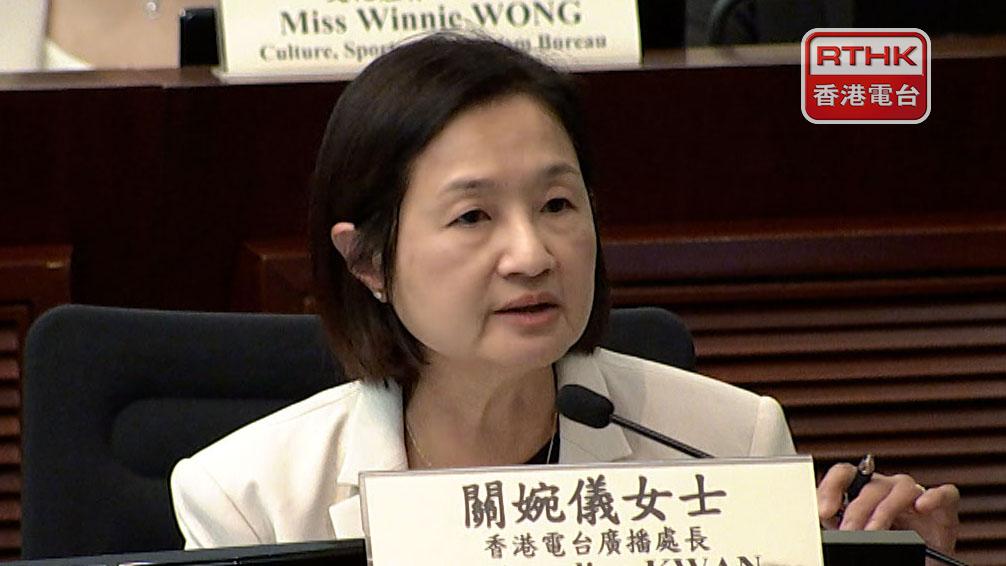
Director of Broadcasting Angelina Kwan said, in response to lawmakers' questions, that RTHK is realigning its manpower and resources in line with the 15th Five-Year Plan to tell the stories of the country and Hong Kong to a global audience.
She said a dedicated task force had been set up to manage and review the direction of new media platforms, using internal resources without additional funding.
Kwan said the TV32 channel had been enhanced with more news and current affairs content using existing resources.
"This year, we have increased our news and current affairs content across our TV32 channel," she said.
"Most of these adjustments were made by reallocating internal resources and personnel, in response to how the public or viewers currently consume news or current affairs information – adapting to their listening or viewing habits."
On regional collaboration, Kwan said RTHK is set to sign a cooperation agreement with Shenzhen Media Group on content sharing and joint productions, with the aim of bringing RTHK programmes to the Greater Bay Area while distributing quality mainland productions to international audiences.
Responding to concerns about overlapping roles with commercial broadcasters, Kwan said RTHK, as a government department and the only public broadcaster, must follow its charter in strengthening public understanding of "One Country, Two Systems", disseminating government information, fostering national identity and promoting social inclusion – a clear distinction from commercially operated television stations.
Edited by Tony Sabine
RTHK to beef up public service, expand new media reach
2026-10-06 HKT 16:37
Share this story


2026-10-11 HKT 11:57
2026-10-10 HKT 12:06
2026-10-10 HKT 11:57
2026-10-09 HKT 20:34
2026-10-08 HKT 17:31
2026-10-08 HKT 13:51
2026-10-08 HKT 12:29
2026-10-07 HKT 16:52

2026-10-07 HKT 12:20
2026-10-07 HKT 11:26
2026-10-06 HKT 11:36
2026-10-05 HKT 11:40
2026-10-04 HKT 12:52
2026-10-03 HKT 16:51
2026-10-02 HKT 15:50
2026-10-02 HKT 11:28
