


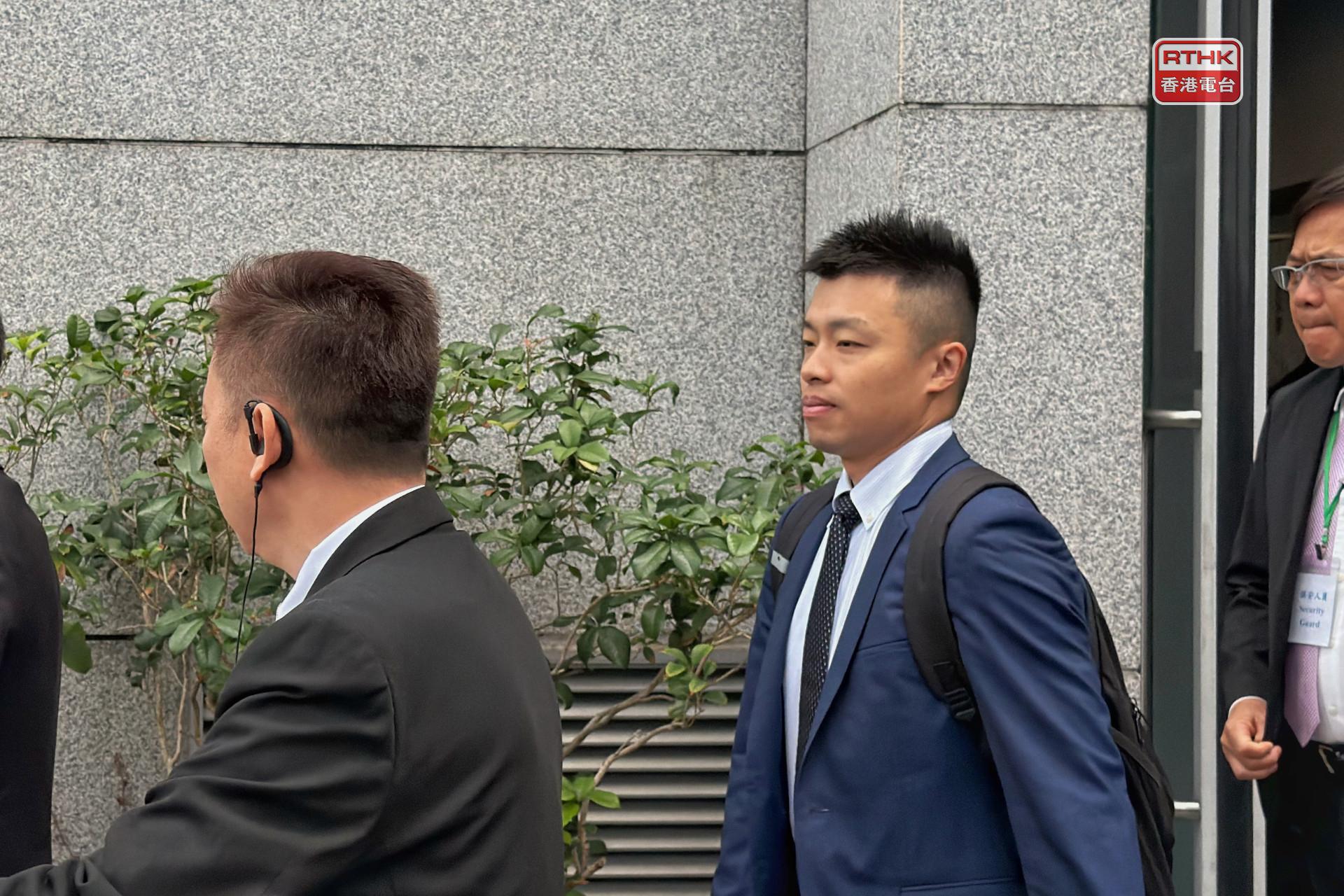
Emergency personnel were unable to locate the firefighter trapped in one of the Wang Fuk Court buildings in November before he perished, the first firefighter taking command of efforts to battle the Tai Po inferno on site said on Monday.
The independent committee investigating the fire earlier heard that Ho Wai-ho, the only firefighter among the 168 people killed in the blaze, had entered Wang Tai House by mistake and relayed a Mayday signal over the radio from its 30th floor moments before his death.
Hui Kin-on, a senior station officer of the Tai Po Fire Station, said he was the one who received the signal, but was not able to identify who made the call or the building from which it was transmitted.
Hui said he thought Ho was most likely to have been trapped in Wang Cheong House, where the blaze was the most intense at the time, and tasked several emergency response teams with carrying out a search for their colleague.
Ho was not, he said, supposed to be inside any of the buildings due to fallen debris blocking their entryways and there being no officer present to keep tabs on who had entered the blocks.
”I was a bit surprised that he was able to reach such a high level in the building amid a raging fire,” Hui said.
The district’s fire station commander, Cheung Lok-hang, told the committee that the blaze was “unprecedented” as it spread so quickly “both vertically and horizontally”.
“[The fire’s seriousness] was far beyond what our established operational and rescue strategies could cope with,” he said.
Cheung, who took over from Hui as site commander later that day, said, when asked whether he had considered helping residents evacuate, the priority was on controlling the inferno.
He said putting the focus on something other than fire control could have hindered efforts to contain the spread of the blaze.
The station commander also responded to suggestions for water bombs to be dropped from helicopters by saying the airflow they generated could create uncertainties in the fire’s spread.
The committee’s head, David Lok, said while the hearing might review and critique the Fire Services Department’s policies, it should be kept separate from the efforts of firefighters.
”Regardless of the inquiry’s outcome, I would like to say, on behalf of residents, that the efforts of frontline firefighters are much appreciated,” he said.
The inquiry also heard that Horace Lam, deputy divisional commander of New Territories East, decided to raise the fire alarm level to No. 4 around 3.30pm that day, citing a need to have higher-ranked officers on site due to the rapid spread of the blaze and the rising number of calls for help.
"Did you think the fire had reached a level that you, in your capacity, were unable to give command?" asked committee counsel Lee Shu-wun, to which Lam agreed.
The committee was also told that Raymond Wong, then deputy chief fire officer of New Territories North, later took over command at the scene.
Asked by Lee why he did not further raise the alarm at that time, Wong said: "I had to figure out a plan first before considering an upgrade. When I was not even ready for a No. 4 alarm, how could I upgrade it to No. 5?"
Wong, now on pre-retirement leave, also offered words of encouragement to those who were displaced by the devastating Wang Fuk Court fire at the end of his testimony.
_____________________________
Last updated: 2026-04-13 HKT 17:07
Edited by Tony Sabine
'Firefighter wasn't supposed to be in Wang Fuk block'
2026-04-13 HKT 16:24
Share this story


2026-10-06 HKT 12:52
2026-09-15 HKT 13:56
2026-09-09 HKT 22:14
2026-09-03 HKT 17:12
2026-09-01 HKT 11:34
2026-08-31 HKT 21:05
2026-08-29 HKT 15:10
2026-08-28 HKT 15:23
2026-08-25 HKT 16:43
2026-08-23 HKT 11:38
2026-08-18 HKT 13:29
2026-08-12 HKT 15:20
2026-08-01 HKT 11:12
2026-07-30 HKT 13:59

2026-07-25 HKT 13:18
2026-07-21 HKT 15:31
