


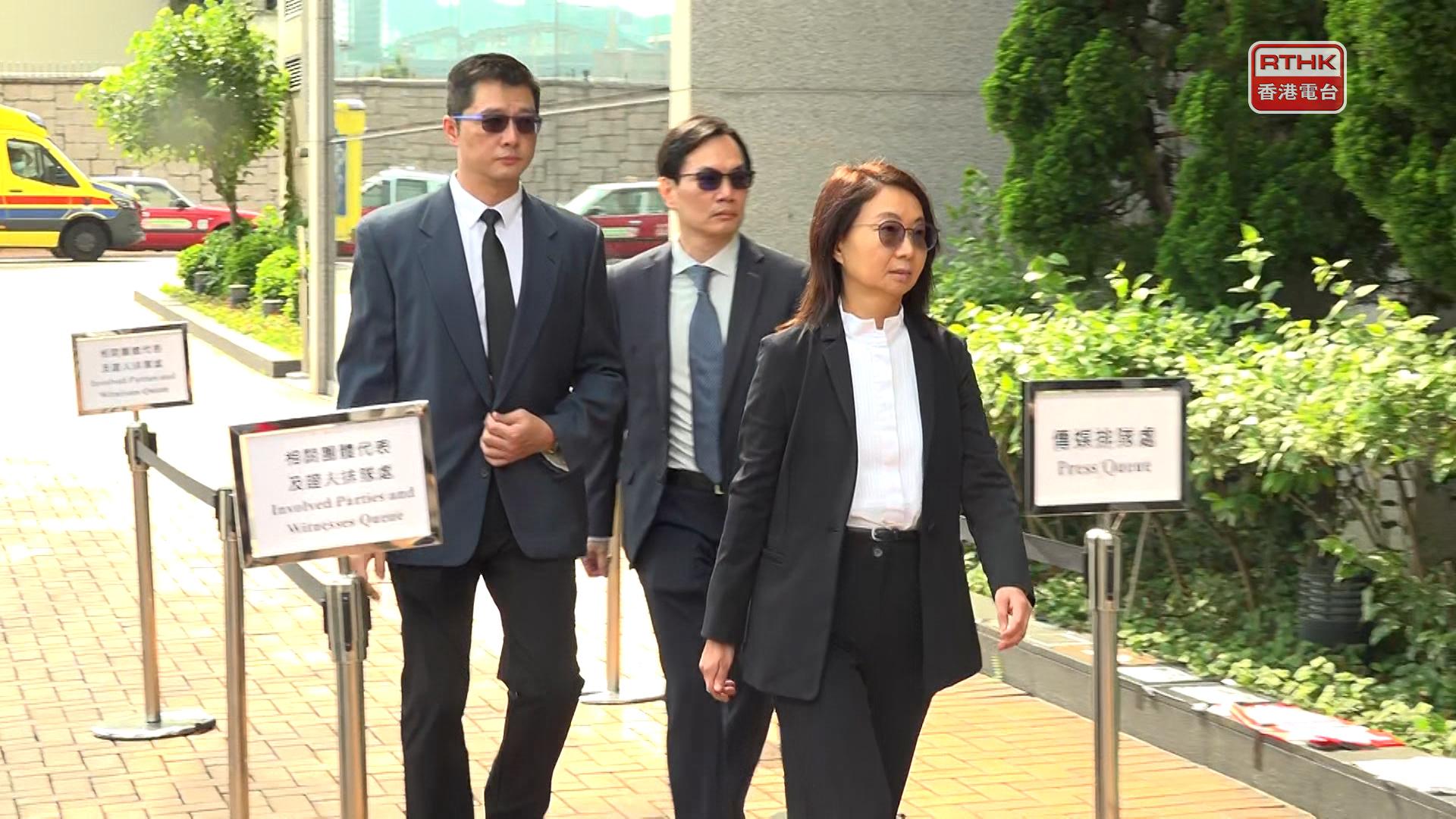
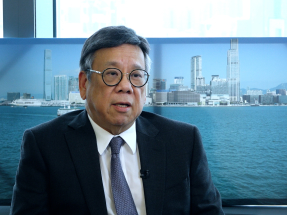
Assistant Director of Buildings Karen Cheung on Monday testified that while the Buildings Department possessed the statutory power to oversee the use of foam boards during renovation projects, specific oversight in the case of Wang Fuk Court fell elsewhere.
That, she stressed, is because Wang Fuk Court, being a subsidised housing estate under the Home Ownership Scheme, falls under the jurisdiction of the Housing Bureau's independent checking unit, which has the responsibility to oversee the work of registered contractors and inspectors and to investigate any problems.
While the checking unit does not have the statutory power to initiate prosecutions or conduct disciplinary actions, Cheung said, it is responsible for filing reports with the Buildings Department so that it could take any necessary enforcement action.
Earlier, the independent committee looking into the disaster that claimed 168 lives last November heard the Buildings Department had failed to conduct on-site tests on the fire-retardant properties of scaffolding mesh nets used for major renovations at Wang Fuk Court before the inferno.
Cheung also told the hearing that officials had relied mainly on certificates provided by contractors.
The committee’s lead counsel, Victor Dawes, expressed concern over how the department verified the credentials of such documents.
He pointed out that it had, in the aftermath of the devastating inferno, found out that more than one allegedly fake fire-retardant certificate for scaffolding nets had been used during inspections before the fire occurred.
Cheung, the first official from the department to testify, said staff had only checked if certificates were issued by recognised laboratories.
The department, she stressed, has since made collection of random on-site samples for analysis a standard procedure.
Cheung also said blocking windows with foam boards and creating temporary openings in emergency staircases are both violations of building construction regulations.
However, she added that the use of temporary openings was not a common industry practice.
Cheung noted that an inspection conducted in the aftermath of the inferno discovered that only eight out of the more than 400 buildings undergoing renovations had created such temporary openings.
The inquiry also heard that there was a discrepancy in how the Housing Bureau's independent checking unit and the Buildings Department carries out on-site inspections.
Quoting the written testimony of a checking unit staff member, Dawes noted it was standard practice for the checking unit to make an appointment with the contractor to ensure that registered inspectors would be present to answer questions.
However, Cheung testified that the Buildings Department would not follow the same practice.
Edited by Tony Sabine
'Specific oversight not the purview of Buildings Dept'
2026-04-27 HKT 16:36
Share this story


2026-10-06 HKT 12:52
2026-09-15 HKT 13:56
2026-09-09 HKT 22:14
2026-09-03 HKT 17:12
2026-09-01 HKT 11:34
2026-08-31 HKT 21:05
2026-08-29 HKT 15:10
2026-08-28 HKT 15:23
2026-08-25 HKT 16:43
2026-08-23 HKT 11:38
2026-08-18 HKT 13:29
2026-08-12 HKT 15:20
2026-08-01 HKT 11:12
2026-07-30 HKT 13:59
2026-07-25 HKT 13:18
2026-07-21 HKT 15:31
