


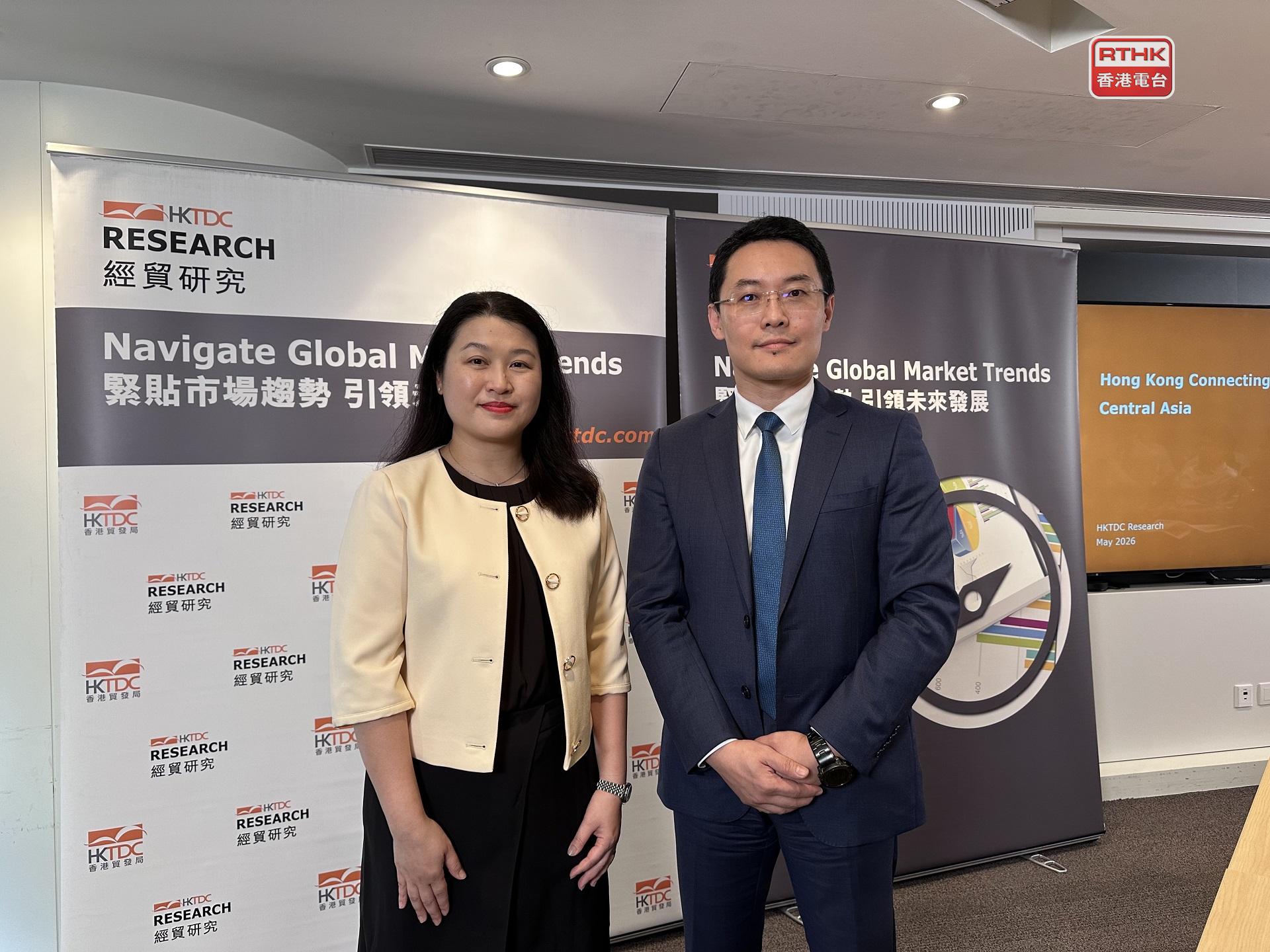
A landmark renminbi bond issued by Kazakhstan in Hong Kong last year signals a new reality that Central Asia's most dynamic economies are turning to the city for finance, logistics and expertise.
As Kazakhstan and neighbouring Uzbekistan pursue economic modernisation and diversification, Hong Kong is emerging as a notable partner in finance and logistics.
To further cultivate ties, Chief Executive John Lee will lead a delegation of officials, as well business leaders from the SAR and the mainland, on a visit to the Central Asian nations next month.
While Kazakhstan relied traditionally on its oil and mineral reserves, it has been diversifying its industries as part of economic reforms.
Data from the Hong Kong Trade Development Council (TDC) showed that Kazakhstan's oil and gas sector made up 11.9 percent of national GDP last year, compared to nearly 20 percent in 2010.
Alongside this shift, the TDC said there is keen demand for modern infrastructure, finance and technology.
One key conduit is the Astana International Financial Centre (AIFC), which operates as a special economic zone and practises common law.
The TDC said the AIFC has already attracted over US$21 billion in investment since its inception in 2018.
As of the first half of 2025, 14 Hong Kong companies and 725 mainland firms were registered there.
"Hong Kong and AIFC do share the common law together, so that's easy for Hong Kong financial sector or professional services to tap into the Kazakhstan market," TDC principal economist Alice Tsang said.
"The AIFC also has an encouraging fintech development in there. So I think Hong Kong fintech companies can actually establish common developments in Kazakhstan, in AIFC, and this also helped the digitalisation of the government policy from Kazakhstan."
The Development Bank of Kazakhstan's issuance of a 2 billion yuan "dim sum bond" in Hong Kong last September further cements the SAR's role as a top offshore renminbi hub.
Meanwhile to the south, Uzbekistan is undergoing an even more dramatic overhaul. Under its "2030 strategy", the country is eyeing accession to the World Trade Organisation within this year, a move which would greatly slash trade barriers.
As part of that push, the Uzbek government is liberalising markets, creating special economic zones and promoting digital governance – all of which put Hong Kong's fintech, smart city, and ESG advisory services in high demand.
"Uzbekistan is striving to develop the light industries, so I think Hong Kong companies can get a full... advantage by establishing or actually collaborate with the factories or companies in Uzbekistan to develop their products over there," Tsang said.
"At the same time, Uzbekistan is also striving to develop [the] made-in-Uzbekistan brand, and this will help Hong Kong companies if they are interested to expand their products in Central Asia or in the European market.
"That will be a first-time mover to seek collaboration with the local Uzbekistan companies to tap in different markets."
Bilateral trade between Hong Kong and Central Asia has been growing -- SAR exports to the region reached US$313.4 million in 2025, with Kazakhstan and Uzbekistan accounting for more than half.
Both countries share pressing needs for logistics, infrastructure funding and sustainability solutions, according to the TDC. The group is trying to introduce Hong Kong's expertise in capital markets and gold-trading, as well as global connectivity to potential customers there.
Edited by Raymond Yeung
HK finds its next growth frontier in Central Asia
2026-05-19 HKT 13:16
Share this story


2026-08-20 HKT 13:32
2026-06-13 HKT 15:28
2026-06-11 HKT 18:58
2026-06-08 HKT 13:43
2026-06-07 HKT 16:26
2026-06-07 HKT 11:55
2026-06-06 HKT 07:02
2026-06-05 HKT 21:50
2026-06-05 HKT 18:22
2026-06-05 HKT 13:13

2026-06-05 HKT 09:24
2026-06-04 HKT 21:48
2026-06-04 HKT 16:44
2026-06-04 HKT 15:31
2026-06-04 HKT 09:11
2026-06-03 HKT 19:03
